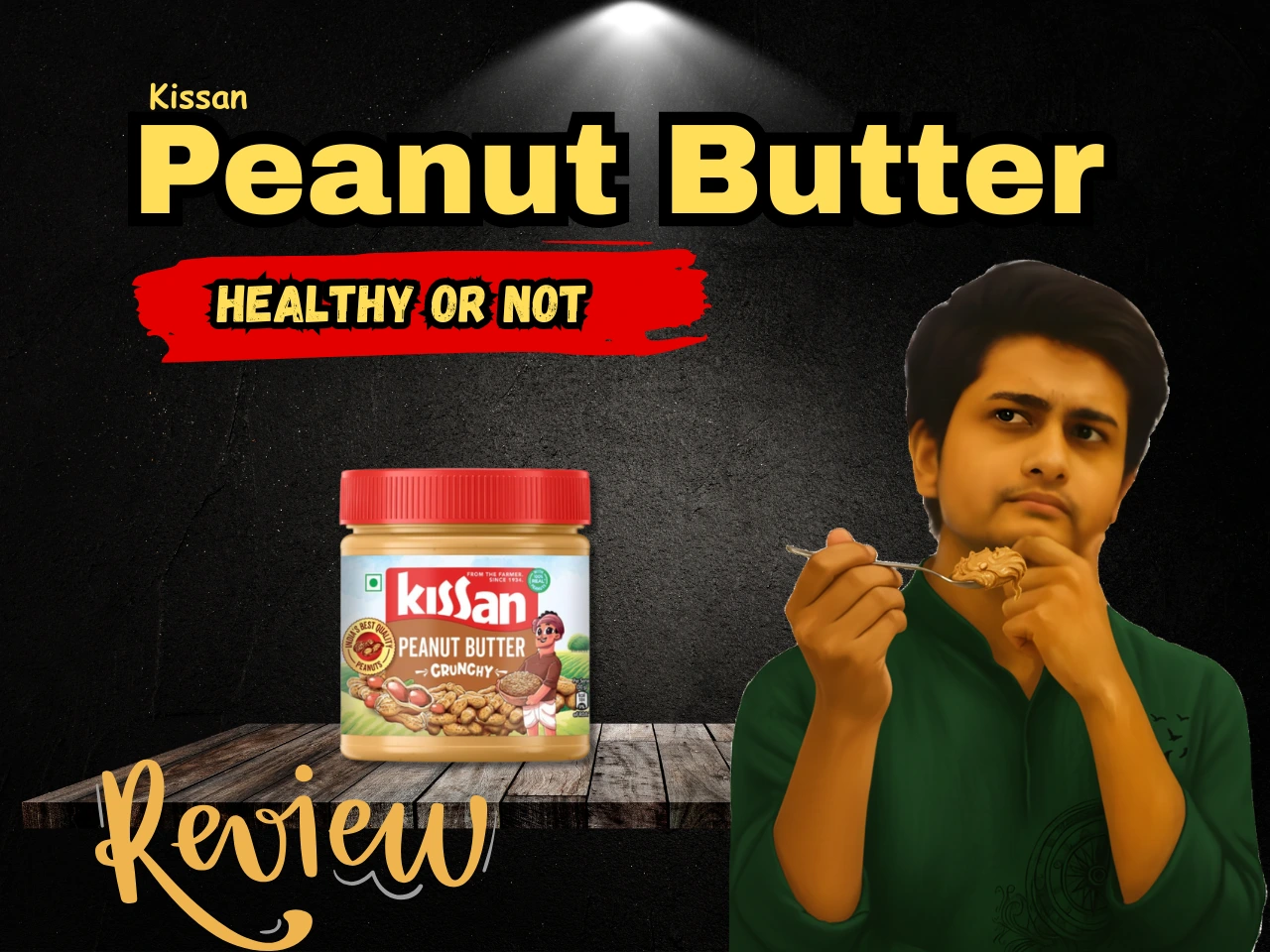
Peanut butter is often marketed as a protein-packed superfood, especially for fitness lovers. Among the many brands in India, Kissan Peanut Butter has gained popularity for its “crunchy” texture and “100% real peanuts” claim. But is it actually healthy, or just fake promises?
Let’s decode it scientifically—ingredient by ingredient.
Table of Contents
Ingredients Analysis
Ingredients:
- Roasted Peanuts: 90-91%
- Sugar
- Edible Vegetable Fat/Oil (or Hydrogenated Palm Oil in the crunchy variant)
- Iodized Salt
That’s it. Four ingredients. Now, let’s talk about what each one actually does to our bodies.
1. Roasted Peanuts (90-91%)—The Star of the Show
The Good News: The good stuff! The whole reason we buy peanut butter. This is where Kissan gets major points, with 90-91% peanut content.
Peanuts are a fantastic source of plant-based protein, healthy monounsaturated and polyunsaturated fats (the good kind!), dietary fiber, and essential vitamins and minerals like vitamin E, magnesium, and niacin (B3). These nutrients are linked to improved heart health, better blood sugar control, and keeping you full and satisfied.
✅ The product is a big point in its favor.
2. Sugar—The Not-So-Sweet Reality
6.3 g of added sugar per 100 g, which means a 350 g pack contains 22.05 g of sugar.
So, a 350 g jar of Kissan Peanut Butter contains approximately 22 grams of added sugar, which is roughly 5.5 teaspoons (since 1 teaspoon ≈ 4 g of sugar).
While peanuts are naturally sweet and don’t need added sugar, Kissan includes it to enhance taste. Added sugars provide “empty calories” with no nutritional benefit.
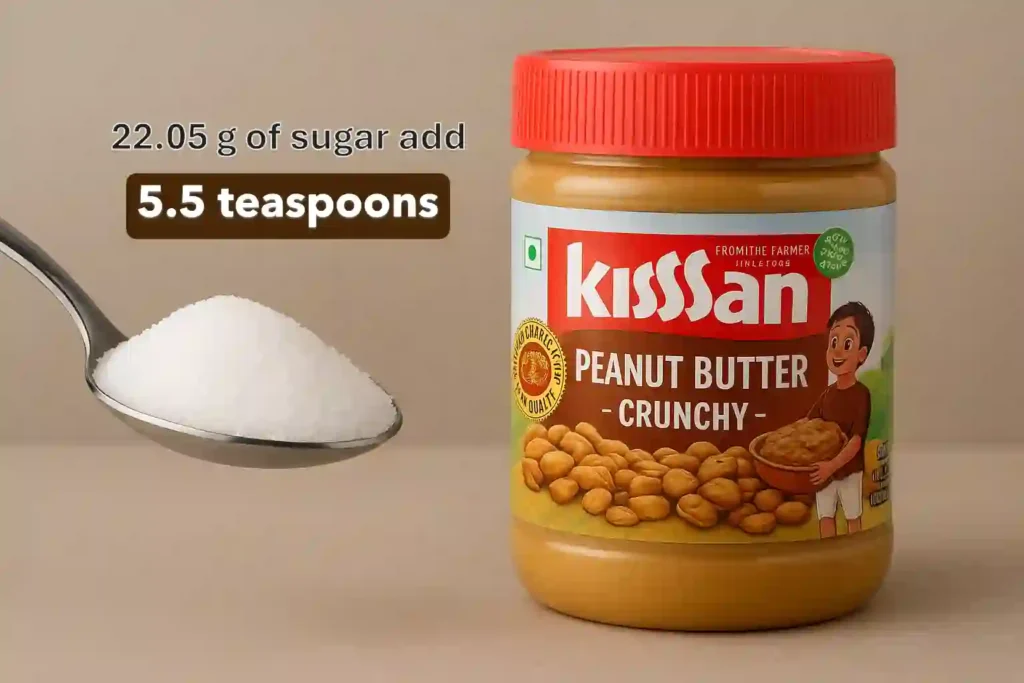
In this case, 22.05 g of added sugar per 350 g might seem small, but it adds up quickly if consumed daily—especially for those already consuming sugary diets.
🚫 A healthier peanut butter wouldn’t need added sugar.
3. Hydrogenated Rapeseed Oil (for preventing oil separation)
This is where things get concerning. Hydrogenation turns liquid oil into a semi-solid form—improving shelf life but also creating trans fats.
Even though the label shows “Trans-fat: 0.01 g (<1%),” that doesn’t mean it’s 100% trans-fat-free. Indian labeling law allows rounding off small amounts.
- Trans fats raise LDL (bad cholesterol) and lower HDL (good cholesterol).
- Linked with heart disease, inflammation, and metabolic disorders.
🚫 The Problem Ingredient, A major downside. This ingredient is used for texture and shelf life, not for your health.
A healthier peanut butter wouldn’t need hydrogenated oil at all.
4. Iodized Salt
Salt enhances taste but can increase sodium intake.
Kissan Peanut Butter contains 253 mg sodium per 100 g—around 4% of the daily recommended limit. That’s moderate, but excessive sodium from multiple sources can contribute to high blood pressure.
🚫 A healthier peanut butter wouldn’t need iodized salt.
Nutritional Highlights (Per 100 g)
| Nutrient | Value | Verdict |
|---|---|---|
| Energy | 612 kcal | High-calorie, energy-dense |
| Protein | 25.7 g | Excellent plant-based source |
| Fat | 49.5 g | Mostly healthy fats, but check oil quality |
| Added Sugar | 6.3 g | Unnecessary addition |
| Trans Fat | 0.01 g | Should be zero in ideal PB |
| Sodium | 253 mg | Moderate |
The Final Verdict: Is Kissan Peanut Butter Healthy?
Let’s be real, Kissan Peanut Butter may look healthy and “protein-rich,” but it’s not entirely clean.
It’s not a health food, but it’s not poison either. It’s a processed food product that sits somewhere in the middle.
The Good:
- It’s still 90% peanuts, so you’re getting a decent dose of protein, healthy fats, and fiber.
The Not-So-Good:
- Added Sugar: Unnecessary calories with no benefit.
- Hydrogenated Oils: A source of potentially harmful fats that are best avoided.
- Iodized salt: no need for a healthier peanut butter.
Decode Pure Summary
| Category | Rating (Out of 5) | Remarks |
|---|---|---|
| Ingredient Quality | ⭐⭐ | Hydrogenated oil reduces purity |
| Protein Source | ⭐⭐⭐⭐ | Good plant protein |
| Sugar Level | ⭐⭐ | Added sugar not needed |
| Overall Healthiness | ⭐⭐½ | Better than chocolate spreads, worse than natural PB |
Is this article helpful?
Pro tips
If you want truly healthy peanut butter, at first, read the ingredient list, and go for
- Only ONE ingredient: peanuts (100%).
- No added sugars
- No hydrogenated oils
- No palm oil
If you truly want peanut butter for health or fitness, stick to 100% natural versions — your heart, liver, and waistline will thank you later.
Mind it, longer the ingredient list, longer the medication list.
Q. Is Kissan Peanut Butter healthy?
Kissan Peanut Butter contains 91% roasted peanuts, which are nutritious, but it also includes added sugar and hydrogenated oil — both reduce its health value. It’s better than chocolate spreads but not as healthy as natural peanut butter.
Q. Does Kissan Peanut Butter contain added sugar?
Yes. It contains around 6.3 g of added sugar per 100 g, which equals about 22 g per 350 g jar. This means around 5–6 teaspoons of sugar per jar.
Q. Is Kissan Peanut Butter good for gym or bodybuilding?
It provides 25.7 g protein per 100 g, which supports muscle repair, but the added sugar and hydrogenated oil make it less ideal for clean bulking. Natural peanut butter (just peanuts + salt) is a better fitness option.
Q. Is Kissan Peanut Butter suitable for weight loss?
Not really. While it has protein and fiber, the added sugar and hydrogenated oil increase calories without nutritional benefit. Choose unsweetened, natural peanut butter instead for weight management.

I’m Mehebub Alam Chowdhury, an M.Sc. Organic Chemistry student, and my mission with Decodepure is to simplify complex chemical ingredients in everyday products. With my knowledge of chemicals, I aim to help you make safer, healthier choices by breaking down product labels in an easy-to-understand way.