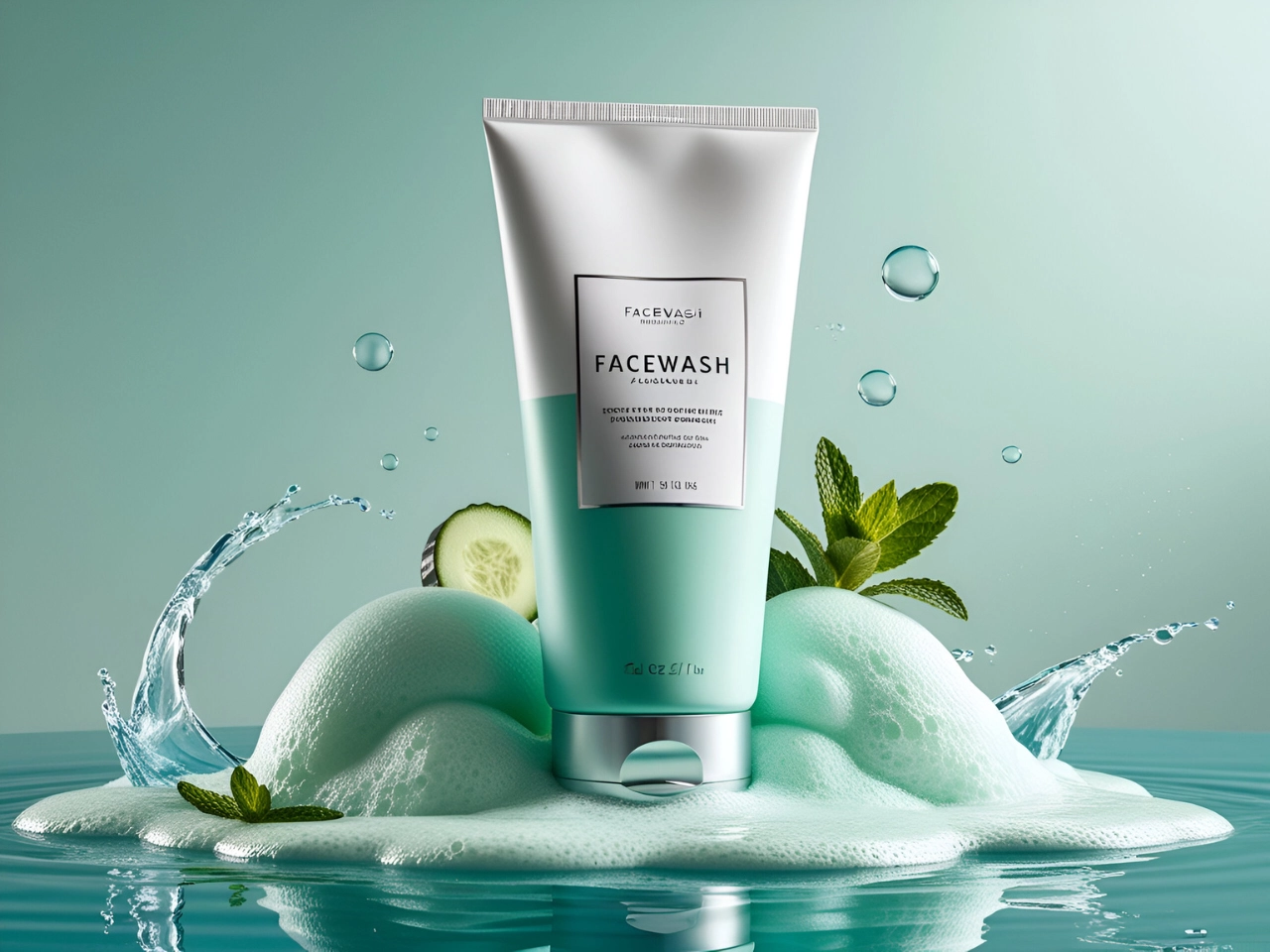
We all use face wash more or less. Face wash makes us feel fresh after the tiredness of the whole day. When choosing Best Facewash for our skin type, most of us pay more attention to the familiar name, trendy branding, fragrance, it’s foam, packaging etc. Every facewash contains chemicals. The toxic chemicals are harmful for health and skin.
In this page we’ll decode what are Best facewash available in the market, uncover the hidden ingredients and help you to find best facewash according to your skin type.
Table of Contents
Why we use Facewash :-
Facewash we used to clean the skin, removing dirt, pollutants, excess oil from skin, bacteria that can cause acne. It also maintains skin’s pH balance, prevent pimples and keep the skin healthy, fresh and glowing.
Ingredients Matter
Facewash can contain both harmful and beneficial ingredients. But harmful ingredients can play negative role that can damage skin and also overall health.
Choosing Best Facewash according to your skin, only the ingredient list will help us to distinguish between which is good and bad. Otherwise, there are no option.
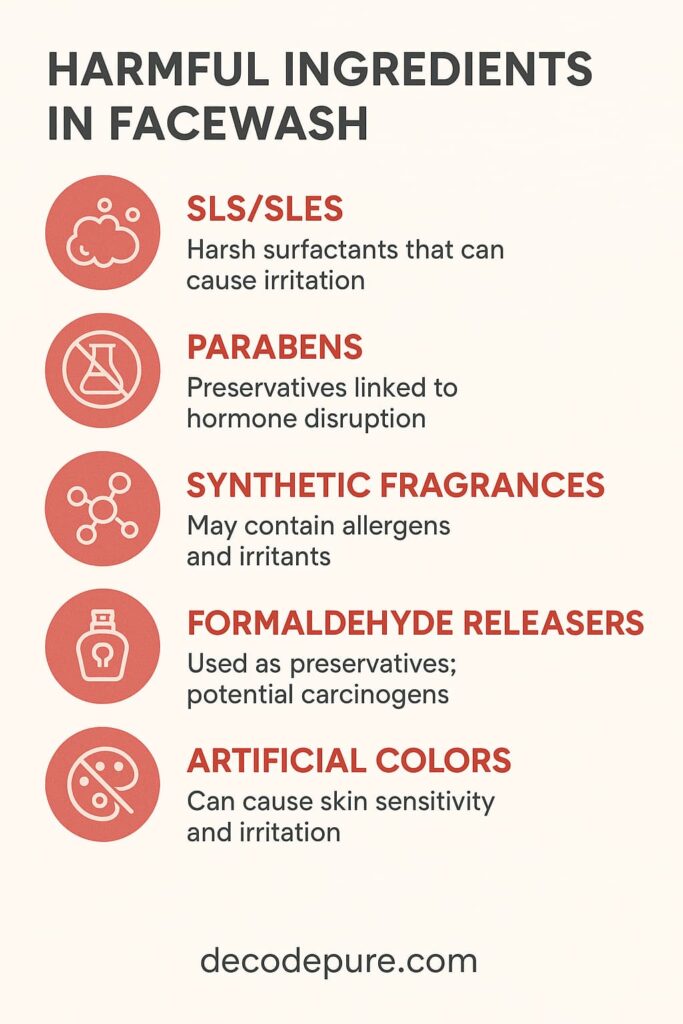
Harmful ingredients to avoid
1. Sulfates (SLS/SLES): – used as foaming agent.
Very bad for dry & sensitive skin. Strip away natural oil, causing dryness, irritation and can damage the skin barrier.
2. Parabens: – Used to extend shelf life.
it can cause potential irritation for sensitive skin.
3. Artificial Fragrance: – Used for beautiful smell.
It can cause allergies, skin irritation.
4. Alcohol (ethanol): – like Denatured alcohol.
Give clean feel but can dry out the skin especially dry & sensitive type skin (e.g., Cetyl alcohol)
5. Synthetic Colors: – It can cause skin irritation and allergic reaction.
6. Formaldehyde Releasing Preservatives: – like DMDM Hydration, Quaternium-15.
well known carcinogen (Formaldehyde)
7. Triclosan: – Antibacterial agent banned in many countries.
8. Silicones: – create layer over skin and clog pores. Bad for sensitive skin.
Beneficial ingredients list
Your face deserves best facewash. So, before buy read the label.
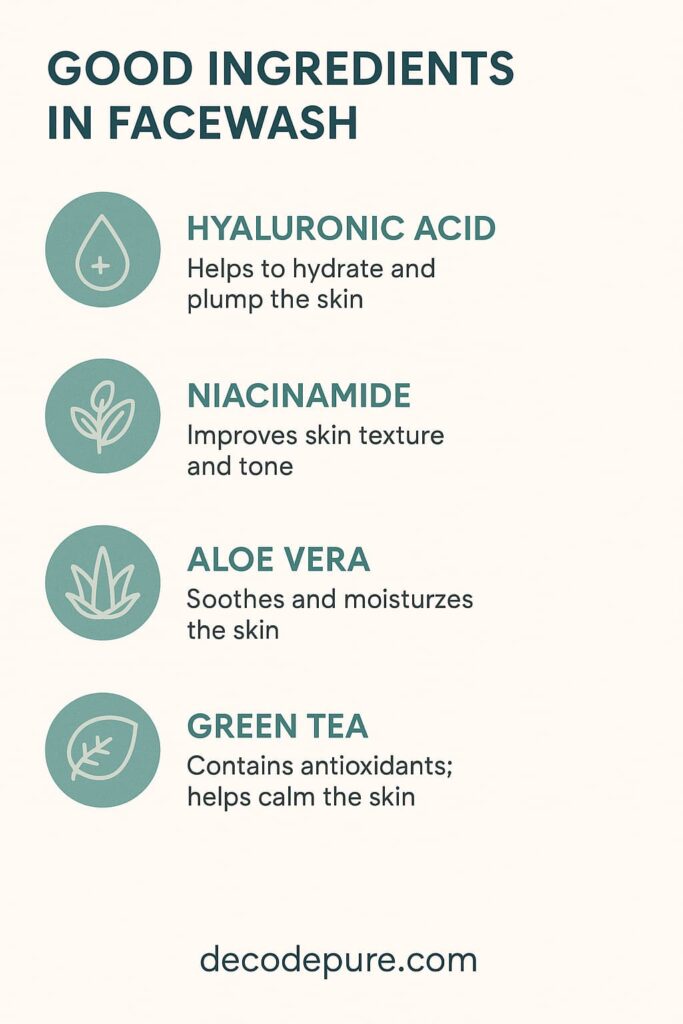
- Glycerin
A mild moisture barrier that hydrates and softens skin
Suitable for all skin types.
- Aloe Vera
Soothes irritation, redness, and keep hydrates.
Ideal for sensitive, dry, or acne-prone skin.
- Salicylic Acid
Helps to unclog pores and reduce acne
Ideal for oily and acne-prone skin.
- Niacinamide (Vitamin B3)
Reduces redness, improves texture, and controls oil
ideal for all skin types.
- Tea Tree Oil
Natural antibacterial, fight against acne
Best for oily and acne-prone skin.
- Hyaluronic Acid
Super hydrating without clogging pores
Excellent for dry skin
- Vitamin C
Brightens skin and improves complexion and fades dark spots
Good for dull or pigmented skin
- Chamomile or Green Tea Extract
Antioxidant and calming properties
Perfect for sensitive skin
- Ceramides
Protect skin barrier
- Sea Butter
Add softness and keep moisture.
- Green Tea
Contain antioxidants, helps to calm the skin.
Overview
Sulfates – create of foam – “feels clean”
Parabens – longer shelf life – lower cost
Fragrance – pleasant smell – sells better
Alcohol – instant drying – illusion of oil removal
Use of pH Paper
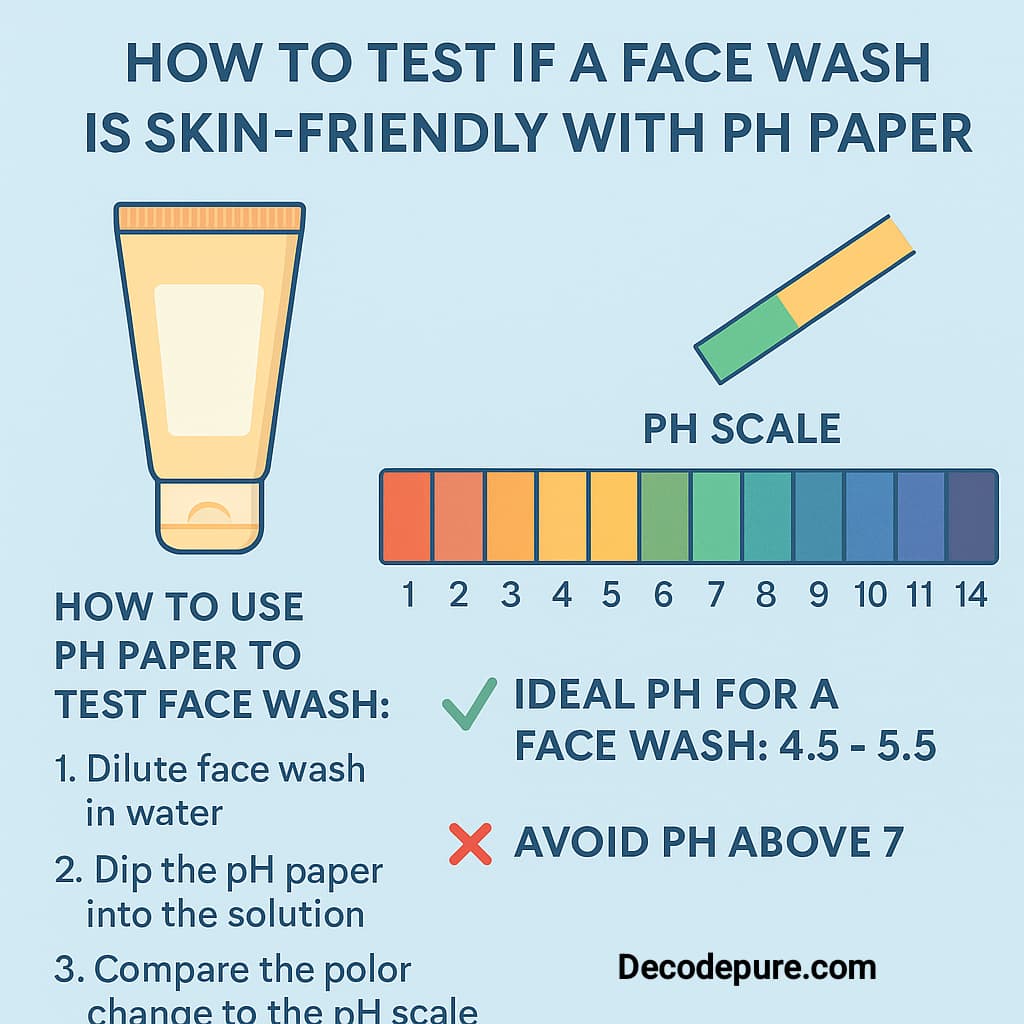
Common pH range is slightly acidic (4.5 to 5.5) of a healthy skin. This acidic layer protects our skin against pollution, bacteria, and moisture loss.
If we use facewash like alkaline (pH >7) can strip natural oil in skin and cause dryness or skin problem.
The color of the paper is usually yellow. If the paper turns red when dipped in a solution, then the solution is acidic, and if its color is blue or green or deep blue, then it is alkaline. Deep blue color indicates high alkaline.
I have done many experiments with facewash using pH paper myself, and the results are very disappointing.
The color of the pH paper was green or blue for all the soaps we use every day, except one or two.
Read the pH level
(pH 4.5 – 6) ~ Ideal for Face ………………. pH paper like Yellow.
There are some simple steps to do the experiments
Need to buy a pH paper from market
- Dilute facewash in water
- Dip the pH paper into the solution
- Compare the color, if it remains yellow or light red – it’s good for skin, and if it turns into green or blue or deep blue – try to avoid it.
Facewash Routine (AM & PM)
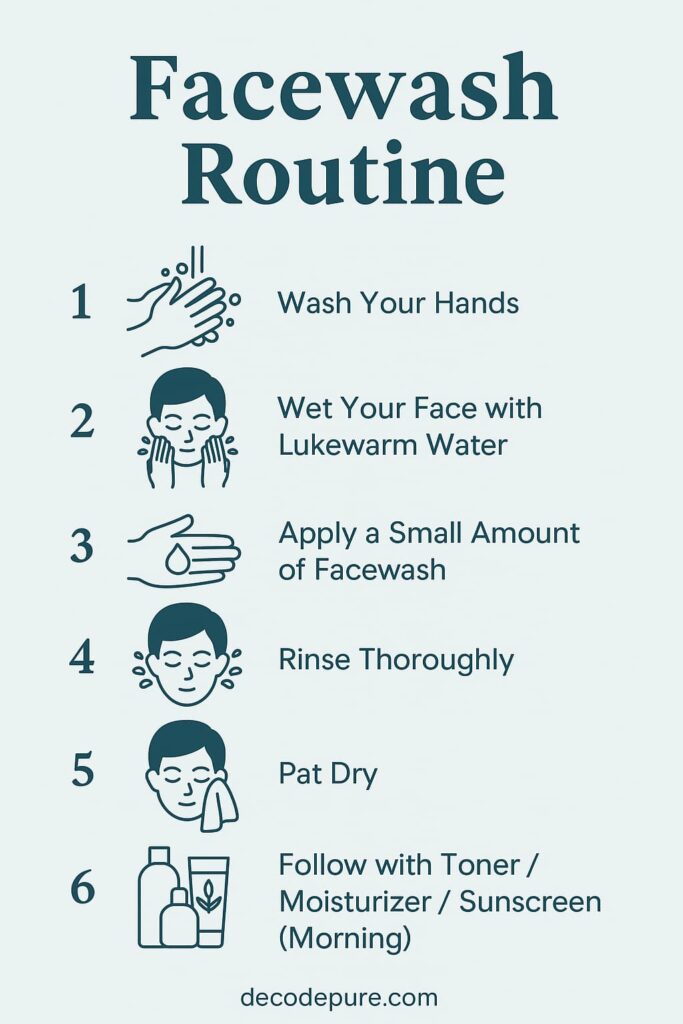
Step 1: Wash Your Hands
Always clean your hands to avoid dirt and bacteria.
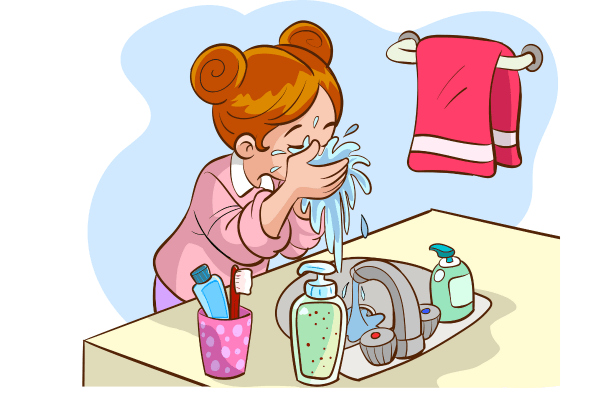
Step 2: Wet Your Face with Lukewarm Water
Avoid hot water (it strips natural oils) or cold water (it doesn’t open pores).
Step 3: Apply a Small Amount of Facewash
Gently massage it on your face using circular motions for 40–60 seconds.
Focus on oily areas like the T-zone (forehead, nose, chin).
Step 4: Rinse Thoroughly
Use lukewarm water to wash.
Step 5: Pat Dry
Don’t rub. Use a soft, clean towel to gently pat your face dry.
Step 6: Follow with Toner / Moisturizer / Sunscreen (Morning)
After cleansing, always apply a moisturizer (If it’s morning)
Tips:–
Use 2 times daily: Morning and night.
Avoid over-washing-it can irritate or dry out your skin.
Switch to a mild facewash if your skin feels tight or dry after use
Read Labels
- Order – Ingredients are arranged by volume of concentration (top 5 are main components, used by in high volume)
- Don’t make fool terms like “Dermatologist Tested” or “Hypoallergenic” or “Natural” / “Organic”, “Chemical-Free”, “No Sulfates / Parabens”, “Suitable for All Skin Types”, “pH Balanced”. Just because all levels are allowed to write doesn’t mean that, what is written is true.
Make decision (Buy or Skip)
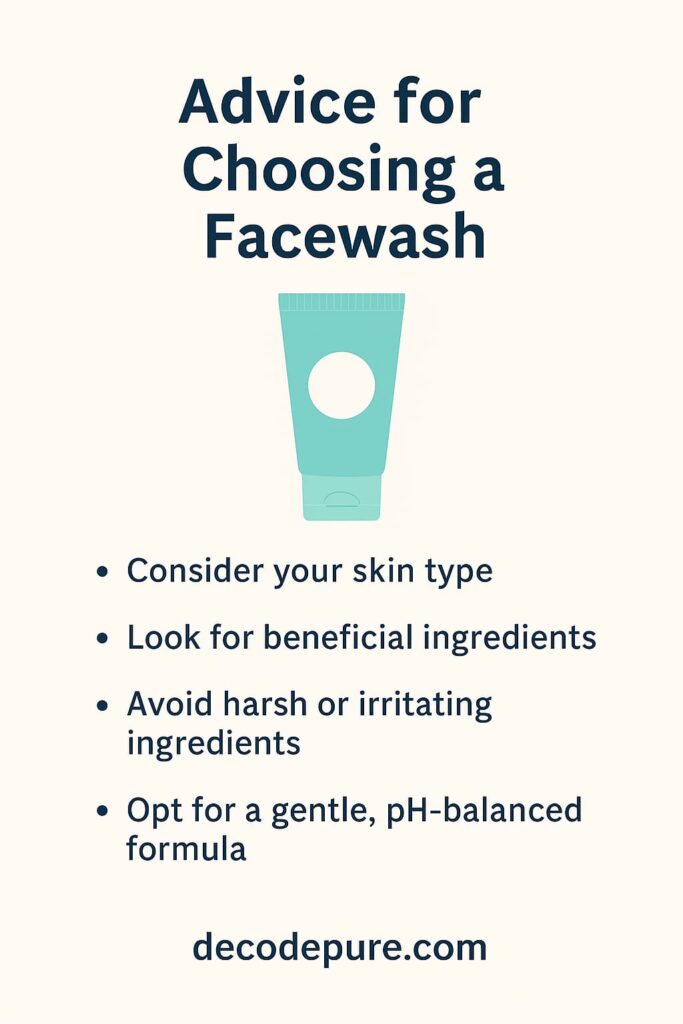
Choosing Best Facewash according to your skin in market. Without thinking about anything, first check what ingredients list are there. If you find any harmful ingredients…. just skip it. Your face deserves best facewash.
You deserve to know what you are putting on your body.
Join WhatsApp Channel to Updated
Conclusion
Spend 30 seconds to read the labels – your skin will thank you .
Be smart, Choose best Facewash.
We all like to keep our skin clean, moisturized and glowing and use face wash for this, but if that face wash contains harmful ingredients and continues to damage our skin, then it is not acceptable. Most packaged Facewash in market is made with harmful ingredients like- Sulfates (SLS/SLES), Parabens, Artificial Fragrance, Triclosan, Silicones, Artificial Fragrance….etc and which can cause various problems like – allergies, skin irritation, dry out the skin etc.
I believe that buying anything shouldn’t be a guessing game. It’s time to we should start read labels and exploring healthier alternative.
I think now it’s very easy for you to identify. If I miss any ingredients? Whether you have a question, a suggestion, or just want to share your thoughts, feel free to reach out. I look forward to reading your messages.
Best Facewash in the market
Here is some Best Facewash list as alternative in market without harmful chemicals.
1. Cetaphil Paraben, Sulphate-Free Gentle Skin Hydrating Face Wash | Combination skin type.
2. Minimalist Gentle Face Wash With 6% Oat Extract (Best for sensitive skin)
3. Sebamed gentle facial cleanser for oily & combination skin | pH balanced ( pH 5.5 ) | Oily, Combination skin
3. Neutrogena Deep Clean Foaming Cleanser facewash for Sensitive skin.
4. Dot & Key facewash | For Oily & Sensitive Skin | Sulphate Free for Men & Women
5. WOW Skin Science Brightening Vitamin C Face Wash | for All Skin Types
5. Just Herbs Brightening Face Wash with Vitamin C Face Wash | Suitable for all skin types | Men & Women
6. Mamaearth Vitamin C Face Wash | ALL SKIN TYPES
100% natural facewash
1. Khadi Natural Papaya Face Wash |Reducing Dark Spots & Blemishes.
2. Khadi Organic Ayurvedic Neem Face Wash
3. Nat Habit Ubtan Face Wash, Fresh Daily Tikta For Men & Women
4. NEEV SOAPS Kumkumadi Face Scrub Soap
5. Multani Mitti Stone

I’m Mehebub Alam Chowdhury, an M.Sc. Organic Chemistry student, and my mission with Decodepure is to simplify complex chemical ingredients in everyday products. With my knowledge of chemicals, I aim to help you make safer, healthier choices by breaking down product labels in an easy-to-understand way.