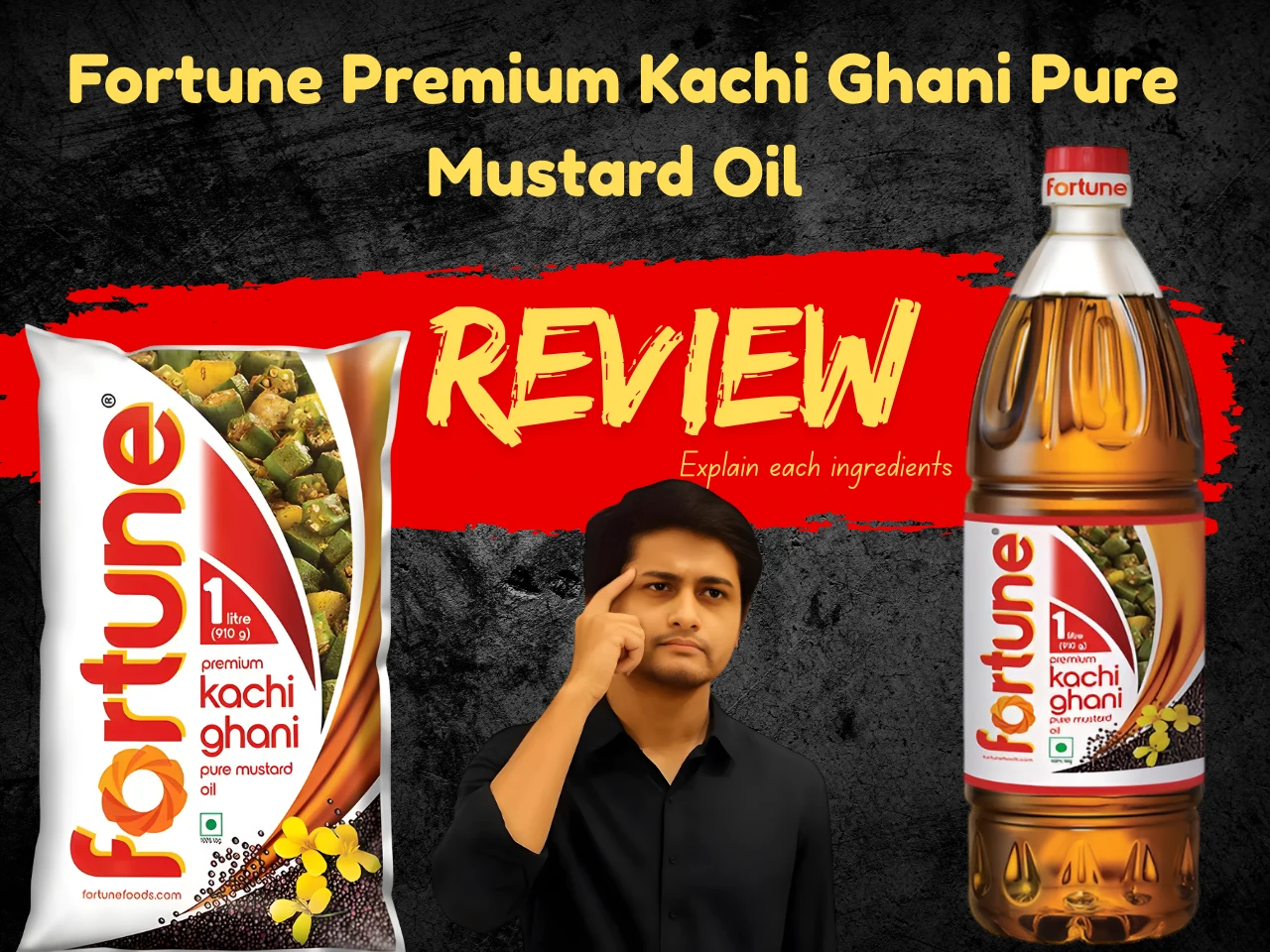
Mustard oil has been a kitchen essential in many Indian homes for ages. But nowadays, when you pick up a bottle of Fortune Kachi Ghani Mustard Oil, you’re hit with fancy health claims—cold-pressed, rich in omega-3, zero cholesterol, and so on. Is this oil truly as healthy as it claims, or is it another case of smart marketing?
In this blog post, let’s decode the truth—what goes into it, ingredient by ingredient—and figure out if it truly deserves a spot in your kitchen.
Table of Contents
Ingredients
Only one ingredient is listed:
Mustard Oil
Clean and simple ingredient list. But don’t stop here—mustard oil naturally contains certain compounds that require deeper analysis. Let’s go beyond the label.
Nutritional Breakdown (per 100g)
| Nutrient | Amount |
|---|---|
| Energy | 900 kcal |
| Total Fat | 100 g |
| Saturated Fat | 12 g |
| Monounsaturated Fat (MUFA) | 36 g (min) |
| Polyunsaturated Fat (PUFA) | 16 g (min) |
| Trans Fat | 1 g (max) |
| Protein, Carbs, Sugars, Cholesterol | 0 g |
🔬 Scientific Analysis of Nutrients
✅ Good Fats That Support Heart Health
- MUFA (Monounsaturated fats, 36 g) – Heart-friendly fats help to reduce bad cholesterol (LDL) and support heart health.
- PUFA (Polyunsaturated fats, 16 g) – Includes both Omega-3 and Omega-6. Essential for brain and cell health. The omega-6 to omega-3 ratio should be around 4:1 or 2:1 for a healthy anti-inflammatory diet.
⚠️ Trans Fat – Not Good News
Even though it’s just 1g, that’s still a red flag. Trans fats are linked to heart disease, and ideally, you want zero. The American Heart Association recommends completely avoiding trans-fat.
Cholesterol-Free?
Technically true, but also kind of meaningless. All plant oils are naturally cholesterol-free.
Omega-6 vs Omega-3: Is the Ratio Balanced?
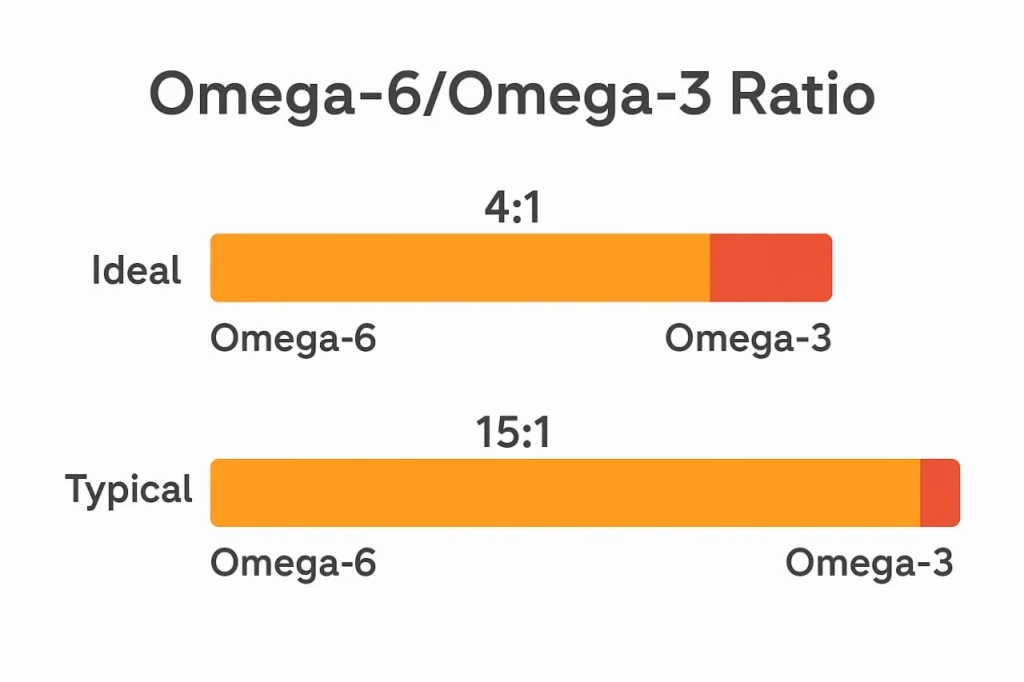
Mustard oil is one of the rare plant oils that naturally contains omega-3 (ALA). That’s a big plus ✅. According to a study published in the Journal of Clinical Lipidology, the ideal omega-6 to omega-3 ratio should be close to 4:1 or lower. Refined oils like sunflower or soybean have poor ratios (up to 40:1!), which mustard oil improves significantly.
📌 Verdict: Mustard oil is better balanced and heart-friendlier than most refined oils.
What About Allyl Isothiocyanate?
Mustard oil contains allyl isothiocyanate, a natural compound responsible for its pungent aroma.
Erucic Acid
- Present in mustard oil (20–40%)
- Linked to heart muscle damage in animal studies at very high doses (EFSA report)
- However, no conclusive evidence in humans at normal dietary intake
“Even though the label looks clean, mustard oil naturally contains compounds like erucic acid and allyl isothiocyanate. Companies don’t mention them — maybe because they sound too technical — but if you’re serious about your health, you should know they’re in there.”
Marketing Claims – True or Misleading?
| Claim | Truth Check |
|---|---|
| Cold-pressed from finest seeds | ✅ Yes, Kachi Ghani is cold-pressed, which retains more nutrients. |
| Rich in Omega 3 & 6 | ✅ True. Unlike refined oils, mustard oil has decent Omega-3. |
| Cholesterol-free | ❌ Misleading. All plant oils are. |
| Good source of vitamins | ⚠️ Could be true in raw form, but they don’t mention actual amounts. |
| Helps with digestion | ✅ Traditional use supports this claim. |
Is this article helpful?
Overview
- Naturally cold-pressed (Kachi Ghani)
- Rich in MUFA and Omega-3
- Helps improve Omega-6:3 balance
- Supports digestion and traditional Indian cooking
- Free from preservatives or additives
- Contains 1g trans-fat (not ideal)
So, Should You Use It?
After considering everything above, it can be concluded that Fortune Premium Kachi Ghani Mustard Oil is among the healthier oils available in the Indian market, especially when compared to refined oils. It’s cold-pressed, contains natural omega-3s, and aids digestion. So, yes, you can go for it.
Q. Is Fortune Kachi Ghani Mustard Oil good for heart health?
Fortune Kachi Ghani Mustard Oil is often considered beneficial for heart health due to its high levels of monounsaturated fats and omega-3 fatty acids, which can help reduce cholesterol levels and improve overall cardiovascular health.
Q. Does Fortune mustard oil contain erucic acid?
Yes, Fortune mustard oil contains erucic acid.
Q. Does mustard oil help with digestion?
Yes, Mustard oil is known to stimulate digestion and increase appetite.
Q. What is the smoke point of mustard oil?
The smoke point of mustard oil is approximately 480°F (249°C), making it suitable for high-heat Indian cooking.
Q. Which oils should I use for cooking instead of refined oils?
Go for traditional, less processed oils:
Cold-pressed mustard oil
Wood-pressed groundnut oil
Virgin coconut oil
Desi ghee
Extra virgin olive oil (for raw use)
Q. What are the side effects of using refined oils daily?
Daily use of refined oil can lead to:
Chronic inflammation
Heart problems
Hormonal imbalance
Liver stress
Increased risk of obesity, diabetes, and cancer

I’m Mehebub Alam Chowdhury, an M.Sc. Organic Chemistry student, and my mission with Decodepure is to simplify complex chemical ingredients in everyday products. With my knowledge of chemicals, I aim to help you make safer, healthier choices by breaking down product labels in an easy-to-understand way.










Great information 👍 waiting for the next ….
As always, impressed. Such a wonderful information in one place.
Thank You sir ❤️