
Children love chocolate despite the fact that it is unhealthy, as we all know. Why is chocolate unhealthy? Which harmful chemicals are used in it? This page will go into great detail about each of those dangerous ingredients.
Table of Contents
Most common ingredients used in chocolates
1. Sugar: Primary Culprit
Sugar is used to improve taste, sweetness, and shelf life.
Long-term excessive sugar consumption can lead to weight gain, tooth decay, raised blood pressure and insulin levels, joint pain, skin aging, liver damage, type 2 diabetes, pancreatic breakdown, kidney failure, and increased heart attack risk.
WHO recommends <10% of daily calories from sugar (≈25g/day for an adult).
Most of the chocolates available in the market have 15g–25g of sugar per 35g bar—already hitting your daily limit.
Reference: WHO – Guideline, Sugar intake for adults and children, World Health Organization, 2015
2. Refined Palm Oil / Hydrogenated Fats
Palm oil is around 50% saturated fat. Palm oil is very cheap and does not spoil for a long time (a cheaper substitute for cocoa butter); most of the food in Indian markets is made with this palm oil.
Palm oil is high in saturated fat, raises the bad cholesterol (LDL), and decreases good cholesterol (HDL). Very harmful for heart health.
Globally, India is the leading importer of palm oil in 2023. India imported $8.7 billion worth of palm oil. Ranking first among 206 countries. Imported from Malaysia and Indonesia.
Reference: American Heart Association.
3. Milk Solids/Milk Powder
Milk solids or powder Used for creamy texture and dairy base.
Source of calcium and protein. It can create problems for lactose-intolerant or allergic individuals. promote inflammation when ultra-processed.
4. Emulsifiers (E322 – Lecithin, E476 – Polyglycerol Polyricinoleate, PGPR, E476)
Generally, emulsifiers are used to improve texture and prevent separation of ingredients. Polyglycerol Polyricinoleate (PGPR, E476) is sometimes used as a cheaper alternative to cocoa butter.
E476 (PGPR) is petroleum-derived and may create gut problems. In some animal studies, it’s linked to liver enlargement and digestive issues.
5. Artificial Flavors (Vanillin, Ethyl Vanillin)
Used as an alternative to natural flavors. Imitates real vanilla at a lower cost.
Often synthesized from petrochemicals like guaiacol. Can create problems for allergies and migraines (headaches) in sensitive individuals (especially in children).
6. Cocoa Solids (Low Percentage)
Cocoa solids are used for chocolate flavor.
Most commercial chocolates contain only 6%–12% cocoa (that is too low). Real dark chocolate should have ≥70% cocoa.
Low-quality cocoa can be contaminated with toxic heavy metals like cadmium and lead, especially if sourced from polluted soil or processed improperly. Cadmium and lead can create many problems for health, like kidney damage, bone demineralization, impaired child brain development, etc.
Reference: Consumer Reports, Lead and Cadmium Could Be in Your Dark Chocolate
We will discuss ‘Dark Chocolate’ in detail on another page.
7. Preservatives & Stabilizers (E330 – Citric Acid, E200 – Sorbic Acid)
Preservatives & stabilizers are generally used to extend the shelf life of products.
Industrially produced citric acid may be linked to inflammation in sensitive individuals.
Deep explanation of commercial chocolate available in the market
1. 🍫 KitKat (Nestlé)
Ingredients:
Sugar, milk solids (16.2%), hydrogenated vegetable fats, Refined wheat flour (maida), cocoa solids (4.5%), emulsifier (soy lecithin), yeast, raising agent (500(ii)), salt, artificial (vanilla) flavoring substance, flour treatment agent (516), and nature-identical flavoring substance. Allergen Note: Contains wheat, milk, sesame, and soy. May contain nuts.
Calculation:
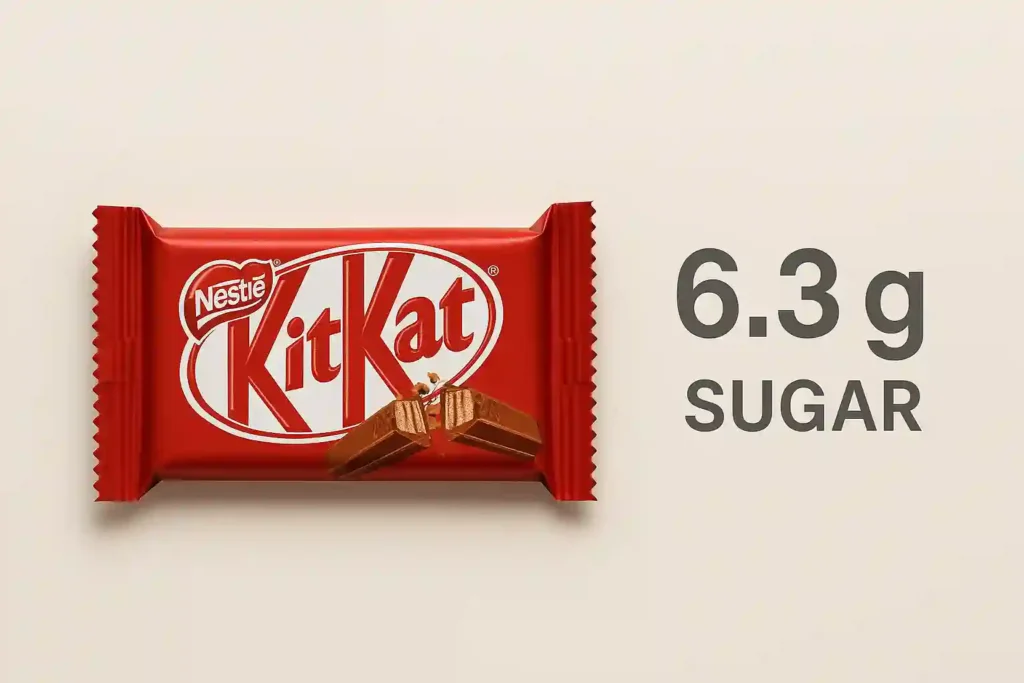
₹10 KitKat (≈18g Bar)total sugar 35.1 gm per 100 gm.
(35.1×18)/100 = 6.32gm sugar
- World Health Organization (WHO) and American Heart Association (AHA): Recommended Added Sugar Limits: for men and women, ≥36 grams (9 teaspoons) per day, and for children, ≥25 grams per day.
- So, 1 KitKat bar ≈ 25% of your daily sugar limit.
Do you know KitKat is different in India and Australia? In India, KitKat has only 16.2% milk solids and 4.5% cocoa solids, whereas in Australia, it has 25% milk solids and 22% cocoa solids.
2.🍫 Cadbury Dairy Milk (Regular)
Ingredients:
Sugar, Milk Solids, Cocoa Butter, Cocoa Solids, Emulsifiers (INS 476, INS 442), Flavouring Substances (Nature-Identical and Artificial – including vanillin)
Calculation:
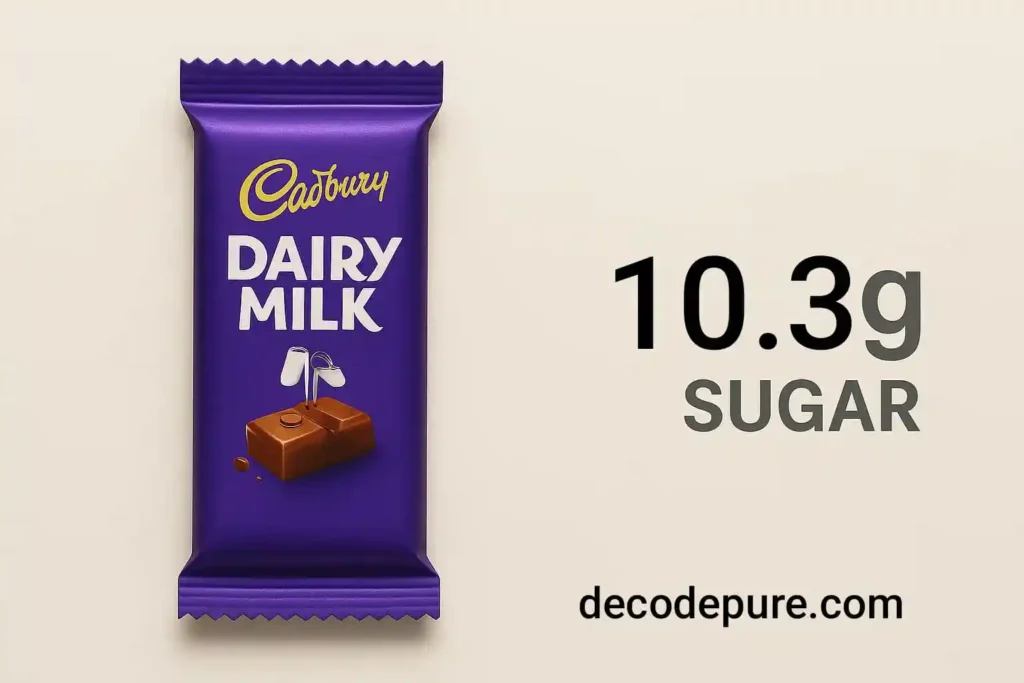
₹10 Cadbury Dairy Milk (≈18g Bar), 57gm Sugar per 100 gm.
(57×18)/100 ≈10.3gm sugar (≈ 2.5 teaspoons of sugar).
🚫The amount of sugar is too much.
3. 🍫 Nestlé Munch
Ingredients:
Sugar, Hydrogenated Vegetable Oil (Palm Kernel), Wheat Flour, Cocoa Solids (3.9%), Milk Solids, Corn Flour, Cocoa Mass, Emulsifiers (INS 322, 476), Salt, Artificial Flavour (Vanillin), contains wheat, sesame, milk and soy. May contain nut.
Calculation:
₹10 nestle Munch (≈18g Bar), 33gm Sugar per 100 gm.
(33×18)/100 ≈ 6gm sugar

4. 🍫 5 Star (Cadbury)
Ingredients:
Sugar, Glucose Syrup, Milk Solids, Cocoa Butter, Cocoa Solids, Liquid Glucose, Hydrogenated Vegetable Fat, Emulsifiers (INS 476, 442), Flavouring Substances etc.
Calculation:
₹10 5 star (≈22g Bar), 55.5gm Sugar per 100 gm.
(55.5×22)/100 ≈ 12.21gm sugar (≈ 3 teaspoons of sugar).
🚫The amount of sugar is too much.

5. 🍫 Milkybar (Nestlé) – White Chocolate
Ingredients:
Sugar, Milk Solids, Edible Vegetable Fat (Palm Kernel), Wheat Flour, Corn Flour, Emulsifier (INS 322), Artificial Flavouring Substances (Vanillin) etc.
Calculation:
₹10 milkybar (≈18g Bar), 40.9gm Sugar per 100 gm.
(40.9×18)/100 ≈ 7.36gm sugar (≈ 2 teaspoons of sugar).
Milkybar has no cocoa — it’s not real chocolate.
There are many other brands of chocolate available in the market. It is not possible to discuss all of them. Hopefully, you can now verify them yourself, whether they are healthy or unhealthy.

Is this article helpful?
Note: The sugar content varies depending on the version of chocolates.
Overview
- High amounts of sugar and harmful chemicals like refined palm oil, emulsifiers, preservatives, and stabilizers make chocolate unhealthy.
- The amount of cocoa is too low.
- Most chocolates contain a high amount of sugar. Chocolate bar❌, sugar bar✅
- Used palm oil is very bad for heart health.
- Very bad for children.
- Just one bar ≈ 50–90% of daily sugar limit.
- Don’t make fool by marketing term.
Special Note: Children at Risk
Children often consume chocolate regularly. However:
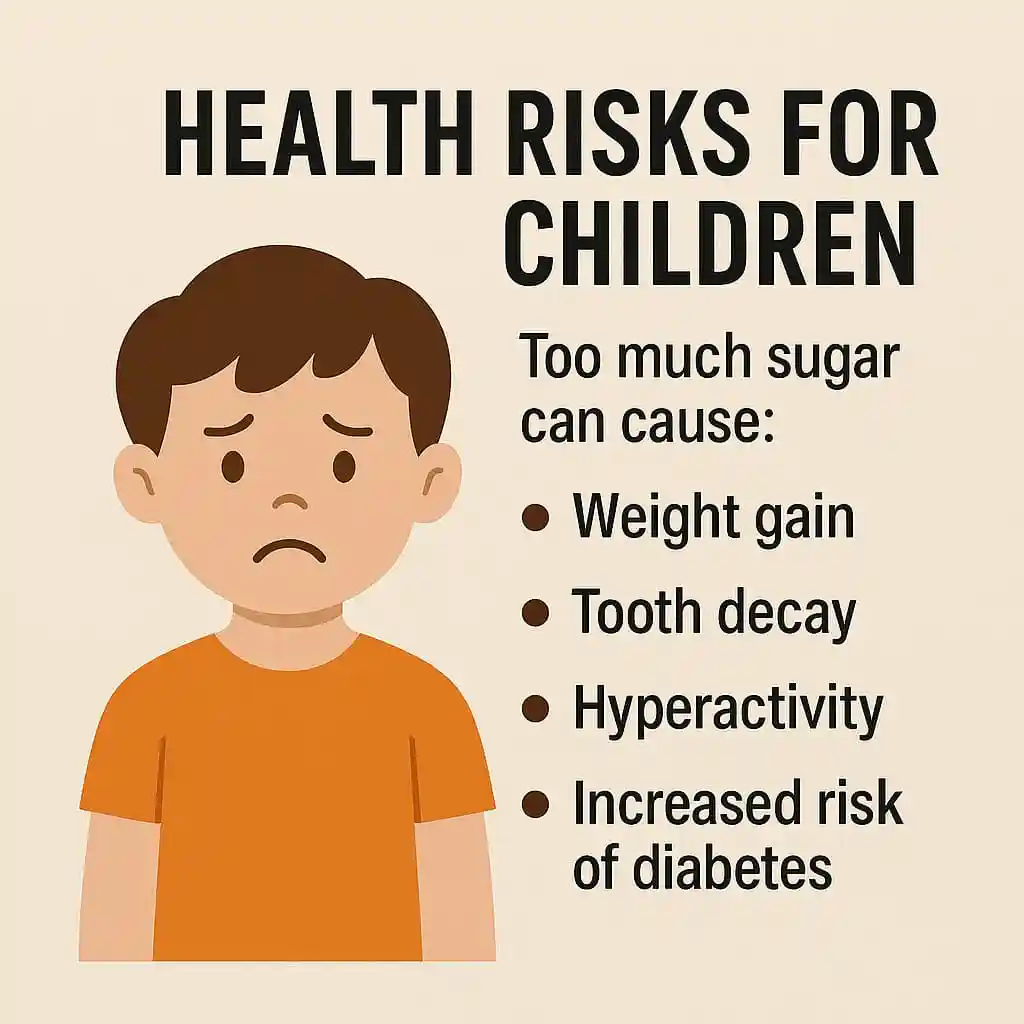
- High sugar → obesity and early insulin resistance.
- Additives → Hyperactivity, gut issues.
- Artificial flavors (like vanillin) and emulsifiers (E476, E322) may disrupts – Hormonal balance, Brain development in growing children
Long-Term Risks
| Problem | Linked to Chocolate Overconsumption |
| Obesity | ✅ Yes (excess sugar & fat) |
| Type 2 Diabetes | ✅ Yes |
| Hyperactivity / ADHD | ⚠️ Possibly (linked to sugar + additives) |
| Dental Issues | ✅ Yes |
| Early Puberty (girls) | ⚠️ Some evidence (hormonal disruption) |
Join WhatsApp Channel to Updated
What Parents Should Do
Limit Frequency:
Chocolate is fine once in a while, but not daily.
Choose Better Options:
- High-cocoa dark chocolate (70%+)
- Homemade cocoa treats with jaggery/coconut sugar.
- Avoid bars with hydrogenated fat, vanillin, or too much sugar.
If you eat chocolate 1-2 times a week, in small quantities, and clean label versions – you’re doing fine. the key is quality and portion control.
Read More: The bitter truth behind your sweet biscuits
Safer Alternatives in Market
1. The Whole Truth – Energy Bars
2. Aadvik Chocolate |Camel & goat Milk chocolate
3. Anuttama Dark Chocolate Bar A2 Milk
Q. Why chocolate is unhealthy?
High amounts of sugar and harmful chemicals like refined palm oil, emulsifiers, preservatives, and stabilizers make chocolate unhealthy.

I’m Mehebub Alam Chowdhury, an M.Sc. Organic Chemistry student, and my mission with Decodepure is to simplify complex chemical ingredients in everyday products. With my knowledge of chemicals, I aim to help you make safer, healthier choices by breaking down product labels in an easy-to-understand way.








Outstanding, it’s really helpful.