Hello, food lover, let’s talk about that trusty red bottle sitting in your fridge door. Tomato ketchup—it’s that one sauce we all reach for, whether we’re eating samosas, fries, burgers, pakoras or even parathas. It tastes great, it’s easily available, and most of us assume it’s made from real tomatoes. But have you ever checked the label? What if I told you that what you’re dipping your food into is more sugar, chemicals, and preservatives than actual tomatoes?
In this blog post, let’s decode the truth—what really goes into it, how it affects your health, and what safer, healthier alternatives you can choose for your family.
Table of Contents
🧪 Common Ingredients in Commercial Tomato Ketchup (India)
1. Tomato Paste or Concentrate (Not Fresh Tomatoes)
Tomatoes cooked down to sludge, stripped of fiber, are often imported. Lower nutrient value than fresh tomatoes. Heat processing can reduce antioxidants like lycopene (a cancer-fighting antioxidant) and vitamin C.
Kissan Fresh Tomato Ketchup contains only 28% tomato paste.
Ref: PubMed Central – An Update on the Health Effects of Tomato Lycopene
2. Sugar / High Fructose Corn Syrup (HFCS)
A sweetener that makes ketchup addictive. A cheap, ultra-processed sweetener made from cornstarch.
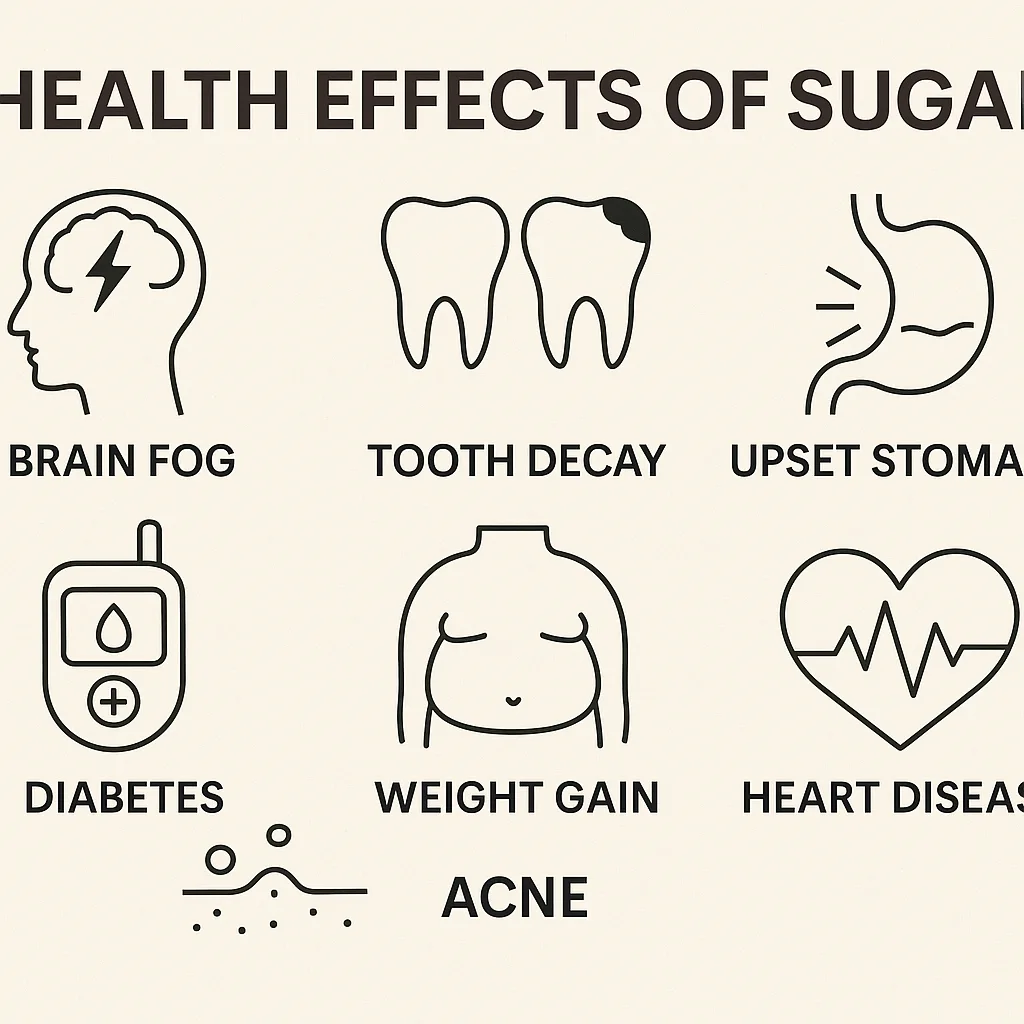
- Leads to obesity, fatty liver, and insulin resistance.
- Increases risk of type 2 diabetes and heart disease.
Most popular Kissan Fresh Tomato Ketchup contains a total of 29g of sugar per 100g. Sugar is used for taste and preservation. The most dangerous ingredient is used in high amounts.
According to the American Heart Association, “Too much sugar is not sweet for your health.”
Ref: 1. Harvard Health: The sweet danger of Sugar. 2. Who – Guideline, Sugar intake for adults and children, World Health Organization, 2015. 3. BMJ Study on sugar and health risks
3. Salt (Sodium)
Intake of excess amounts of sodium can cause high blood pressure, heart disease, and stroke-like problems. Bread is among the top sources of hidden sodium, even more than salty snacks in some cases.
Kissan Fresh Tomato Ketchup contains 948 mg of sodium per 100 gm.
Recommended daily sodium intake
- WHO (World Health Organization): Less than 2,000 mg (2 gm) of sodium per day.
- U.S. Guidelines (FDA/CDC): Less than 2,300 mg of sodium per day for adults. Ideal intake for those with hypertension, kidney disease, or heart problems: 1500 mg/day.
1 teaspoon of table salt ≈ 2300 mg of sodium
1 tablespoon of table salt ≈ 6,900 mg of sodium
Table salt is ≈ 40% sodium by weight; the rest is chloride.
4. Preservatives – E211 (Sodium Benzoate)
Preservatives help to keep ketchup fresh for a long time.
Sodium benzoate, when mixed with vitamin C (ascorbic acid), can form benzene—a well-known carcinogen, and tomato is rich in vitamin C. Even without that, studies suggest it might mess with kids behavior and gut health.
Ref: PubMed – Sodium benzoate risk
5. Acidity Regulator—E260 (Acetic Acid)
Overconsumption can cause throat irritation and damage enamel.
6. Thickeners—E415 (Xanthan Gum), E1422 (Modified Starch)
Thickeners are generally used to provide thickness and smoothness. May cause digestive issues like gas and bloating in sensitive individuals.
7. Artificial Flavoring & Color (INS 124 – Ponceau 4R)
Used to enhance color to look red and appealing.
- Linked to hyperactivity in children.
- Banned in some countries like Norway and the US.
Sugar and Sodium Calculation
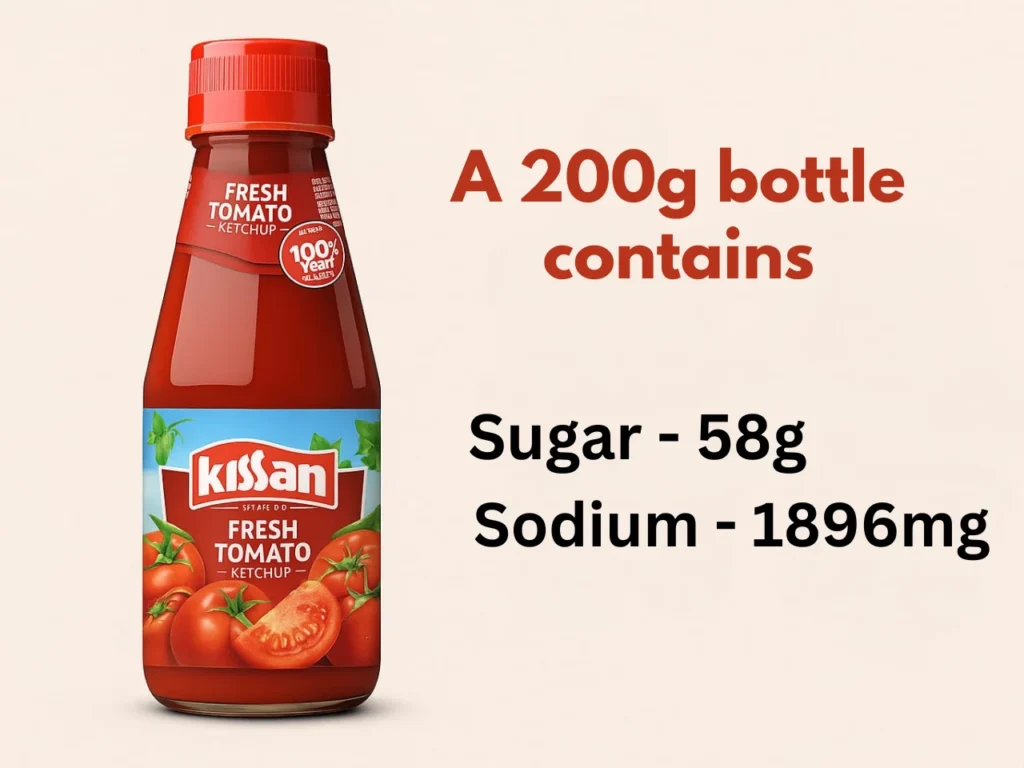
The most popular Kissan Fresh Tomato Ketchup contains a total of 29g of sugar and 948mg of sodium per 100g.
A 200g bottle contain:
29 × 2 = 58g of sugar (≈ 15 teaspoons of sugar). Too much sugar.
948 × 2 = 1896mg of sodium – that’s nearly 95% of the recommended daily sodium intake for an adult!
Is this article helpful?
Popular Ketchup Brands in India Use:
- Nestlé Maggi Tomato Ketchup
- Kissan Ketchup
- Heinz Tomato Ketchup
- Del Monte Tomato Ketchup
All contain sugar, synthetic vinegar, preservatives, and additives.
📊 Shocking Data
| Brand | Sugar per 100g | Sodium per 100g | Preservatives Present |
|---|---|---|---|
| Kissan | 29g | ~948mg | Sodium Benzoate |
| Maggi | 18.7g | ~553mg | Acetic Acid, E211 |
| Heinz (India) | 22g | ~815mg | E260, E211 |
Note: Numbers can vary slightly depending on the specific product.
Overview
- Not real tomatoes—just concentrate and chemicals.
- If real, then the amount is too low.
- Loaded with sugar & salt = obesity + hypertension.
- Harmful preservatives + artificial colors.
- Most Dangerous Preservatives—E211 (Sodium Benzoate)
- Especially dangerous for children.
Read Labels like a pro
Order—Ingredients are arranged by volume of concentration (the top 3/4 are main components, used in high volume).
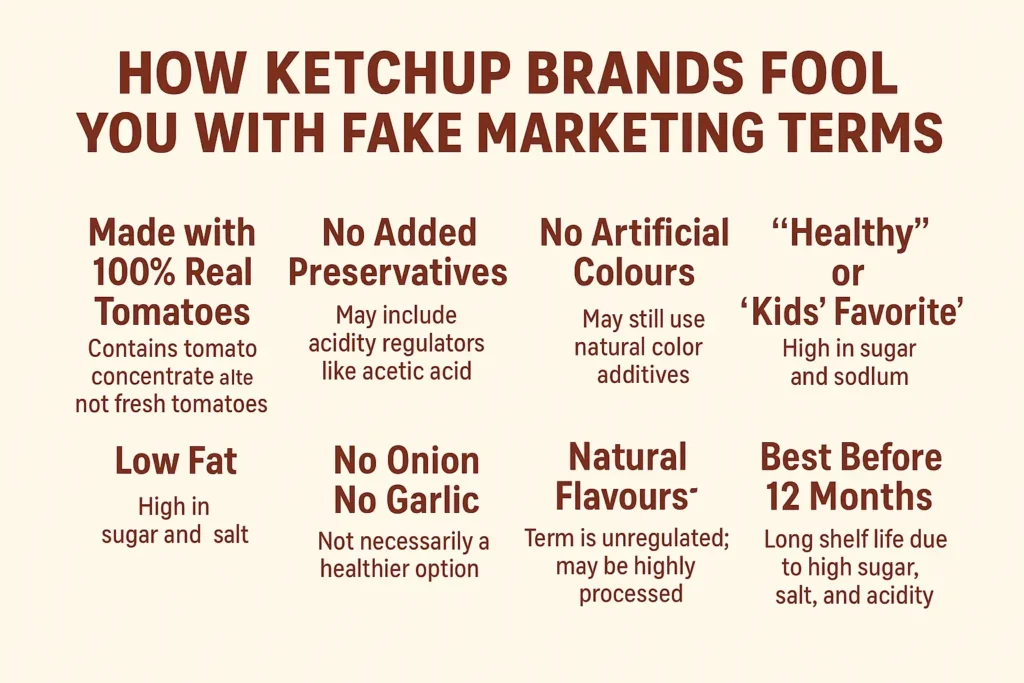
Don’t use foolish marketing terms like “Made with 100% Real Tomatoes,” “No Added Preservatives,” “No Artificial Colors,” “Low Fat,” “No Onion, No Garlic,” “Healthy,” “Kids’ Favorite,” “Natural Flavors,” “Best Before 12 Months,” etc. Just because all levels are allowed to write doesn’t mean that what is written is true.
Tips While Buying
- Always read the ingredients list before buying. Don’t fall for flashy front claims.
- Check ingredients—avoid E-numbers (E211, E124) and added sugar.
- Go for glass bottles over plastic (plastic may leach BPA).
- Choose organic or preservative-free alternatives.
- Look for brands with short and clean ingredient lists.
🧪 Examples of Common E Numbers (Found in Ketchup and Packaged Foods)
| E Number | Name | Purpose | Health Concern |
|---|---|---|---|
| E211 | Sodium Benzoate | Preservative | May form carcinogenic benzene with vitamin C |
| E260 | Acetic Acid | Acidity regulator | May cause acidity and enamel damage |
| E330 | Citric Acid | Preservative/flavor | Generally safe but overuse may erode enamel |
| E1422 | Modified Starch | Thickener | May cause bloating and digestion issues |
| E124 | Ponceau 4R (red dye) | Artificial color | Linked to hyperactivity, banned in some countries |
| E415 | Xanthan Gum | Thickener/stabilizer | Can cause gas or allergies in sensitive people |
Conclusion
At the end of the day, ketchup won’t kill you overnight. But when it’s a daily habit? Those teaspoons of sugar and salt add up. Your body is whispering—maybe it’s time to listen.
I believe that buying anything shouldn’t be a guessing game. It’s time we started reading labels and exploring healthier alternatives.
Q. Is tomato ketchup actually made from real tomatoes?
Not always! Most brands use tomato concentrate or paste, not fresh tomatoes — and mix it with sugar, salt, and preservatives.
Q. Why is ketchup so sweet?
Because it’s loaded with sugar. One tablespoon can have 1–2 teaspoons of sugar — almost like candy!
Q. Is tomato ketchup healthy or unhealthy?
Most commercial tomato ketchups are unhealthy if eaten daily because they contain more sugar, salt, and preservatives than real tomatoes. Small occasional use is fine, but not as a regular food.
Q. Is tomato ketchup good for children?
No. Ketchup is loaded with sugar, salt, and additives, which can lead to obesity, hyperactivity, and dental problems in children.
Q. Can eating too much ketchup cause health problems?
Yes. Regular consumption may increase the risk of diabetes, obesity, high blood pressure, and heart disease due to sugar and sodium overload.
Q. Does tomato ketchup have preservatives?
Yes, most brands use Sodium Benzoate (INS 211), which can form harmful benzene when combined with Vitamin C.
Q. Which preservative is used in ketchup?
The common preservative is Sodium Benzoate (INS 211). Some brands also use acidity regulators and stabilizers.

I’m Mehebub Alam Chowdhury, an M.Sc. Organic Chemistry student, and my mission with Decodepure is to simplify complex chemical ingredients in everyday products. With my knowledge of chemicals, I aim to help you make safer, healthier choices by breaking down product labels in an easy-to-understand way.




Thank you for sharing these types of valuable content. Waiting for next.
Nice information, love ir