Tomato ketchup—it’s that one sauce we all reach for, whether we’re eating samosas, fries, burgers, pakoras, or even parathas. It tastes great, it’s easily available, and most of us assume it’s made from real tomatoes.
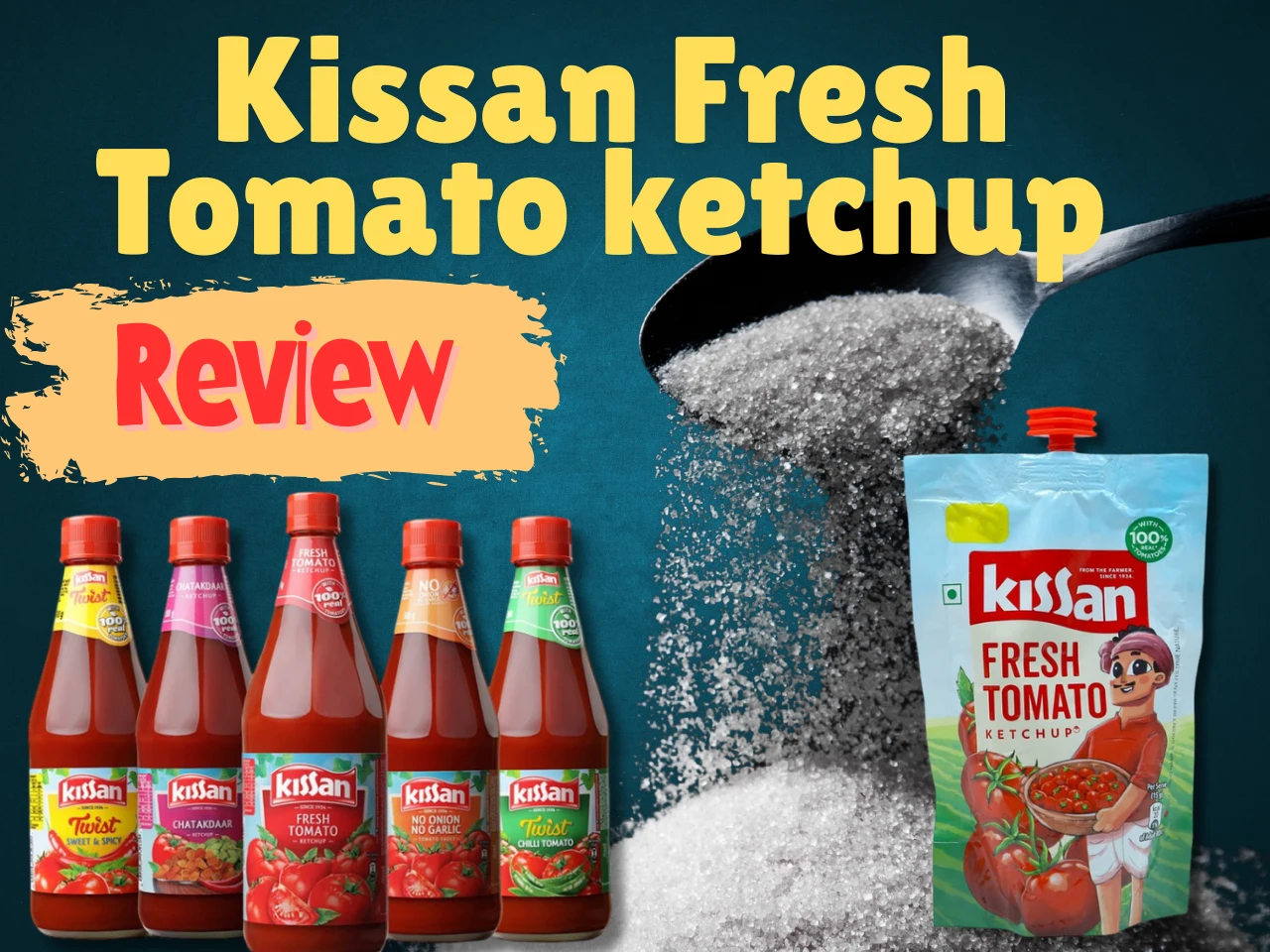
“Kissan Fresh Tomato Ketchup” is one of the most popular ketchup brands in India. The label proudly says, “With 100% Real Tomatoes,” but the real question is—how much “real tomato” is actually in your bottle, and what else is hiding in it? Let’s decode the ingredients one by one.
Table of Contents
Ingredients Analysis
1. Water
Water is used to dilute the tomato ketchup. Here, water is the first ingredient (meaning it’s the highest by quantity).
2. Tomato Paste (28%)
On the front of the pack, it claims “100% real tomato,” and on the back of the pack, in the ingredients list, there is only 28% tomato paste—confused, right?
This is the concentrated form of tomatoes. Only 28% tomato paste means the rest of the bottle is mostly water, sugar, and additives.
3. Sugar
- Nearly 32% of this ketchup is sugar (4.8 g per 15 g serving).
- That’s about 1 teaspoon of sugar in just 1 tablespoon of ketchup!
- High sugar intake is linked to obesity, type 2 diabetes, and heart disease (WHO Sugar Guidelines).
Sugar is used for taste and preservation. The most dangerous ingredient is used in high amounts.
4. Salt (Sodium – 136 mg per serving)
Adds flavor and helps preserve the product. Just 3 tablespoons of this ketchup can give you 18% of your daily sodium limit.
5. Acidity Regulator – 260 (Acetic Acid)
This is basically vinegar. Safe in small amounts, it helps control acidity.
6. Stabilizers – 1422 (Acetylated Distarch Adipate) & 415 (Xanthan Gum)
1422: Used to thicken and improve texture. Considered safe, but ultra-processed.
415: Xanthan gum, a thickener and stabilizer. Generally safe, but can cause bloating in sensitive people (PubChem).
7. Preservative – 211 (Sodium Benzoate)
Sodium benzoate, when combined with vitamin C, can form benzene, a known carcinogen (FDA Safety Alert). Also linked to hyperactivity in children.
Generally used to prevent bacterial and fungal growth.
8. Onion Powder & Garlic Powder
Natural flavoring agents.
9. Spices & Condiments
Add taste and aroma. Usually safe, but the exact spices aren’t disclosed.
Sugar Calculation
Sugar: 4.8 g (≈1 tsp)
Serving size: 15 g, Sugar per serving: 4.8 g
Sugar per gram = 4.8 ÷ 15 g
= 0.32 g sugar per g ketchup.
Find sugar in a 500 g bottle.
0.32 g sugar/g × 500 g = 160 g sugar 😱
1 teaspoon ≈ 5 g of sugar.
160 ÷ 5 ≈ 32 teaspoons of sugar in the whole bottle.
Compared to Soft Drinks
500 ml Campa Cola bottle – 10.5 × 5 = 52.5 gm (≈ 13.12 teaspoons of sugar).
A standard 330 ml can of cola ≈ 35 g of sugar.
This ketchup bottle is worth 4.5 cans of cola in sugar.
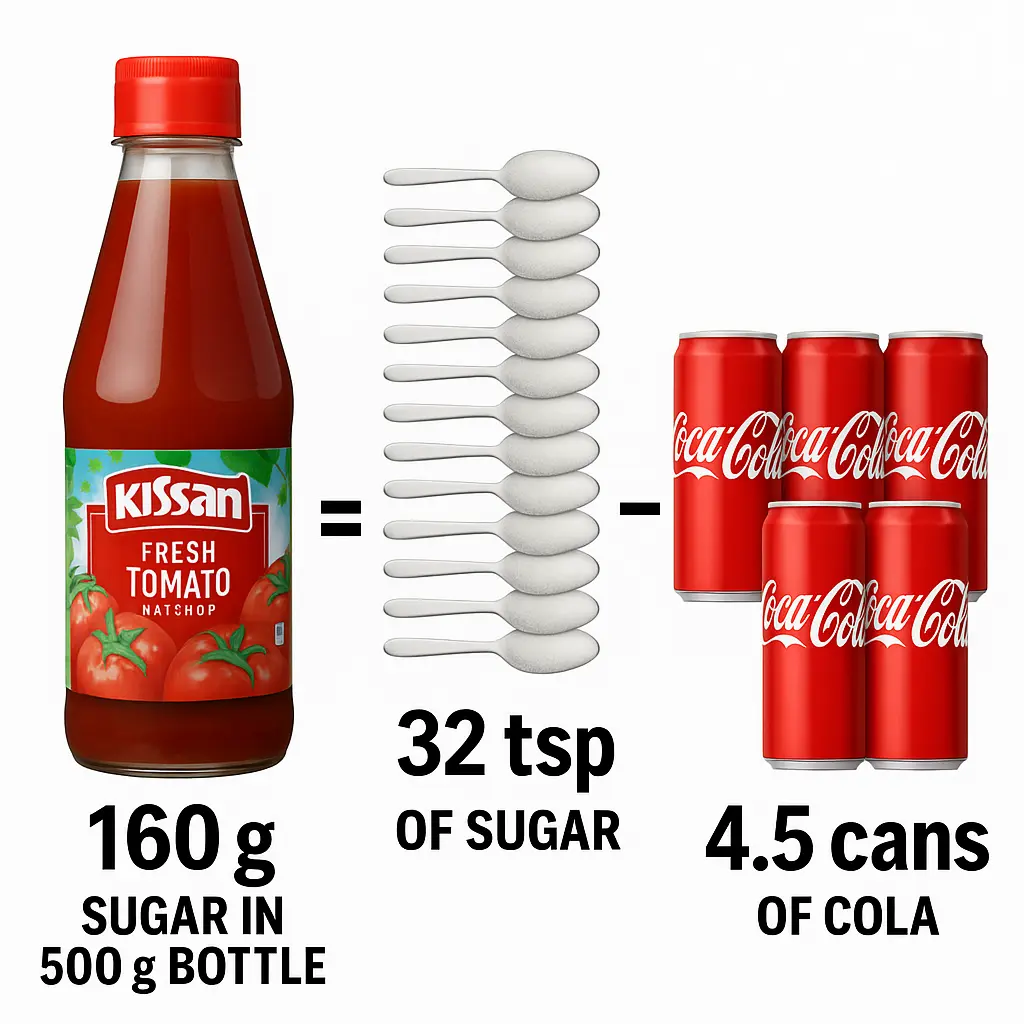
According to the American Heart Association, “Too much sugar is not sweet for your health.”
Is It Healthy or Not?
Cons:
- Fake claims, in the front, mention “100% real tomatoes,” butactually contain only 28% tomato paste.
- High sugar content, ≈ 32 teaspoons of sugar in a 500 g bottle—totally shocking.
- A 500g ketchup bottle = 4.5 cans of cola worth of sugar.
- Contains sodium benzoate (potential benzene risk with vitamin C).
- High sodium
Is this article helpful?
Final Verdict
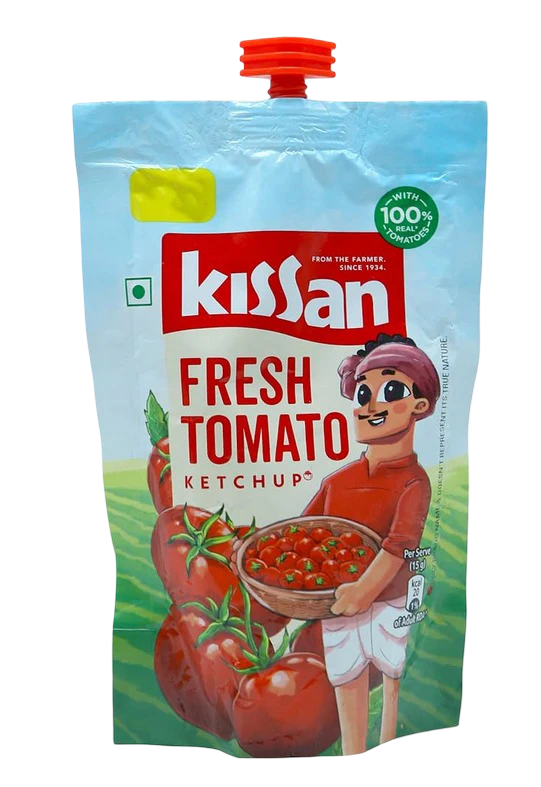
After considering everything above, it can be concluded that “Kissan Fresh Tomato Ketchup” is not as “fresh” or “healthy” as it looks. The excess amount of sugar makes it unhealthy. It’s fine once in a while, but if you’re giving this to your kids regularly, you’re basically feeding them liquid sugar with chemicals.
- Make homemade ketchup with fresh tomatoes, vinegar, jaggery/honey, and no preservatives.
- Choose brands with >75% tomato content and no added preservatives.

I’m Mehebub Alam Chowdhury, an M.Sc. Organic Chemistry student, and my mission with Decodepure is to simplify complex chemical ingredients in everyday products. With my knowledge of chemicals, I aim to help you make safer, healthier choices by breaking down product labels in an easy-to-understand way.