Soap ingredients decoding, this is the main point to discuss in this page.
Soap is something we all use every day. When choosing soap, most of us pay more attention to the familiar name, trendy branding, fragrance, packaging, etc. Every soap contains chemicals. The toxic chemicals are harmful for health and cause skin irritation like eczema and allergies.
So, before choosing a soap, you need to check what chemicals are used. If we have knowledge about all those soap ingredients, it will be much easier to choose a good shampoo for your skin type.
Table of Contents
Why we use soap
Skin absorbs 60% of what we apply; it helps to break down the dirt that accumulates on our bodies after everyday hard work, it makes us feel fresh, and it helps to keep our skin healthy.
Ingredients Matter
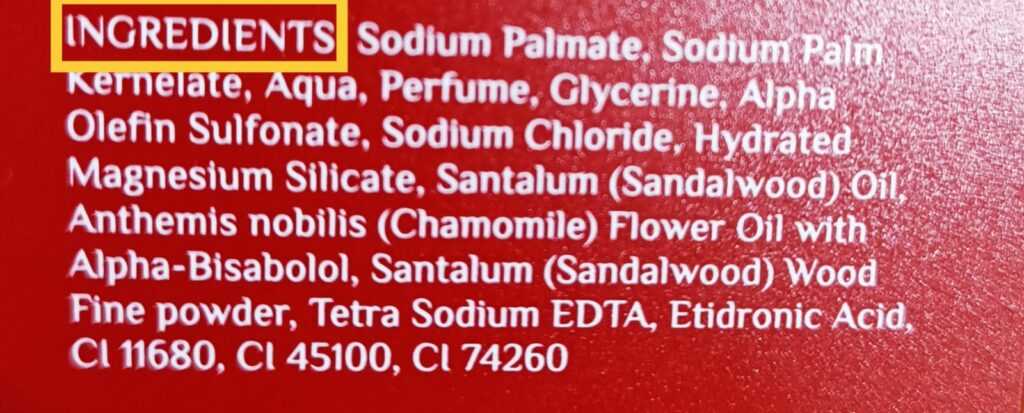
Not all soap contains harmful chemicals (like vegetable-based soap or natural soap, which naturally contains fats and oils from animals and trees). Some commercial soaps contain harmful ingredients.
Only the ingredient list will help us to distinguish between which is good and bad. Otherwise, there are no options.
So, look at the harmful soap ingredients list here.
Harmfull soap ingredients list
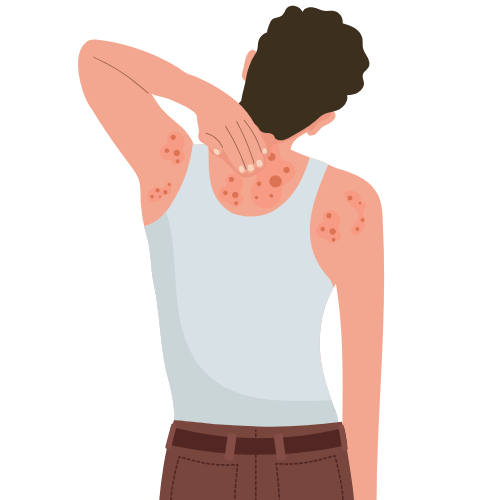
- Sodium Lauryl sulfate (SLS)- use to create foam, It can cause dryness or irritation due to it strips natural oil from scalp.
- Parabens- (Methylparaben, propylparaben), use to extend soap expiry date. It can cause breast cancer.
- Triclosan– use as a role antibacterial agent. Disrupts hormones disorder.
- Artificial Fragrances– use to add scent Can cause eczema.
- Formaldehyde- (DMDM hydration), use as a preservative Carcinogenic.
- Artificial dyes- use to give soap an attractive color It can cause allergic
- Microbeads – Environmental toxic.
90% of the soaps we use at home are made with these harmful chemicals. If you don’t believe me, check it out.
Beneficial soap ingredients list
1.Olive Oil – best for dry or sensitive skin.
Rich of antioxidants and it try to deeply moisture.
2. Shea Butter – best for dry or sensitive skin.
Deeply nourishing, rich in fatty acid, repairs dry skin.
Good for antibacterial & antifungal, deeply cleansing.
3. Coconut Oil – Best for oily skin.

4. Cocoa Butter – best for dry or aging skin.
Rich in fatty acids, adds firmness in soap.
5. Oatmeal – Best for sensitive, dry skin
Soothes eczema or rosacea.
6. Neem – All type skin
Ayurvedic powerhouse, act as Anti flammatory
7. Tea tree oil – All type skin
Act as antibacterial, fights against acne causing bacteria
8. Activated Charcoal – best for oily or acne prone skin
Absorbs excess oil, Detoxifies
9. Aloe vera – best for sun damage or acne prone skin
Act as cooling agent, soothes and heals sunburns, rashes and irritation.
10.Glycerin – try to looks moisturiser …………etc
there are many ingredients, These are the top ingredients that you should notice before buying.
Use of pH Paper
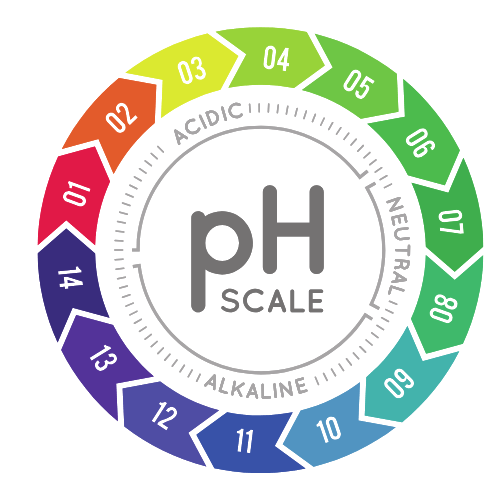
The common pH range is slightly acidic (4.5 to 5.5) for healthy skin. This acidic layer protects our skin against pollution, bacteria and moisture loss.
If we use soap like alkaline (pH > 7), it can strip natural oil from the skin and cause dryness or skin problems.
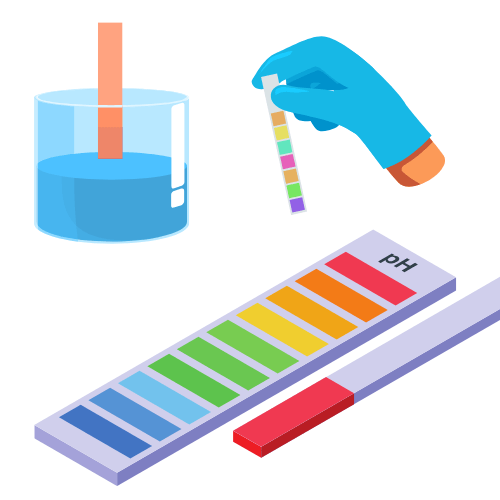
The colour of the paper is usually yellow. If the paper turns red when dipped in a solution, then the solution is acidic, and if its colour is blue or green or deep blue, then it is alkaline. Deep blue colour indicates high alkalinity.
I have done many experiments with soap using pH paper myself, and the results are very disappointing.
The color of the pH paper was green or blue for all the soaps we use every day, except one or two.
Read the pH level :-
(pH 4.5 – 6) ~ Ideal for Face soap ……………….pH paper like Yellow.
(pH 5 – 6 )~ it’s ok for body soap……………………pH paper like light Yellow.
There are some simple steps to do the experiments :- Need to buy a pH paper from market
- Wet the soap and make it a little lather.
- Then dip the pH paper into the lather.
- Compare the color, if it remains yellow or light red – it’s good for skin, and if it turns into green or blue or deep blue – try to avoid it
Read soap Labels like a pro
- Order – Ingredients are arranged by volume of concentration (top 5 are main components, used by in high volume)
- Don’t make fool terms like “100% natural” or “Eco-friendly packaging ” or “Antibacterial”. Just because all levels are allowed to write doesn’t mean that, what is written is true
try to compare two soap by ingredients ( good vs bad )
Make decision ( Buy or Skip)
Without thinking about anything, first check what soap ingredients are there. If you find any harmful ingredients… just skip it.
Pro tips
Nothing pro like it. Check ingredients & make a decision. (Try to avoid sodium lauryl sulphate and fragrance and try to contain olive oil, coconut oil, shea butter, etc.)
Is this article helpful?
Conclusion
spend 30 seconds to read the soap ingredients – your skin will thank you.
Next time, before buying any soap, be sure to read the soap ingredients list and then make a decision. Because your skin deserves better than hidden toxins.
pH paper also can help; I do experiments on both solid & liquid soap, and from liquid soap, I got better results.
I think now it’s very easy for you to choose a good soap. If I miss any ingredients ? let me know in the comments.
Read more: Choose the Right Shampoo: Guide to Decoding Shampoo Ingredients
Join WhatsApp Channel to Updated
Safe alternative in Market
Budget Friendly-
1. Naija Organic Sandalwood & Turmeric Bath Soap | ECOCERT Certified
2. Kaprica Natural Handcrafted Cold Pressed Coconut Oil Soap
3. Just Herbs Vitamin C Brightening Body Wash
4. Mother Sparsh Simply Unscented Baby Wash With Natural Oatmeal ( best for Baby)
5. Rustic Art Rosemary Peppermint Body Wash | Organic Castile Soap ( for Acne prone skin)
6. SHESHA AYURVEDA MUD SOAP with NALPAMARADI Skin Brightening Soap Bar
7. Ancient Living Tulasi Soap
8. WOW Skin Science Moisturising Soaps with Ceramide | Vitamin C, Green Tea, Aqua | Paraben & sulfate free | For All Skin Types
Expensive-
1. Dr. Bronner’s Pure-Castile Soap ( All skin types )
Buy Link – Click Here
2. Nubian Heritage Soaps ( Dry , acne-prone skin )
Buy Link – Click Here
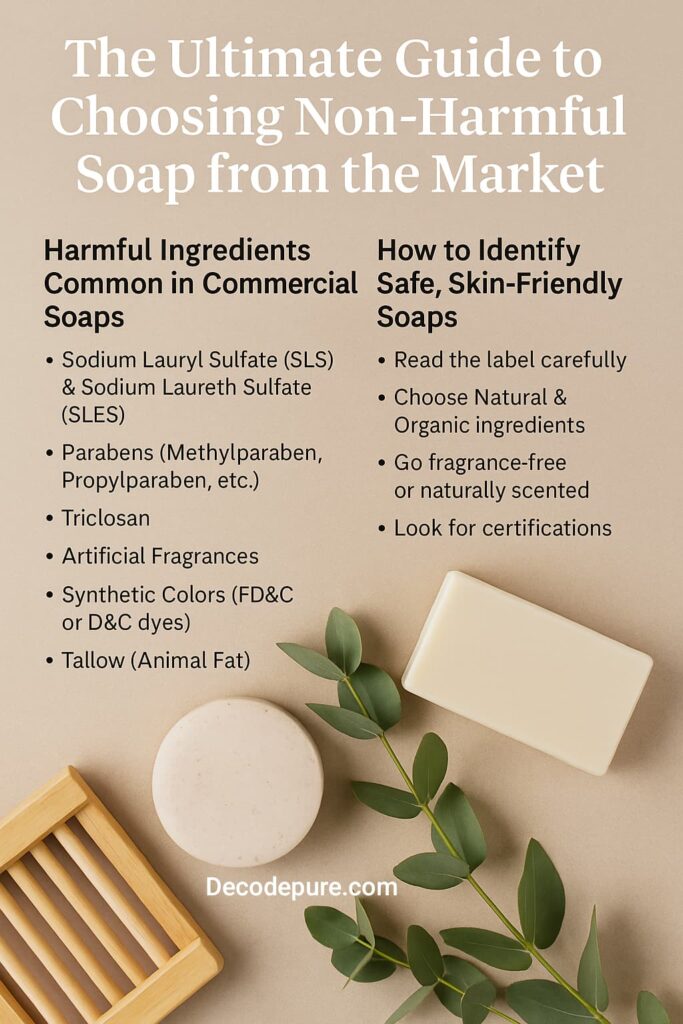
Q. What harmful chemicals should I avoid?
Watch out for synthetic detergents (like sulfates), parabens, synthetic fragrances, triclosan, and preservatives—they can irritate or dry out skin

I’m Mehebub Alam Chowdhury, an M.Sc. Organic Chemistry student, and my mission with Decodepure is to simplify complex chemical ingredients in everyday products. With my knowledge of chemicals, I aim to help you make safer, healthier choices by breaking down product labels in an easy-to-understand way.