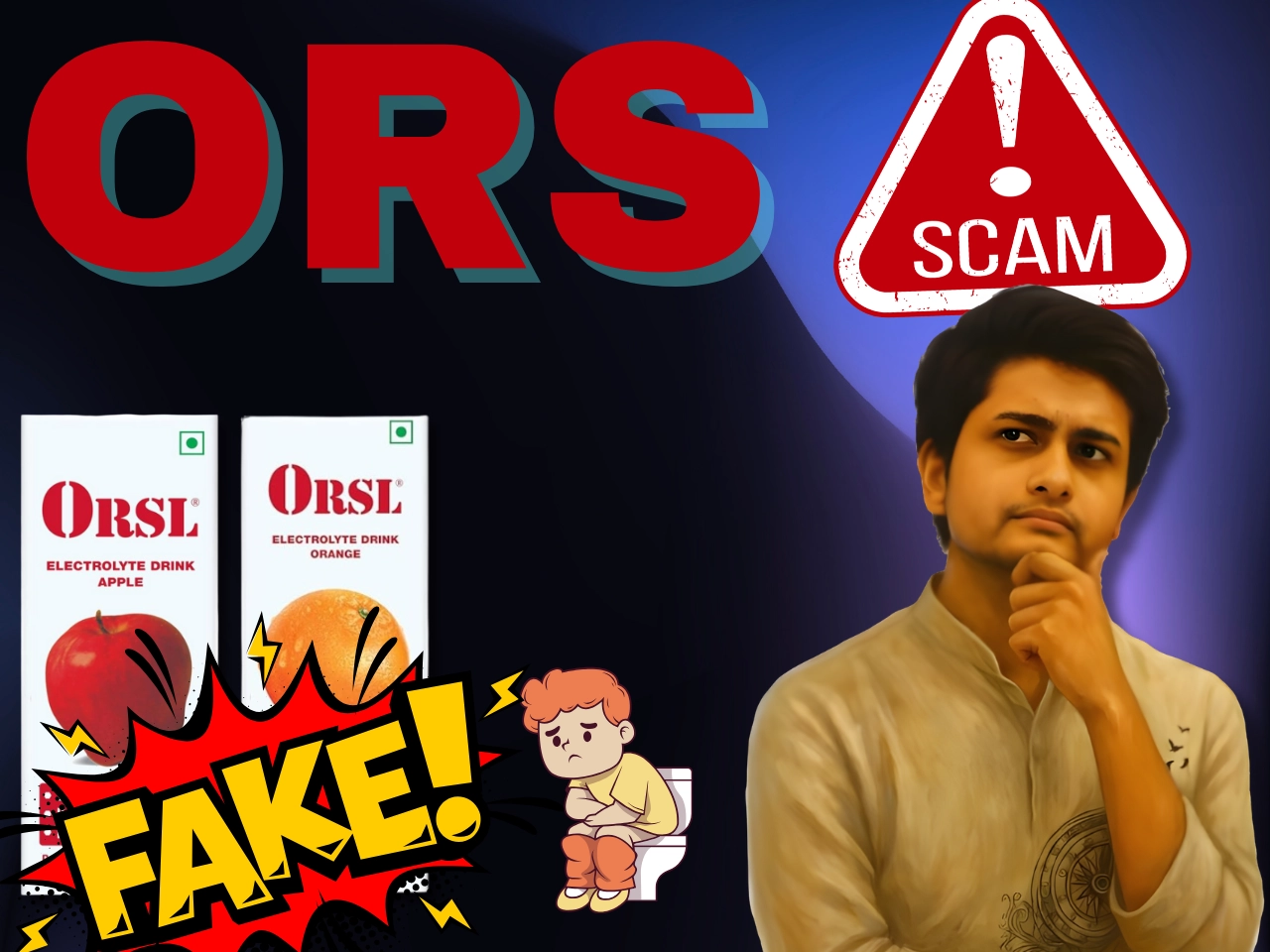
When we feel weak, dehydrated, or are recovering from fever or diarrhea, we take ORS (Oral Rehydration Solution) to keep our body hydrated.
But there’s a problem: many fake ORS (Like ORSL, ORS Fit, ORS Plus) are available in the market, and they are being recommended by some pharmacists and even doctors.
It looks like an advanced medical drink. But here’s the harsh reality,
Most of these are not ORS but sweetened electrolyte drinks disguised as medicine.
Table of Contents
What is Real ORS?
Real ORS (Oral Rehydration Solution) is a WHO-formula-based mix of just 6 ingredients in very specific proportions:
| Ingredient | WHO Recommended Amount (per 1L water) |
|---|---|
| Glucose | 13.5g |
| Sodium Chloride | 2.6g |
| Potassium Chloride | 1.5g |
| Trisodium Citrate | 2.9g |
| Water | 1L |
No artificial flavor, no added sugar, no vitamins, no preservatives.
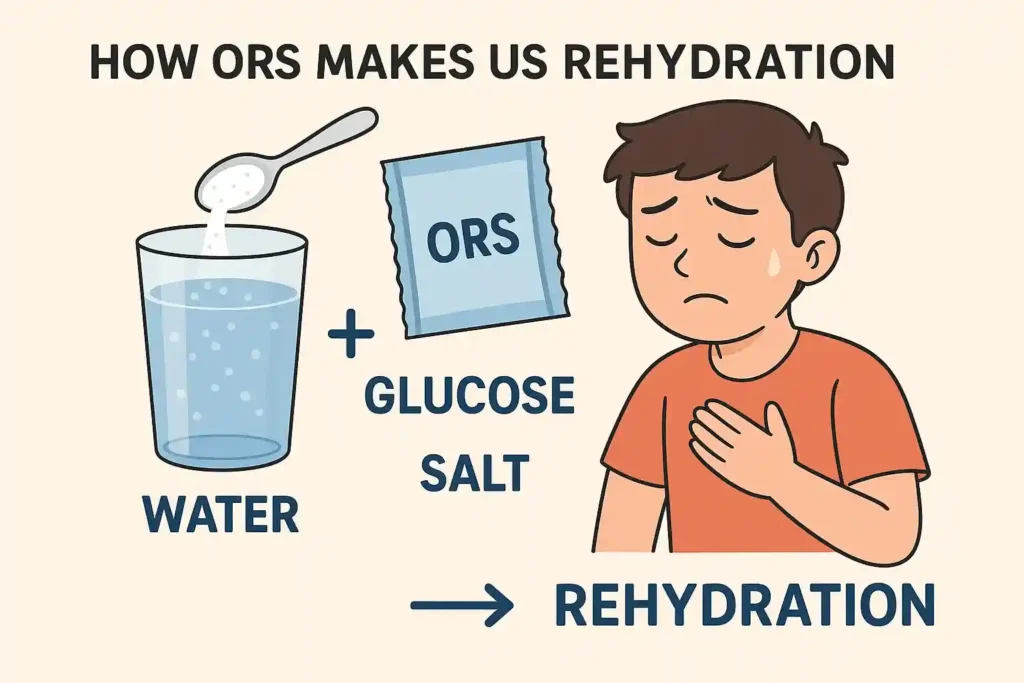
The main function of real ORS is to quickly and effectively rehydrate the body by replacing lost fluids and essential electrolytes (sodium, potassium, chloride, and citrate) during dehydration caused by diarrhea, vomiting, or excessive sweating.
Health risks of fake ORS
- High sugar content can increase water loss in the intestines (osmotic diarrhea), making dehydration worse.
- It doesn’t help the body absorb water properly.
- May have too little sodium and potassium
- Can lead to electrolyte imbalance, causing weakness, dizziness, etc.
- High sugar can worsen diarrhea, bloating, and gas.
- Increase blood sugar, especially for diabetics.
How to Identify Fake ORS vs Real ORS
| Criteria | Real ORS | Fake ORS (e.g. ORSL) |
|---|---|---|
| Ingredients | Only salts + glucose | Added sugar, flavours, vitamins |
| Sugar Content | No added sugar | Often high in fructose/glucose |
| Taste | Bland or slightly salty | Tasty and fruity |
| Sold as | Powder sachets | Ready-to-drink bottles |
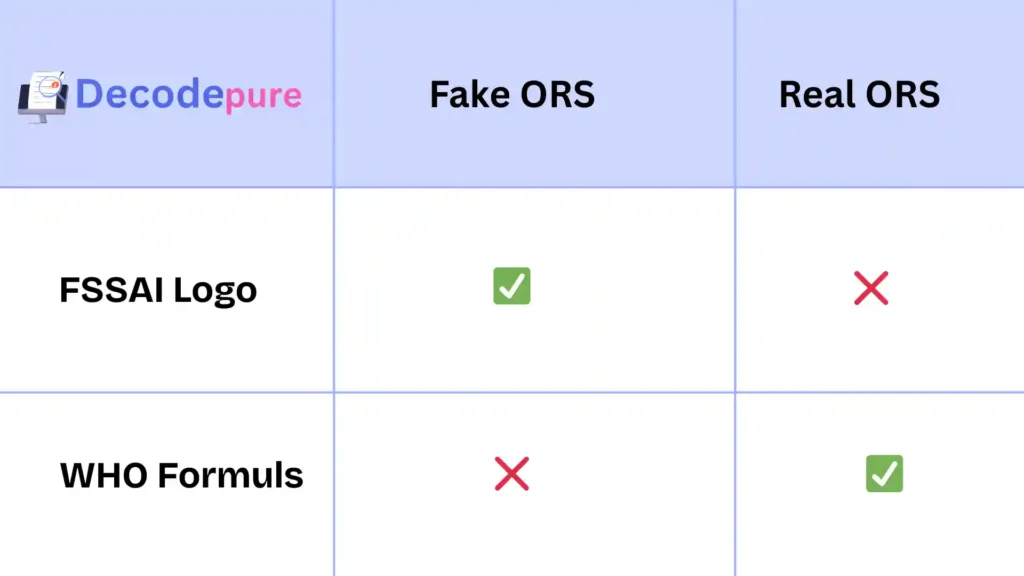
| WHO Formula? | Yes | No |
| Price | Very cheap (₹10–₹20/sachet) | Expensive (₹35–₹60/bottle) |
Sugar Content Comparison: Fake vs Real ORS
| Type | Approx. Sugar per Serving (200 ml) | In Teaspoons | Remarks |
|---|---|---|---|
| Fake ORS (e.g. ORSL, ORS Fit) | ~20g sugar | 4–5 tsp | Often a mix of glucose + fructose — too high |
| Real ORS (WHO Formula) | ~3.5g sugar | ~1 tsp | Controlled glucose (13.5g/L or ~3.5g/250ml) |
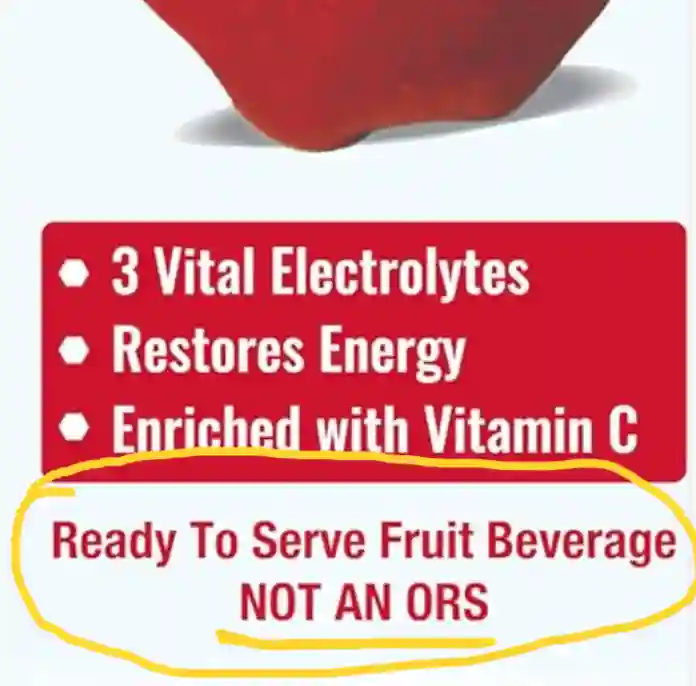
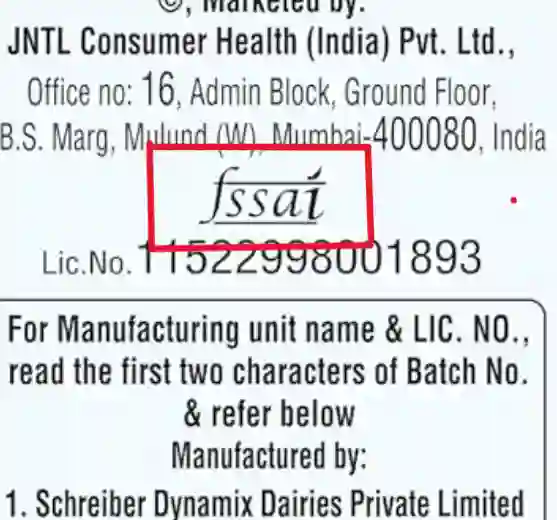
ORSL has written on their package that it is not a ORS, yet it is being sold as one in various pharmacy stores as ORS.
Importnant Point
- The price of real ORS in India is government-regulated; it usually costs ₹16–22 per sachet (for 1 liter of solution).
- Fake ORS price has no limit—generally expensive.
- Real ORS: WHO formula—regulated as medicine (drugs).
- Fake ORS: Food regulated by FSSAI, treated as a nutritional product, not a medical therapy.
- Real ORS: tastes slightly salty.
- Fake ORS: tasty and fruity.
- REAL ORS: no added sugar.
- Fake ORS: added sugar (4-5 teaspoons of sugar).
Why It’s a Problem Even If Sold in Pharmacies?
- These are branded as “ORS” but nowhere meet the WHO ORS definition.
- It is marketed like medicines but behaves like flavored electrolyte drinks.
- Worse, consumers believe they’re getting medical rehydration.
What Should You Do Instead?
- At first, read the ingredient list.
- Buy WHO-recommended ORS ✅
- Regulated by FSSAI, not real ORS—try to avoid ❌
- Make ORS at home – Safe.
Just because a product is in a pharmacy or has a “medical sounding” name doesn’t mean it’s safe.
ORS is a life-saving formula, not a fruit drink with vitamins.
Let’s stop falling into this sweet-tasting health trap.
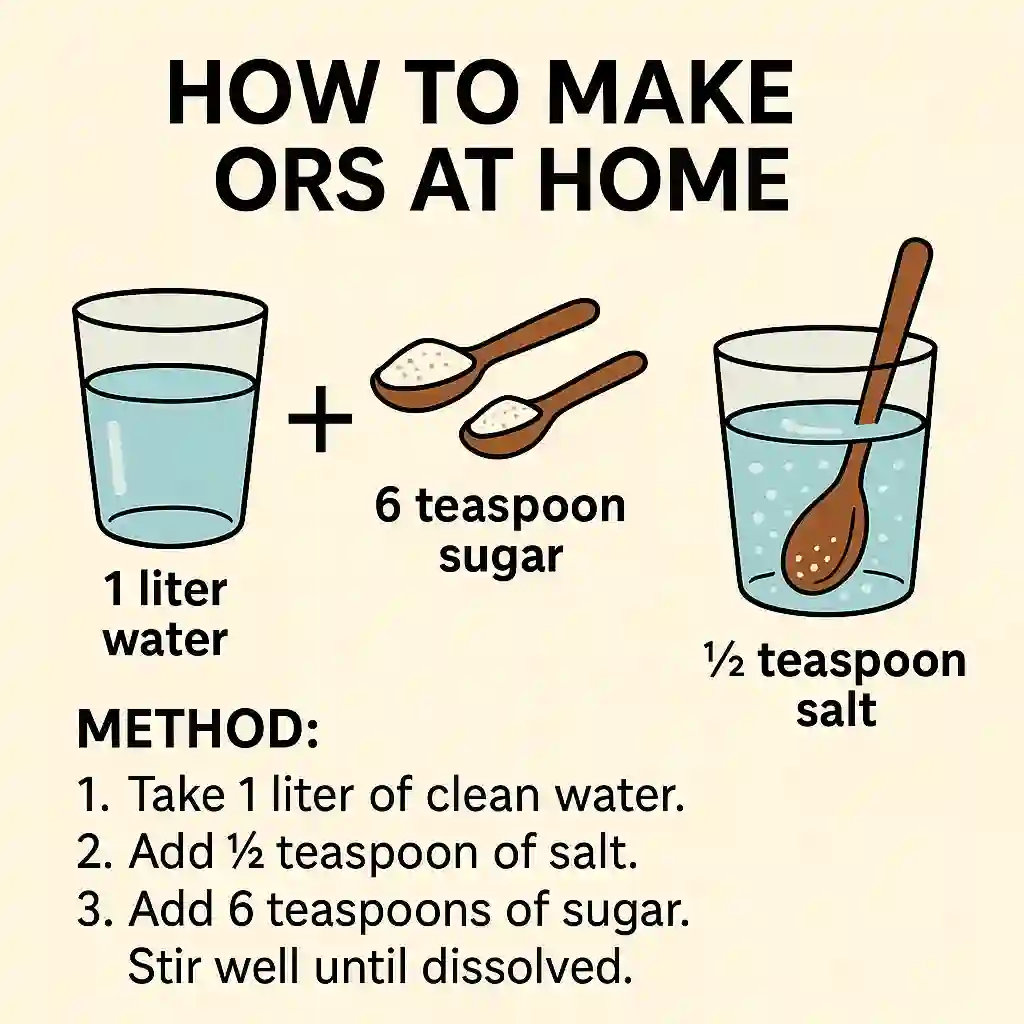
How to make ORS at home (recommended by WHO)
- Take 1 liter of clean water.
- Add 0.5 teaspoons of salt.
- Add 6 teaspoons of sugar.
- Stir well and drink slowly.
Ingredients matter
As a common man, we have no alternative way to verify which product is harmful and which is not. Only the ingredient list can help us in this regard. There is no other way.
So, before buying anything, be sure to check the ingredients list.
Final word
Did you know diarrhea is one of the world’s deadliest killers of children?
In India and across the globe, diarrhea and dehydration claim more lives than many realize. Every year:
- 443,832 children under 5 years old die from diarrhea.
- An additional 50,851 children aged 5 to 9 also lose their lives.
- There are 1.7 billion cases of childhood diarrheal disease every single year (Reference: WHO).
That’s like losing a small city of children every year.
When a child has diarrhea, they don’t just lose water—they lose vital salts that keep their heart, brain, and organs working.
In these critical situations, if we give fake ORS drinks, it can worsen dehydration, increase stool loss, and put the child at even greater risk of death.
❤️ This is not just about buying a packet or bottle—it’s about choosing life over danger.
Together, we can stop these preventable tragedies. Share this with every parent you care about.
Is this article helpful?
Q. What is real ORS and why is it important?
Real ORS, or Oral Rehydration Solution, is a fluid replacement therapy used to prevent and treat dehydration, especially due to diarrhea or vomiting. It is important because it helps maintain electrolyte balance and hydration in the body, which is crucial for overall health and recovery.
Q. How is fake ORS different from real ORS?
Fake ORS (like many branded electrolyte drinks) often fall under the FSSAI food category, not the WHO drug category. They contain extra sugar, artificial flavors, colors, and sometimes even caffeine or vitamins — which are not recommended during dehydration. These can worsen health, especially in kids.
Q. Can adults use real ORS too?
Absolutely! Real ORS works for people of all ages, especially during diarrhea, vomiting, or heatstroke. It rehydrates quickly and safely.
Q. What makes an ORS “fake”?
ORS products that don’t follow the WHO formula — like ORS-L, ORS Plus, ORS Fit — are considered fake. They usually have too much sugar, missing essential salts, and added flavors or preservatives, which make them unsafe during dehydration.
Q. Is it harmful to drink fake ORS?
Yes. Fake ORS can worsen diarrhea, dehydrate the body more, and cause electrolyte imbalance, especially in children. Some reported cases even led to ICU admissions due to brain swelling.

I’m Mehebub Alam Chowdhury, an M.Sc. Organic Chemistry student, and my mission with Decodepure is to simplify complex chemical ingredients in everyday products. With my knowledge of chemicals, I aim to help you make safer, healthier choices by breaking down product labels in an easy-to-understand way.