Recent news: Reliance’s ₹8,000 crore investment in Campa Cola has reignited interest in this iconic Indian soft drink. With plans to challenge Coca-Cola and Pepsi, Campa Cola is making a strong comeback in the Indian market. (The Times of India)
Investing so much money means its popularity will increase even more, it will be available everywhere, and people will eat it more.
In this article, we break down every ingredient, expose hidden chemicals, and decode the nutritional facts—so you know exactly what you’re drinking.
Table of Contents
Ingredients of Campa Cola (As per label)
- Carbonated Water
- Sugar
- Acidity Regulators (338, 331(iii))
- Caffeine (9.4 mg/100ml)
- Color (150d)
- Preservative (211)
- Natural Flavouring Substances
Ingredient Analysis
1. Carbonated Water
Here applied Henry’s laws. Water that has been mixed with carbon dioxide gas under high pressure. When the bottle opens, the pressure drops and the dissolved carbon dioxide comes out as bubbles, which is why you see fizz and hear a hissing sound.
Plain carbonated water hydrates just like normal water. But when combined with acids like phosphoric acid or citric acid, this combination can increase enamel erosion, bloating, and gas-like problems.
- Carbonated water used to add fizz.
- Generally, not harmful by itself but can lead to bloating or acidity in sensitive people.
2. Sugar (10.5g/100ml)
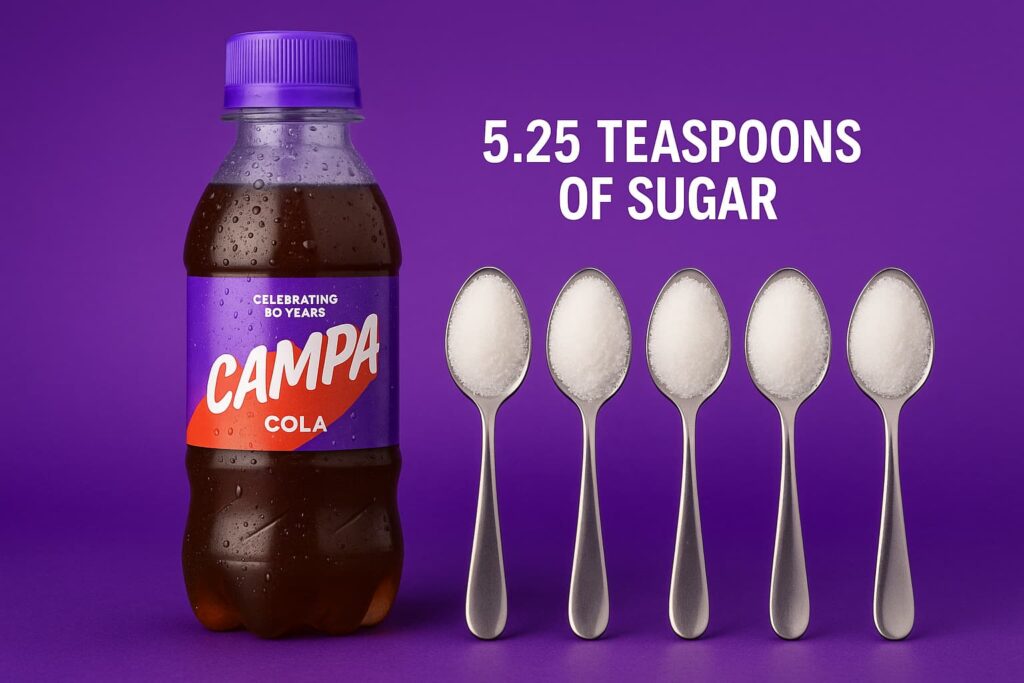
📌 10.5 gm added sugar per 100 ml
200 ml bottle – 10.5 × 2 = 21gm (≈ 5.25 teaspoons of Sugar)
500 ml bottle – 10.5 × 5 = 52.5gm (≈ 13.12 teaspoons of Sugar)
1 litter bottle – 10.5 × 10 = 105gm (≈ 26.25 teaspoons of Sugar)
2 litter bottle – 10.5 × 20 = 210gm (≈ 52.5 teaspoons of Sugar)
Sugar used for taste and preservation. The most dangerous ingredient is used in high amounts.
According to the American Heart Association, “Too much sugar is not sweet for your health.”
Long-term excessive sugar consumption can lead to weight gain, tooth decay, raised blood pressure and insulin levels, joint pain, skin aging, liver damage, type 2 diabetes, pancreatic breakdown, kidney failure, and increased heart attack risk.
A 500ml bottle has over 26g added sugar, which is above WHO’s recommended daily limit (25g for an adult).
Reference: WHO, Guideline: sugars intake for adults and children.
3. Acidity Regulators
Acidity regulators 338 (phosphoric acid) are used for sharpness & sour taste, and 331 (sodium citrate) reduces the acidity and increases the activity of antioxidants.
Excessive intake of acidity regulators (338) can cause calcium absorption, possibly weakening bones over time. 331 is generally safe but contributes to sodium intake, which can raise blood pressure in high quantities.
4. Caffeine (9.4 mg/100ml)
One 500 ml bottle contains 47 mg of caffeine—almost half the amount in a cup of tea.
The safe daily limit set by health authorities like the EFSA and FDA is about 400 mg/day for healthy adults. So 47 mg in one bottle of Campa Cola is well within safe limits.
For pregnant women,the safe limit is ≥200 mg/day. For children, an excess amount is not safe.
- 1 cup of tea: ~30–50 mg
- 1 cup of coffee: ~80–100 mg
- Coca-Cola (330ml): ~32 mg
- Pepsi (330ml): ~38 mg
5. Color 150d (Sulphite Ammonia Caramel)
This is the colorant that gives Coca-Cola its dark brown color.
Heating sugar with ammonia and sulfites. The reaction produced dark pigments and 4-MEI (4-methyl imidazole) as a byproduct.
The International Agency for Research on Cancer (IARC) has classified 4-MEI as “possibly carcinogenic to humans.”
A tiny amount is not harmful, but regular intake can cause long-term health risks.
Reference: Source (OEHHA)
6. Preservative 211 (Sodium Benzoate)
Preservatives Sodium benzoate reacts with ascorbic acid (vitamin C) in the presence of heat and light and produces benzene gas, a well-known carcinogen.
Sodium Benzoate + Ascorbic acid (Vitamin C) = Benzene (gas)
Excess sodium consumption can cause hypertension.
7. Natural Flavouring Substances
No sufficient data available, no disclosure of the source. So, no transparency means we can’t assess their safety.
Nutritional Profile (Per 100ml)
| Nutrient | Amount |
|---|---|
| Energy | 42 Kcal |
| Carbohydrate | 10.6 g |
| Total Sugars | 10.6 g |
| Added Sugars | 10.5 g |
| Protein | 0 g |
| Fat | 0 g |
| Sodium | 10 mg |
| Caffeine | 9.4 mg |
Overview
Carbonated water and sugar are two main ingredients that is used in high amount.
Health implications of regular cod drink consumption – Dental health, Bone Health, Metabolic disorders (obesity, insulin resistance, type 2 diabetes), Mental health (high caffeine and sugar can exacerbate anxiety, depression and sleep disturbances), Organ damage (kidney issue, liver diseases) …. etc.
Final Verdict – Is Campa Cola Healthy?
Absolutely not. Here’s why:
- Extremely high added sugar – very bad.
- Contain Caramel type color – (IARC) has classified 4-MEI as “possibly carcinogenic to humans.”
- Provides zero nutrition – no vitamins, minerals, fiber, or protein.
- Caffeine and additives like ingredients very bad for children and pregnant women. Excess amount can create serious issues.
Is this article helpful?
Should You Drink It?
Daily Consumption: Strongly discouraged ❌. If you are healthy person, with no heart, liver and sleep related issues can consume occasionally (once in a while, not daily).
Skip ❌
- Teenagers (<18) – brain still developing, caffeine effects on mood, sleep and focus.
- People with Heart problem – Stimulants raises blood pressure and heart rate.
- People with Anxiety – caffein and taurine can tigger anxiety attacks.
- Pregnant or Breastfeeding women – high caffeine intake increase risk of miscarriage, low birth weight and irritability in babies.
- Diabetes – High amount of sugar and artificial sweeteners increase blood sugar.
- People with liver Disease – B vitamins harmful for liver.
Read More: Exposing the Dark Side of Cold Drinks
Conclusion
Decode before you drink. Your body deserves better.
Cold drinks (Campa cola) are very cheap and readily available in market, but that comes at the cost of your health. High amount of sugar, caffeine, artificial color, and preservatives — make it an unhealthy choice, especially for regular consumption.
If you want to know a review about any of your products, be sure to comment. I look forward to reading your message.
Join WhatsApp Channel to Updated
Q. Who is the owner of Campa cola?
Campa Cola is owned by the Reliance Group, specifically by Reliance Consumer Products Limited, a subsidiary of Reliance Industries Limited.
Q. Why Campa cola is so cheap?
Campa Cola is cheap primarily due to its low production costs, strategic pricing to capture market share, and minimal marketing expenses compared to larger brands.
Q. How much sugar is in Campa Cola?
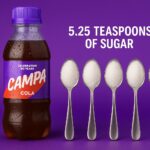
Campa Cola contains approximately 10.5 grams of sugar per 100 ml. A 500ml bottle has over 26g added sugar, which is above WHO’s recommended daily limit (25g for an adult).
Q. Is Campa cola sugar free.
Campa Cola is not sugar-free.

I’m Mehebub Alam Chowdhury, an M.Sc. Organic Chemistry student, and my mission with Decodepure is to simplify complex chemical ingredients in everyday products. With my knowledge of chemicals, I aim to help you make safer, healthier choices by breaking down product labels in an easy-to-understand way.





Helpful, thankyou
Thank you