
Mangoes are India’s pride — we grow more of them than any other country in the world. Yet sadly, when summer arrives, many of us end up eating mangoes that look ripe but are secretly loaded with toxic ripening chemicals. Walk into most fruit markets today — finding naturally ripened mangoes without chemical shortcuts feels like finding a needle in a haystack.
To speed up ripening and cash in early profits, many traders turn to banned or harmful shortcuts like calcium carbide and ethephon — both of which pose serious health risks.
So what’s really inside those picture-perfect yellow mangoes at your local fruit shop? Let’s break it down — from the chemical tricks used to ripen them, to the silent damage they could be causing inside your body.
Table of Contents
Health Benefits of Natural Mango
Immunity Booster: – Rich in Vitamin A & C helps to improve our Immunity system, helps to fight against disease.
Digestive Health: – Mango contains fiber digestive enzymes like amylase helps to breakdown foods and reduce gas, bloating & indigestion.
Skin Health: – Mango contain vitamin C, antioxidant & beta-carotene promotes glowing skin and help to prevent acne and early aging.
Eye Health: – Mangoes are rich in Vitamin C, which supports healthy vision, prevents night blindness, and eye infections.
Heart Health: – Mangoes contain potassium and magnesium which helps keep blood pressure normal and maintain healthy heart.
Energizes the Body:- Natural carbohydrates and sugar provides instant energies to body.
Keeps Hydrated: – During Summer, Mango helps restore lost fluids and electrolytes and keeps our body hydrated and cool (Soak mangoes in water for 30 minutes to 1 hour before eating.
Cancer Prevention: – High antioxidant helps to reduce the risk of certain cancers.
Chemicals used in Artificial Ripening
1. Calcium Carbide (CaC₂)
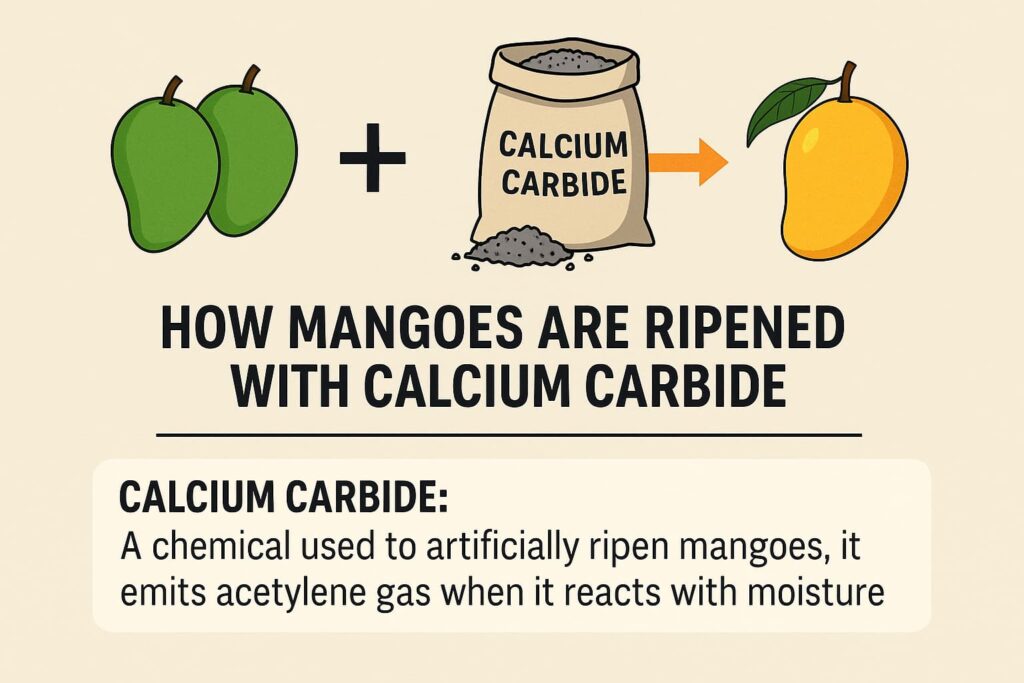
Calcium carbide is a grayish-black lump often used in industrial welding — but here’s the scary part: it’s laced with toxic elements like arsenic, phosphine gas, and traces of heavy metals like lead. When used on fruits, these impurities don’t just speed up ripening — they quietly turn your mango into a chemical cocktail that could harm your brain, lungs, or nerves over time.
What Actually Happens During Chemical Ripening?
When calcium carbide comes in contact with moisture, it releases acetylene gas — a chemical that pretends to be ethylene, the natural hormone fruits produce to ripen slowly on the tree.
CaC₂ + 2H₂O → C₂H₂ + Ca (OH)₂
Health effects:
- Neurotoxicity: Arsenic and phosphine can cause headache, dizziness, memory loss or confusion type problem.
- Organ Damage: Phosphorus can harm kidneys, liver and heart muscles also.
- Carcinogenic: Presence of arsenic, long-term consumption linked to cancers (oral, lung, skin).
- Gastrointestinal distress: contains toxic impurities can create problem like vomiting, diarrhea.
- Hypoxia (lack of oxygen): phosphine gas interferes with oxygen transport in blood.
Calcium carbide is banned by FSSAI (Food Safety and Standards Authority of India).
Reference:
- FSSAI warns fruit traders against using of calcium carbide for ripening,
- THE HINDU
- Dangers of artificial ripening of fruits and vegetables
2. Ethephon (2- chloroethylphosphonic acid)
A pesticide releases ethylene gas on hydrolysis, which promotes ripening.
How it works:
Breaks down into ethylene, phosphate and chloride ions.
Ethephon Permitted in a small quantities and under specific agriculture guidelines, but often misused.
Health effects of misuse:
- If consume high dose can create negative effect on liver and kidneys
- Eye and skin irritation
Safer alternatives
1. Ethylene gas (C₂H₄)
Ethylene gas is natural plant hormone, Ethylene gas is generally safe, if used properly understand limits and regulations.
Sometimes sellers mix with other gases for expose fruits at improper concentrations.
As per FSSAI, only ethylene gas in controlled Ripening chambers is legally permitted for artificial ripening.
Reference: FSSAI
2. Banana leaf method
One of the safest and most traditional ways to ripen mangoes at home is by using banana leaves. They naturally release ethylene gas, the same plant hormone that triggers ripening in fruits still hanging on the tree.
This gentle, chemical-free process allows the mango to ripen slowly, converting starch into sugar, and enhancing the aroma, color, and texture just like nature intended.
Benefits of this method:
- 100% natural
- Better taste – rich, sweet and fiber-friendly plup.
- Authentic mango aroma.
- Eco friendly.

3. Rice Bin method
This age-old Indian method honors how our ancestors ripened mangoes — slowly, naturally, and without any chemicals. Mangoes themselves release ethylene gas, a natural ripening hormone that works best when given time and care
- Take a large container filled with uncooked rice.
- Now bury some mature mangoes in the rice, one at a time.
- Keep some space between them to avoid rotting.
- Cover the container with clothes or lid to prevent air, which helps trap ethylene.
- Store the container in a cool, dry place for 5-7 days.
- Once the mangoes become soft and aromatic, remove and consume.

How to identify artificially ripened mangoes
1. Color uniformity
- Artificially ripened: uniform bright yellow or orange all over.
- Naturally ripened: yellow with green spots, not perfectly uniform.
2. Smell test
- Artificially ripened: little or no mango like aroma, sometime chemical or sour smell.
- Naturally ripened: Sweet, fruity like smell even without cutting.
Acetylene gas from calcium carbide does not promote natural aroma.
3. Texture
- Artificially ripened: ripe from outside but hard inside.
- Naturally ripened: softness throughout.
4. Taste
- Artificially ripened: flat, sour or bitter taste.
- Naturally ripened: sweet, juicy and balanced flavor.
5. Shelf life
- Artificially ripened: spoils within 2-3 days.
- Naturally ripened: lasts around 5-7 days at room temperature.
6. White powder or Foam Test
Dip mango in water: carbide ripened mangoes may release white foam.
7. Calcium Carbide Test (Lab Only)
Detect Calcium Carbide by using silver nitrate test:
Acetylene reacts with silver nitrate (AgNO₃) and produced black precipitate of silver acetylide, which confirms presence of calcium carbide.

Is this article helpful?
Recent News: 150 crates of chemical-ripened mangoes seized: 8 ways to identify artificially treated ones
Practical ways to reduce the heat effect of mangoes
Mangoes are considered ‘thermogenic’ or ‘Heaty’ fruit in Ayurveda and traditional Indian system; means they can increase internal body heat. Eating too many mangoes can cause:
- Acidity or indigestion
- Acne or skin problem
- Bloating or constipation for sensitive people.
- Sore throat.
1. Soak Mangoes in Water Before Eating
Sock mangoes in water for 30 minutes to 1 hour before eating.
This process helps leach out phytic acid and excess heat and making them easier to digest.
2. Avoid Overeating
- Adults: 1-2 medium Size mangoes in a day.
- Children: 1 small size mango in a day
1 mango per day especially in hot weather
3. Avoid Eating at Night
Try to eat mango in daytime for better digestion.
4. Avoid Eating on empty stomach
Always eat mangoes after a meal.
5. Eat With Cooling Foods
Combine mangoes with:
- Curd or yogurt (e.g. mango lassi)
- Mint or pudina
- Coconut water after eating

Download Pdf file, Free
Tips for consumers
- Don’t buy overly bright or uniform mangoes.
- Before buying must check the smell.
- Prefer mangoes with some green areas – likely natural.
- Buy seasonal mangoes.
- Buy from trusted, local farms or ripen mangoes at own home by natural way.
Conclusion
Mangoes should nourish, not harm. Say no to artificially ripened fruits. Mango is a popular summer food for everyone. But if that mango juice is harmful to the health, then it cannot be accepted.
🌿 Stay pure. Stay informed. Only with DecodePure.com
Join WhatsApp Channel to Updated

Q. What is calcium Carbide?
A gray-black industrial compound (generally used in welding) containing arsenic, phosphorus hydride (phosphine gas), lead and other heavy metals. These impurities make the fruit toxic and dangerous for human health.
Q. How calcium carbide works to ripen mangoes?
Calcium carbide reacts with moisture or water and release acetylene gas (C₂H₂), which mimics ethylene (a natural ripening hormone).
CaC₂ + 2H₂O → C₂H₂ + Ca(OH)₂
Q. How banana leaf uses to ripen mangoes?

Banana leaf method is a traditional, safe and chemical free way to ripen mangoes at home. Natural ethylene gas released by banana leaves, a plant hormone that triggers ripening.
Ethylene gas converting starch into sugar and enhancing aroma color and texture just like in natural tree ripening.
Q. How Ethylene gas (C₂H₄) works to ripen mangoes?
Ethylene gas is natural plant hormone, Ethylene gas is generally safe, if used properly understand limits and regulations.
Sometimes sellers mix with other gases for expose fruits at improper concentrations.

I’m Mehebub Alam Chowdhury, an M.Sc. Organic Chemistry student, and my mission with Decodepure is to simplify complex chemical ingredients in everyday products. With my knowledge of chemicals, I aim to help you make safer, healthier choices by breaking down product labels in an easy-to-understand way.