From kids to adults everyone loves to eat ice cream, especially when the weather is hot and sunny. Ice cream treat that cool us down and makes us happy. But did you know that not all frozen treats are same? Some are real ice cream, while others are frozen desserts that look like same but made differently.
Ice cream vs Frozen Desserts – What’s Safe and What’s Not? In this blog we will explore what goes into these tasty treats, breakdown their making process and how they affect our health, and which ones are better for us to enjoy.
Table of Contents
Ingredients Matter
As a common man, we have no alternative way to verify which product is harmful and which is not. Only the ingredient list can help us in this regard. There is no other way.
So, before buying anything, be sure to check the ingredient list.
Ice cream
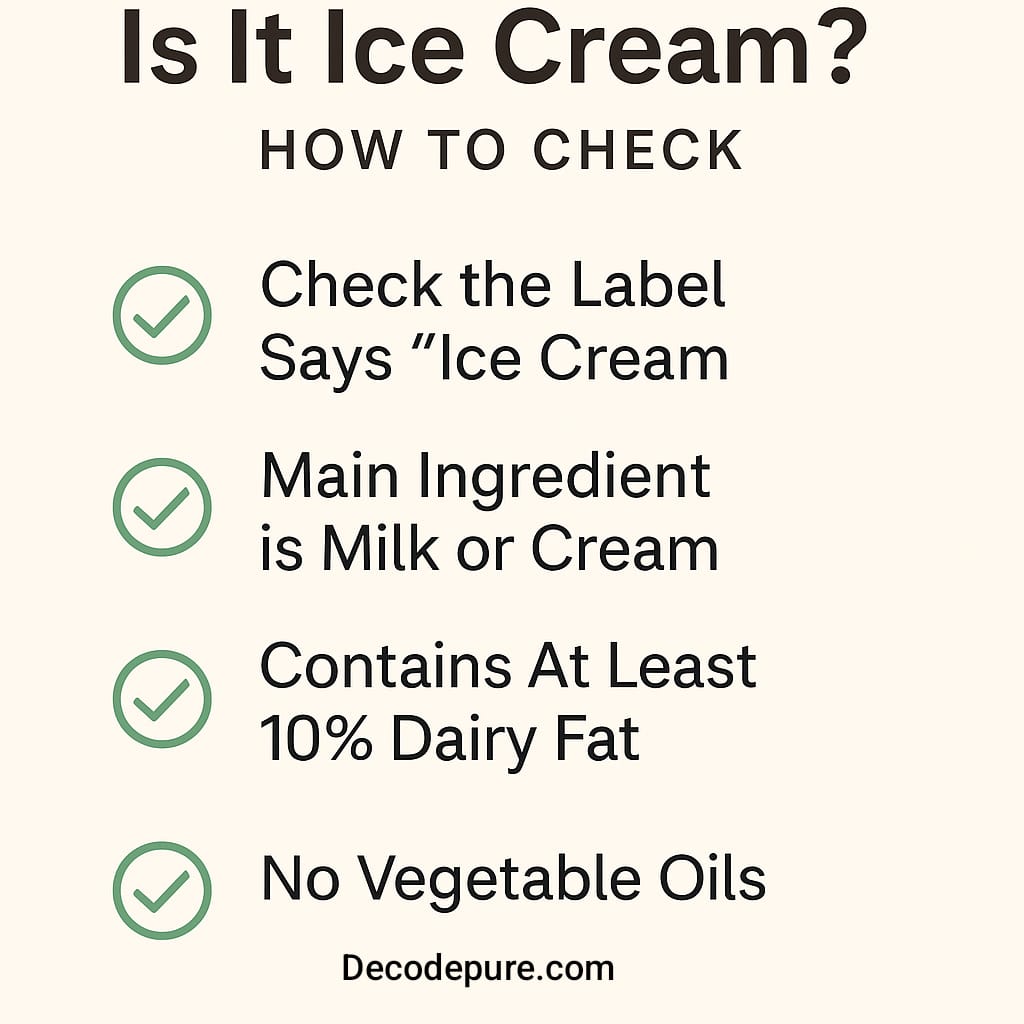
Ice cream is a frozen dairy product made from milk, cream, sugar and often egg yolks. According to food safety standards (FDA) in US or Food Safety and Standards Authority of India (FSSAI) in India, ice cream must contain at least 10% milk fat to be labelled as ‘ice cream.’
Common ingredients in ice cream:
Milk, sugar, cream, egg yolks (in premium varieties), emulsifier, stabilizers, flavor, colors and air.
1. Milk: Base ingredients
2. Cream: important for mouthfeel and flavour (increase fat content). Adds richness and smooth texture.
3. Sugar: Provides sweetness.
4. Saturated fat/trans fat: used for texture, flavour and structure.
5. Stabilizers (E407, E466, E415, E412, E435): maintain smooth texture, ex- guar gum, xanthan gum, carrageenan, locust bean gum.
6. Emulsifiers (E471): helps to keep fat distributed.
7. Flavouring: Flavour can be natural and artificial.
Natural – vanilla extract, cocoa, coffee, fruit puree.
Artificial – artificial fruits flavour, vanillin (cheaper but less healthy).
8. colour (: added to matching flavour like yellow for mango.
9. Air: gives ice cream its light texture. More air more lighter product.
Safe or unsafe?
Milk (source of calcium, protein and vitamins), cream (provides healthy fats, when consumed in moderation), sugar (okay, if not excessive), egg yolks (rich in lecithin and nutrients) and natural flavour (vanilla, cocoa or real fruit puree) all are healthy ingredients.
Stabilizers – Generally safe in small amount consume. Over use can cause bloating, digestive discomfort for sensitive people.
Sugar – excess amount of sugar can create problem (tooth decay, raises blood pressure etc), so check the ingredients list.
Reference: WHO. ” Guideline Sugar Intech for adults and children World Health organisation 2015
Colours – safe, but should verify the quality.
Saturated fat/trans fat: safe in small amounts – especially from natural source like milk and cream. So verify quality.
Example –
Most popular Amul ice cream (Amul milk, cashew, saffron ice cream, 125ml/67gm).
Ingredients: Milk solid, sugar,cashew, almond, honey, saffron, permitted emulsifier (E471), Stabilizers (E407, E466, E415, E412, E435)
Per 100gm –
- saturated fat (8.1gm)
- Trans fat (0.5gm)
- added sugar (14.0 gm)
Means, 67 gm of a ice cream pack contain 9.38gm of sugar (≈ 2.5 teaspoons of Sugar)
Yes, eating ice cream is safe but occasionally not daily.
Frozen Desserts
Frozen dessert is a sweet treat that same taste and looks like ice cream but it’s not real ice cream. According to FSSAI, frozen desserts are made with vegetable oil (palm oil) or fats instead of milk fat and that’s why it’s ‘frozen desserts’ not ‘ice cream’.
Common ingredients in frozen desserts
Milk solid, vegetable oil (palm oil), sugar, cream, emulsifier, stabilizers, flavour, colours and air.
1. Milk: Base ingredients, milk solids or skimmed milk powder are often used but not real milk.
2. Vegetable oil: used palm oil, the most dangerous ingredient. Used mainly for cost, texture and self life.
3. Cream: important for mouthfeel and flavour (increase fat content). Adds richness and smooth texture.
4. Sugar: Provides sweetness.
5. Saturated fat/trans fat: used for texture, flavour and structure.
6. Stabilizers (E407, E466, E415, E412, E435): maintain smooth texture, ex- guar gum, xanthan gum, carrageenan, locust bean gum.
7. Emulsifiers (E471): helps to keep fat distributed.
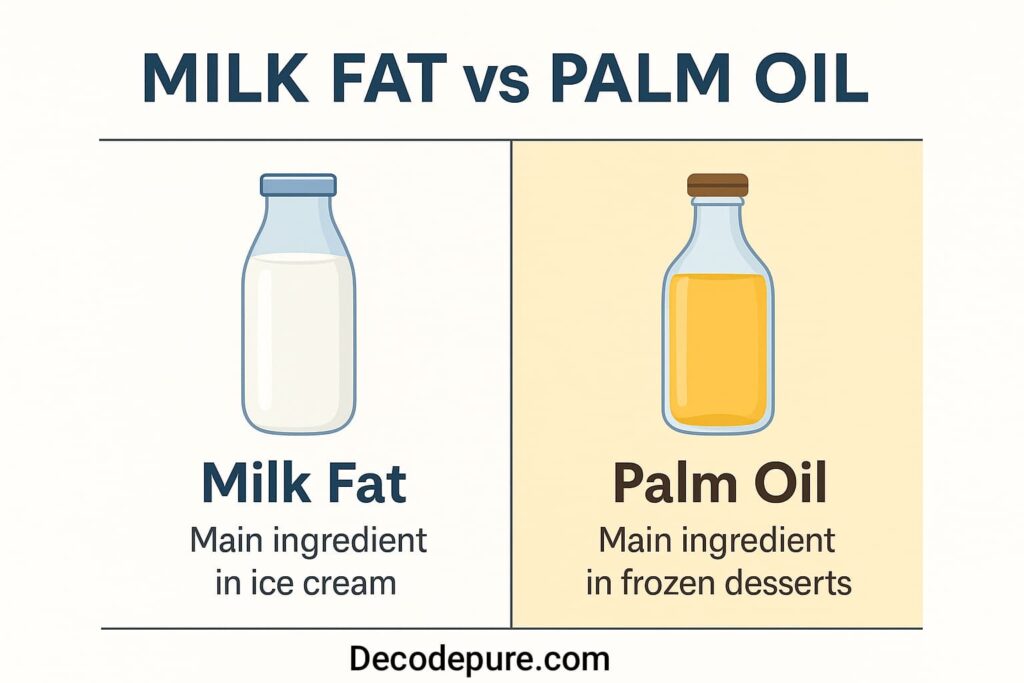
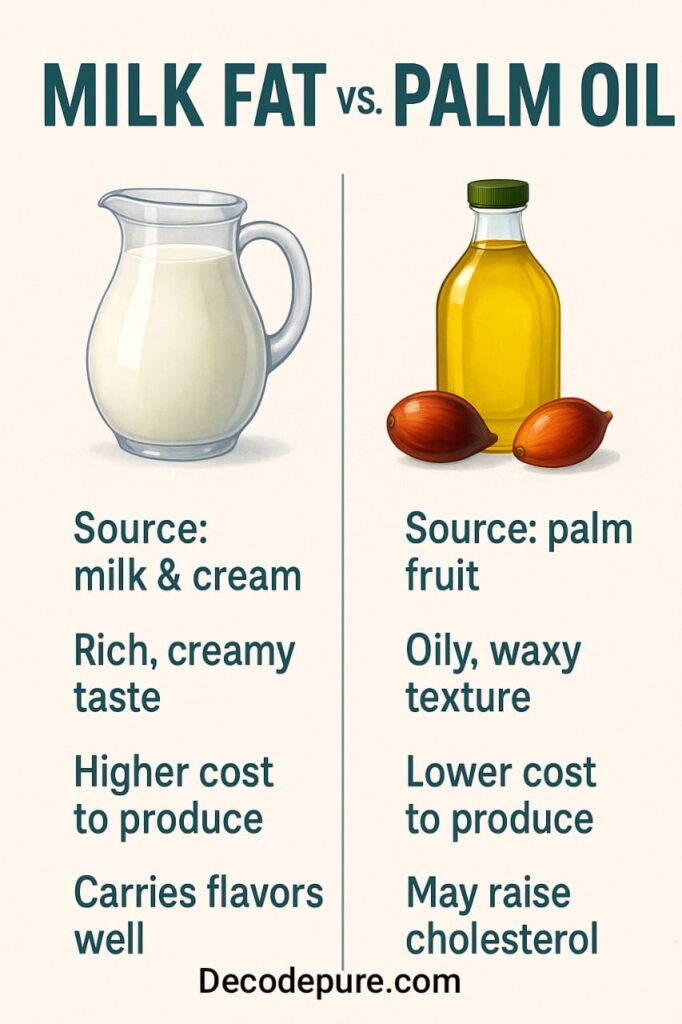
Why do brand use palm oil
- It’s much cheaper than milk fat
- It’s give longer self life
Safe or unsafe?
Most of the ingredients same as ice cream in frozen desserts, palm oil Is commonly used in present frozen desserts instead of milk fat.
Palm oil is used to make frozen desserts cheaper and self-stable, but it compromises health compared to traditional dairy based ice cream.
Palm oil – Eating too much saturated fat (palm oil) can raise bad cholesterol (LDL) in blood. High LDL level increase the heart disease and stroke risk.
According to Food Safety and Standards Authority of India (FSSAI) in India Frozen desserts are legally allowed and considered safe for occasionally consumption. But Palm oil create problem for frozen desserts.
Reference: Harvard Medical School
Key point
FSSAI does not ban or declare frozen desserts harmful, but does not mean they are equally healthy as ice cream. They are just legally safe if eaten in moderation not too much.
Summary
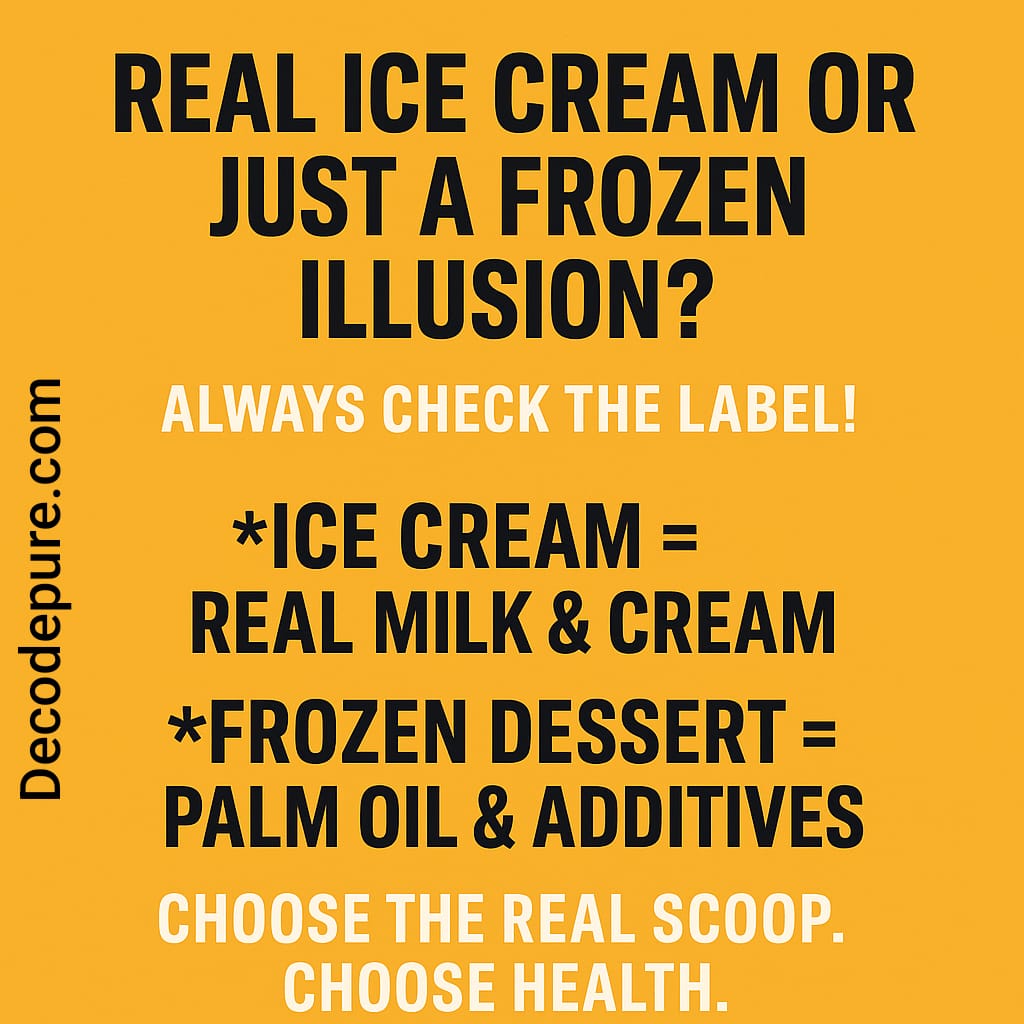
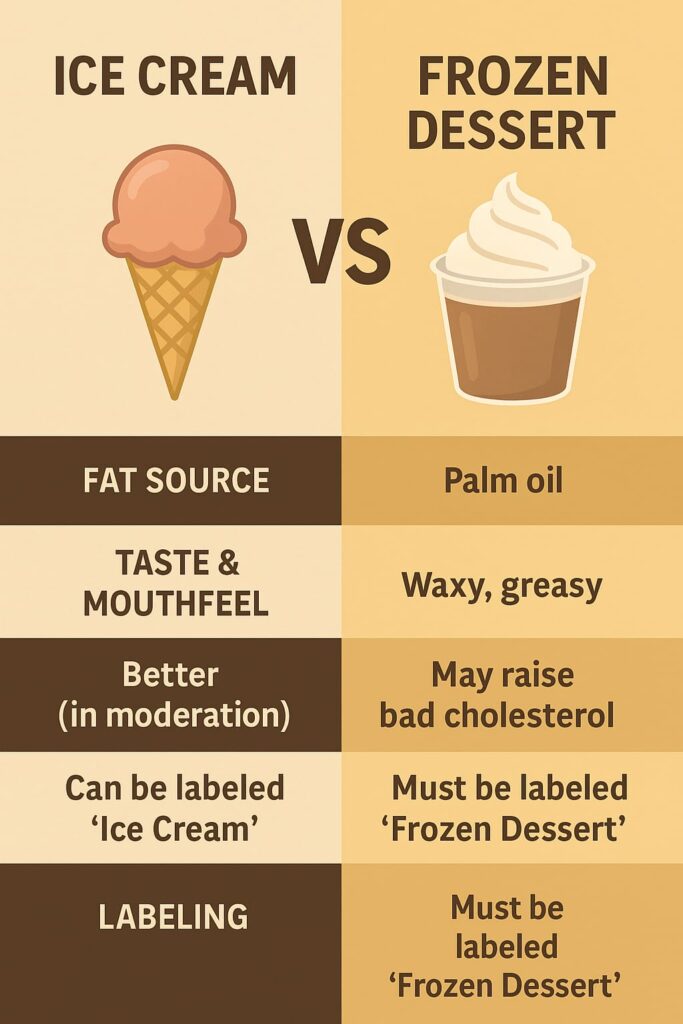
- Real ice cream contains milk fat and is labelled as such.
- Frozen desserts use vegetable fats like palm oil and legally be labelled ‘Frozen desserts’
- Ice cream generally safer and healthier when consumed mindfully (occasionally not daily).
- Frozen desserts may Raises LDL (bad cholesterol), risk of heart disease, Heart stroke.
What to Do?
- Read the label before buying (must mention ‘Real ice cream’ or ‘Frozen desserts’)
- Frozen desserts means it’s not real ice cream.
- Choose brands with clean ingredients like milk, Cream, natural flavour.
- Try to avoid products with vegetable oil (palm oil), vanaspati, artificial color, hydrogenated fat and excess sugar.
Read Labels like a pro :-
Order – Ingredients are arranged by volume of concentration( top 5 are main components, used by in high volume)
Don’t make fool marketing terms like “No added sugar” or “Low fat”, “Frozen Treat/ Frozen Fantasy”, “Rich & creamy”, “Dairy-based,” “made with milk,” “Natural flavors” etc. Just because all levels are allowed to write doesn’t mean that , what is written is true.
Conclusion
Be smart, choose pure.
Ice cream and frozen desserts may look & taste like same – but your body knows the different. Enjoy your treat but choose wisely.
Always check the ingredients list before buying anything. Mind it – ‘Frozen desserts’ means not real ice cream.
I believe that buying anything shouldn’t be a guessing game. It’s time to we should start read labels and exploring healthier alternative.
Choose pure, choose wisely, stay healthy.
If you like this information, then be sure to rate the page. And join the WhatsApp channel to get notifications when there are new updates.
Q. What is Frozen Desserts?
Frozen dessert is a sweet treat that same taste and looks like ice cream but it’s not real ice cream. According to FSSAI, frozen desserts are made with vegetable oil (palm oil) or fats instead of milk fat and that’s why it’s ‘frozen desserts’ not ‘ice cream’.
Q. Difference between Ice cream & Frozen Desserts.
Ice cream contains at least 10% milk fat, while frozen desserts may use less milk fat and can include ingredients like vegetable fats. Ice cream must meet specific standards for texture and flavor, whereas frozen desserts offer more flexibility in ingredients and formulations.
Q. Why Frozen Desserts is cheaper in price?
Frozen desserts may be cheaper due to lower production costs, bulk sourcing of ingredients, economies of scale, seasonal availability of raw materials, and competitive pricing strategies.
Q. Why Palm Oil used in Frozen Desserts?
Palm oil is used in frozen desserts for its smooth texture, stability at low temperatures, and ability to enhance creaminess without causing ice crystals. It also has a high melting point, which helps maintain the structure of the dessert during storage and serving. Palm oil is very bad for heart health.

I’m Mehebub Alam Chowdhury, an M.Sc. Organic Chemistry student, and my mission with Decodepure is to simplify complex chemical ingredients in everyday products. With my knowledge of chemicals, I aim to help you make safer, healthier choices by breaking down product labels in an easy-to-understand way.