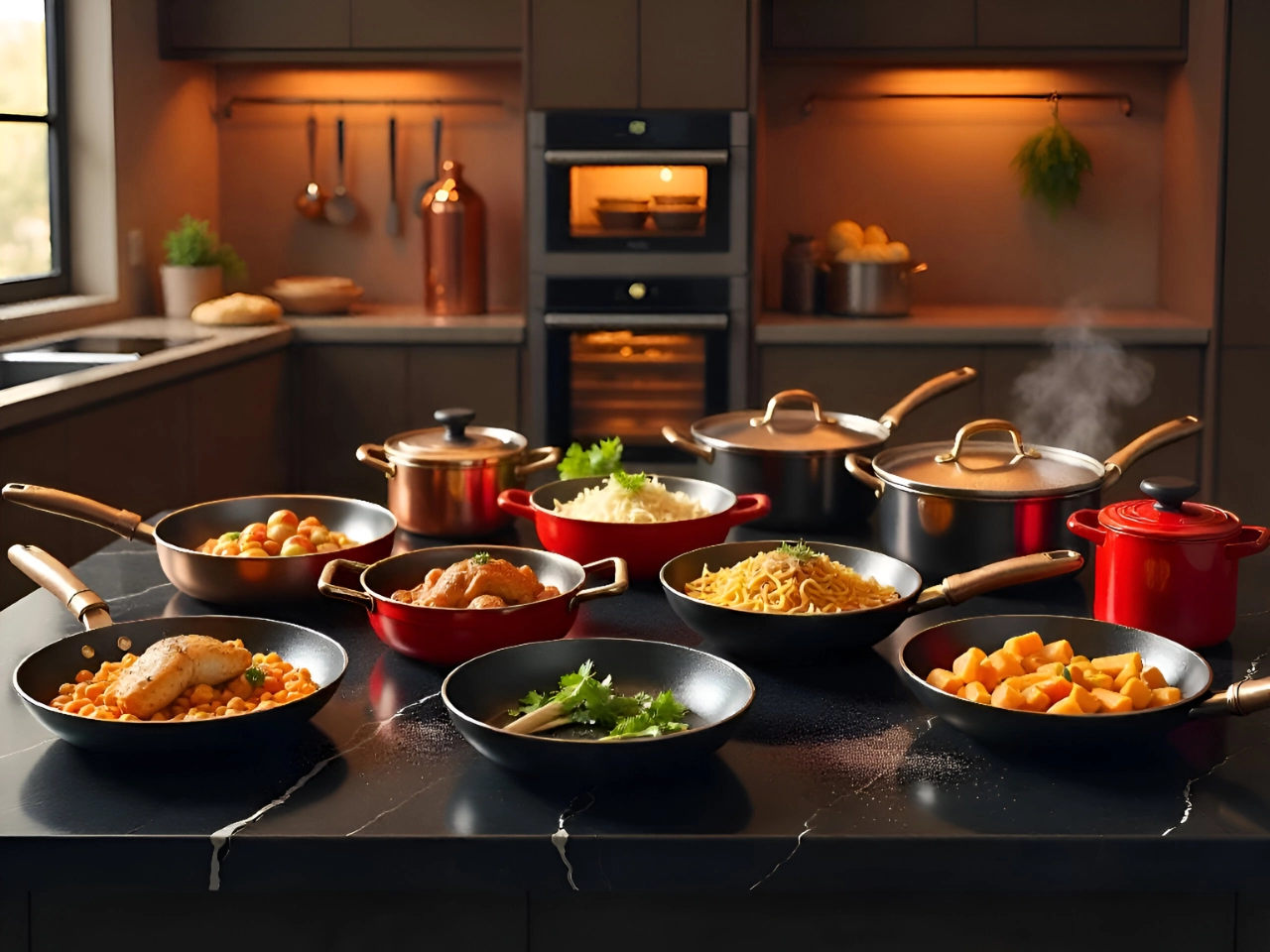
Kitchen – a place where food is prepared with love, care and ancient wisdom. Our grandmothers used to cook in clay pots, iron kadais and brass vessels, which not only made food tastier but also added health benefits. But today, in the name of modern convenience, we have replaced them with shiny, aluminum, nonstick and chemically coated cookware. If we cook and eat in all these cooking utensils for a long time, there is a possibility that we will face very serious health problems.
In this blog we uncover the dark side of modern utensil, breakdown their making process and how they can silently harm our body.
Table of Contents
Worst cookware
1. Nonstick Cookware (Teflon/PTFE)
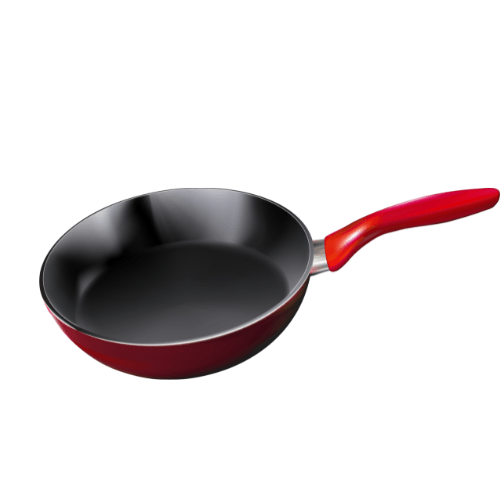
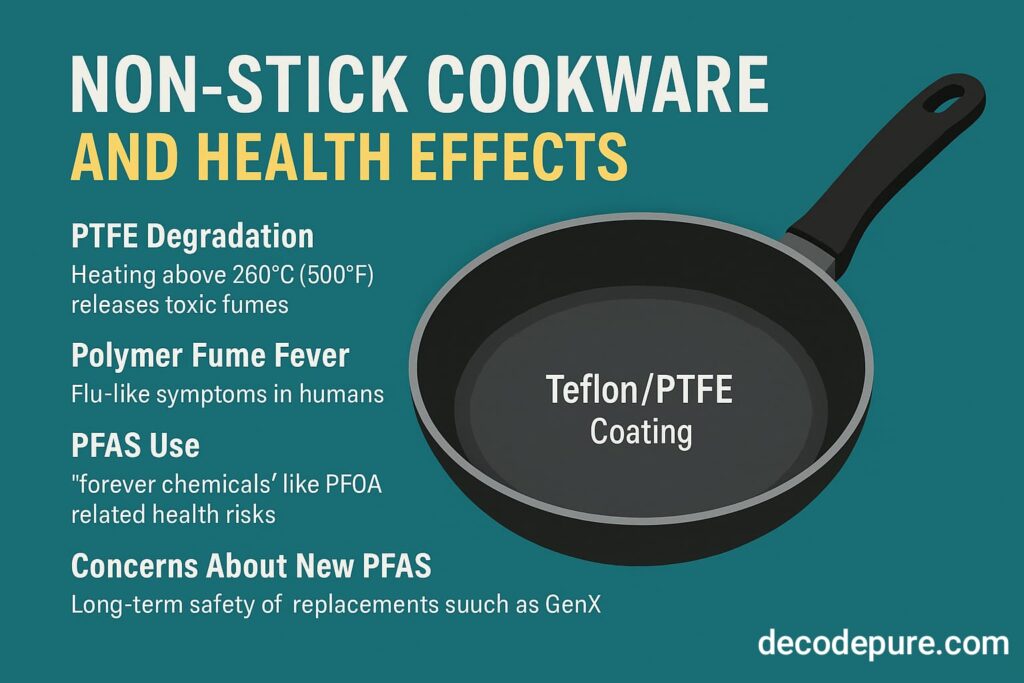
Nonstick Cookware’s used 90% homes in the city. Nonstick Cookware is coated with polytetrafluoroethylene (PTFE) known as Teflon. Perfluorooctanoic acid (PFOA) used to produced PTFE through polymerization, in the past. GenX are being used now, which may pose similar health concerns.
Health risk:
When heated above 500 °F (260°C), PTFE coatings release toxic fumes that is linked to various health issues like headache, chills, thyroid disease, liver damage and cancer also, for long term exposure. (Environmental Protection Agency, EPA, 2016).
2. Aluminum cookware
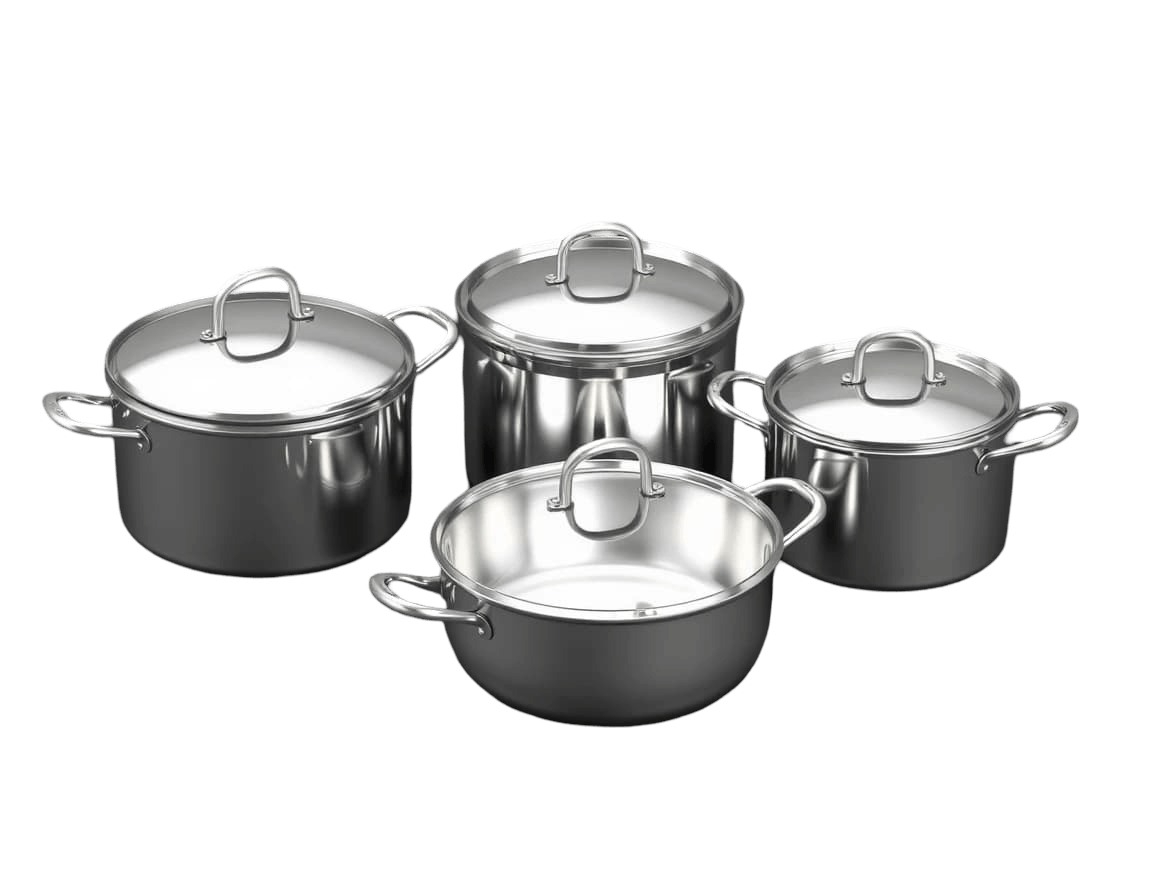
Now Aluminum become most used commercial cooking metal. Aluminum cookware made from processed aluminum metal mainly. Valued for it’s lightweight and excellent heat conductivity. Reason behind popularity of Aluminum cookware is – abundant, cheap, strong, light weight, versatile, good thermal conductor and recyclable.
Buy a new aluminum vessel and do it’s weight. Start using it for daily cooking and after 2 or 3 years weight it again. You will find a considerable decrease in the weight. It’s due to aluminum leaches into the food (Aluminum is toxic).
Health risk :
Uncoated aluminum utensil can leach into food, especially when cooking salty or acidic dishes (like – tomato, citrus etc). Aluminum ia a thyro Toxic metal. High aluminum intake is linked to neurotoxicity and potential Alzheimer’s risk. It can also cause Constipation, skin problem, lack of energy, paralysis, liver problem, heart complications and brain disorders. (Krewski, D., et al. 2007 || Journal of Toxicology and Environmental Health)
Food cooked in aluminum utensil retain only 13 to 15% nutrients (no strong scientific evidence).
Good cookware
1. Stainless steel
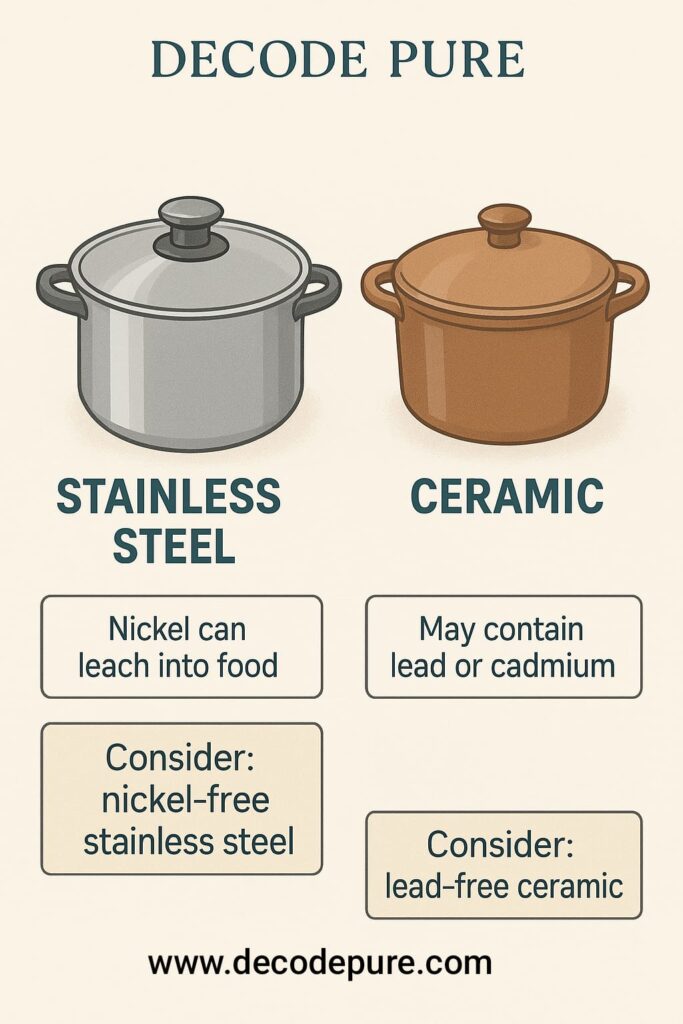
100% Stainless steel much safer than nonstick and aluminum cookware. But in market stainless steel is not a pure metal – it’s ab alloy, primarily made of Iron, Chromium, Nickel, Manganese, carbon, molybdenum.
Excess amount of Nickel provide extra shine. Nickel is a high toxic metal. Contains 18% chromium and 8-10 % nickel – most common in cookware. The ratio of chromium and Nickel of stainless steel which decides how safe it is for cooking.
- 18/10 or 18/8 (grade 304) is generally safe for most people. As leaching is minimal.
- If you are nickel sensitive, choose nickel – free (18/0, grade 430). But rusts more easily.
- 316 best but expensive
Health risk
Nickel is not essential for our body. Especially in people sensitive to nickel can cause allergic reaction, skin rashes, asthma like symptoms, Gut inflammation.
Source : NCBI Study – (NIH) National library of medicine
2. Ceramic
No doubt 100% ceramic cookware is safe for cooking. But 100% ceramic cookware is expensive and hard to find. Made by applying a glaze to metal or clay surface. Some glazes contain heavy metals like lead or cadmium for certain colors.
Health risk
Most of the cases the glaze became damage and toxic metals can leach into foods. And can cause health risk like neurological damage and kidney disease.
Better cookware
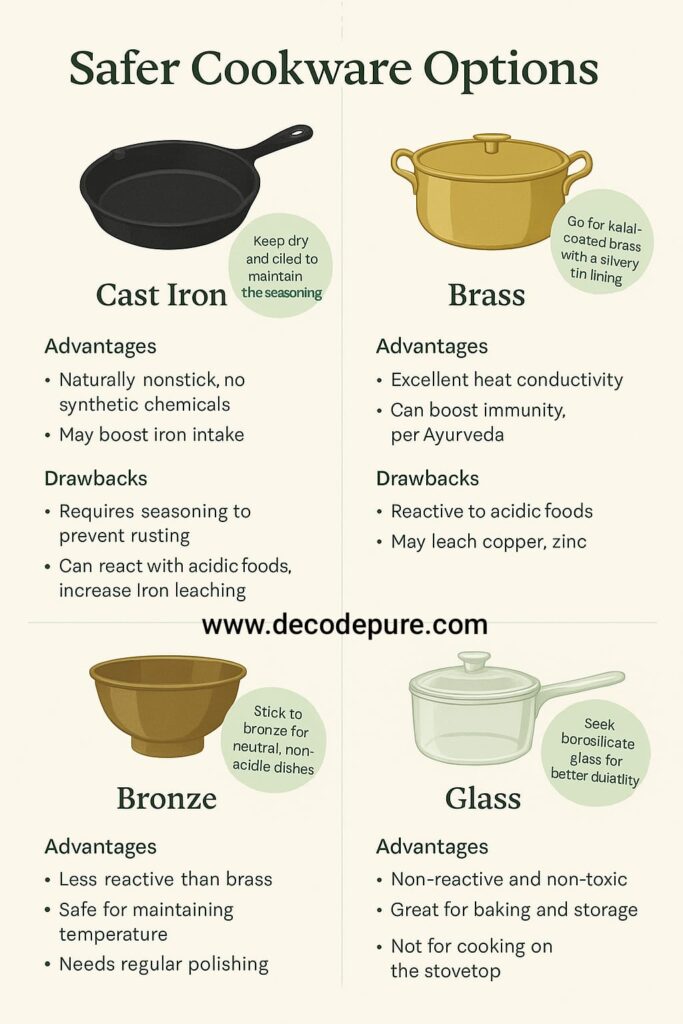
1. Cast iron
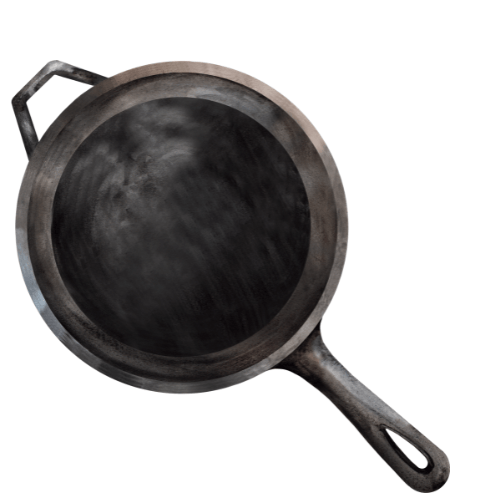
Cast iron is one of the oldest and most traditional types cookware. . Excellent heat retention and known for it’s durability. Cast iron is very heavy and prone to rusting easily if not dried and oiled properly. Never cook in a rusted utensil
- No synthetic chemicals like PTFE or Teflon
- Can leach small amount of iron, which benefit people with iron deficiency (source: National institutes of Health, NIH).
2. Brass (pital)
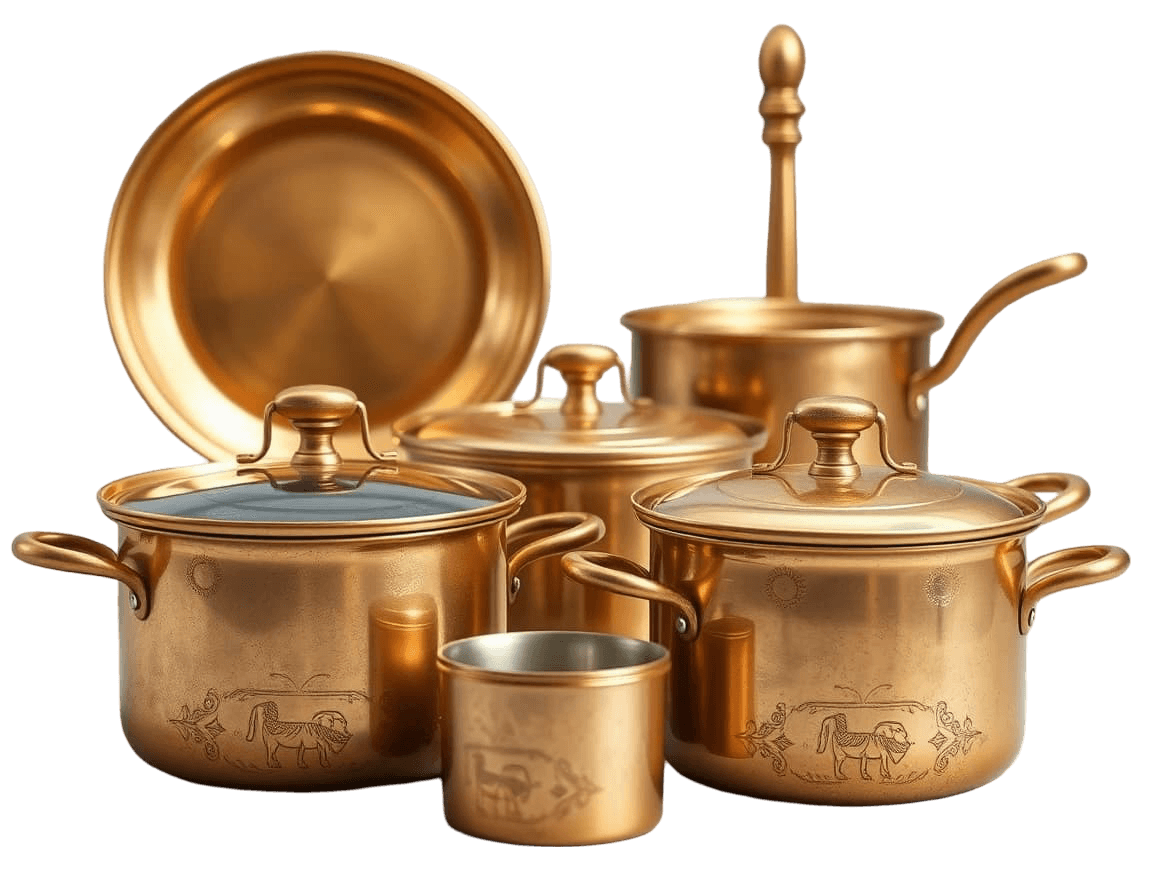
Pital can be a better option for your kitchena as cookware. Used traditional Indian kitchens for centuries.. Alloy of copper (60 – 70%) and zinc (30 – 40%). Reacts with acidic foods (like tomato, lemon etc) forming harmful chemicals. Always use tin coated (kalai) brass cookware to be food safe.
- No synthetic chemicals like PTFE or Teflon
- Excellent heat conductivity
- Can boost immunity due to trace copper release in small amounts.
Food cooked in brass utensil retains 93% nutrients (no strong scientific evidence).
3. Glass
Glass utensil also a better option as cookware. Made from silica and boron trioxide. It can break if dropped or rapidly reated or cooled and not suitable for stovetop cooking. Try to use borosilicate glass cookware from trusted brands.
- 100% non toxic
- Does not leach metals and chemicals
- Great for microwave, oven and storage
- Doesn’t hold color.
4. Bronze (Kansa)
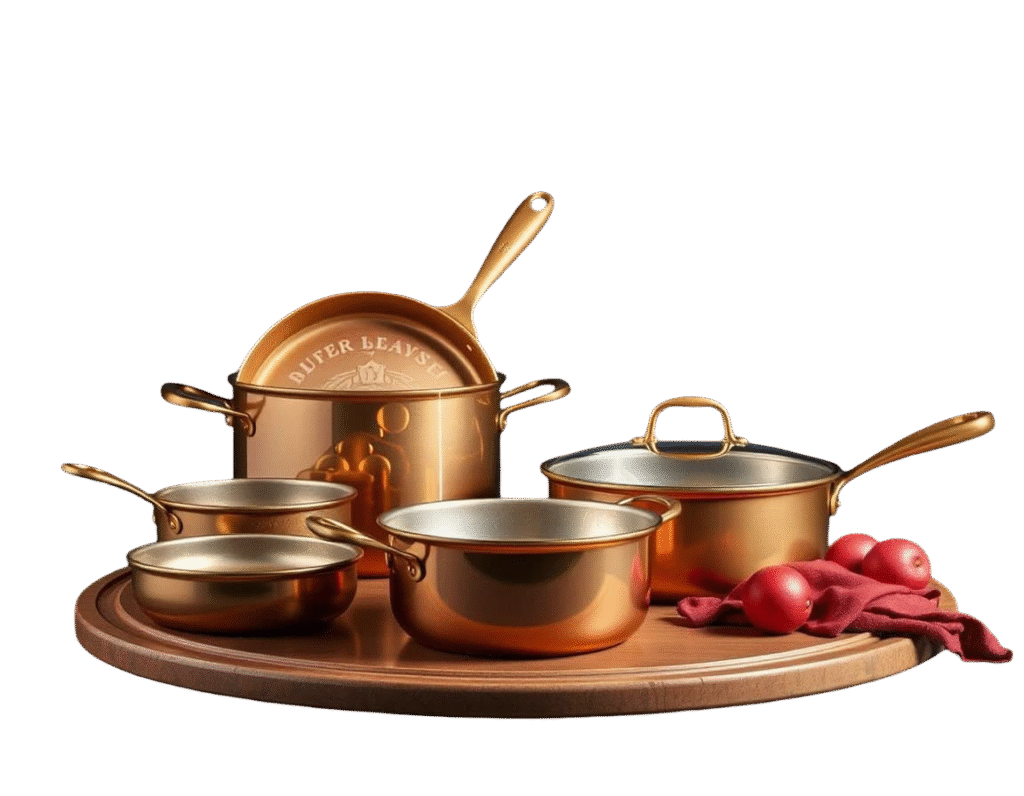
One of the best option is this category. Alloy of copper (88%) and tin (12%). Don’t use for acidic items, use only for dry or natural foods (like kheer, roti, sabzi etc).
- Ayurveda approved: believe to promote immunity and mental health.
- Safer than brass due to less lower zinc (less reactive)
- Maintains temperature longer, ideal for serving.
Food cooked in bronze utensil retains 97% nutrients (no strong scientific evidence).
Best cookware
1. Clay
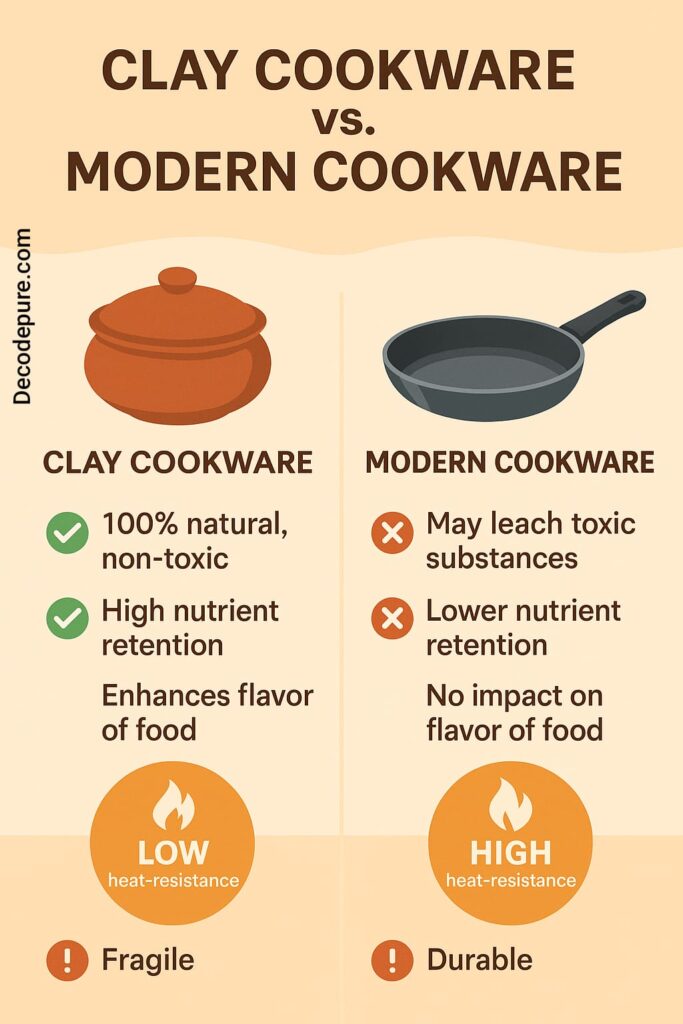
The most scientific cookware ever made, also known as ‘mitti ke bartan,’ has been used in India for thousands of years. Directly made from natural clay, shaped and sun dried. It’s composition is exactly what is need by human body. The food cooked in clay is not only the healthiest but also the tastiest.

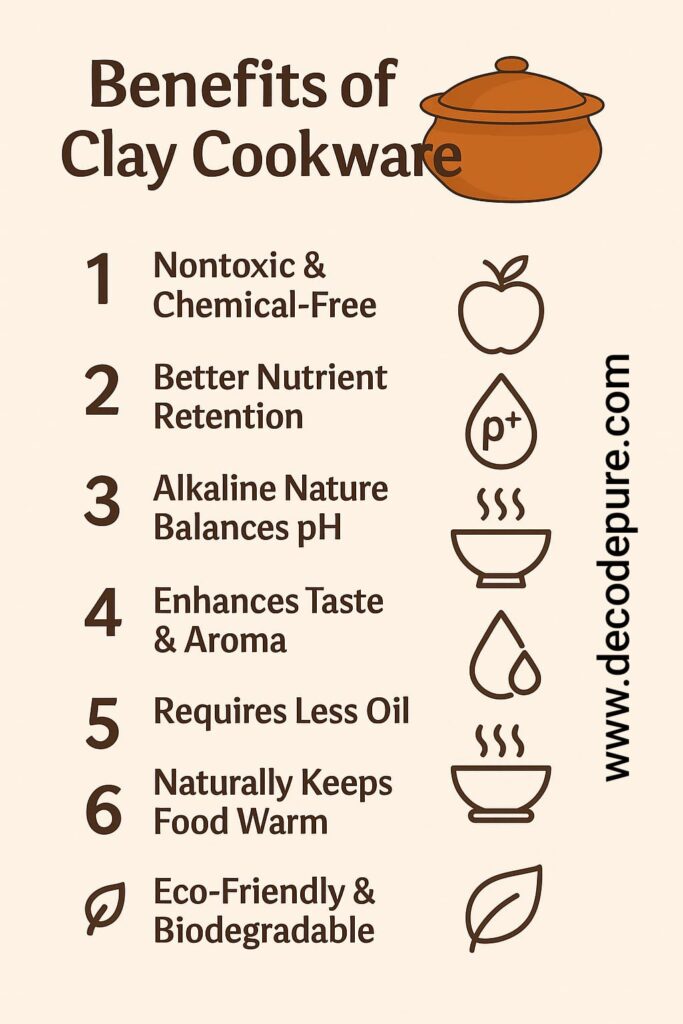
- 100% natural and non toxic.
- powerhouse of nutrients, clay has manganese, iron, phosphorous, Sulphur and other essential minerals in their right quantities.
- Food in clay pot is cooked slowly and that’s quality make the foods tasty and helps retain more nutrients.
- Alkaline nature of clay interact with the acidity of food to balance Ph
- Requires less amount of oil.
- Retain heat longer and make food to stay warm.
- Eco friendly and biodegradable.
Summary
- Aluminum and nonstick are the worst category.
- Stainless steel & ceramic is ok
- Brass, bronze, cast iron, glass are good
- Clay pots are the best cookware.
Don’t make fool
Don’t believe the fake promises by cookware companies and TV ads, they makes us fool as always.
Tips
Why buy bad utensil that can harm our body when you have good items at your fingertips? We must say goodbye to foreign products and try to maintain the traditions of our country.
You deserve to know what you are putting on your body.
Read more: Best Cooking Oil for your kitchen
Conclusion
As Indian, we are blessed with a rich culinary heritage where our ancestors cooked not just for taste but for health. from clay pots and brass kalais to cast iron tawas and bronze utensils.
Today, as we navigate a market filled with chemically coated cookware, returning to our roots is not just a nostalgic journey it’s a conscious step towards health.
I believe that buying anything shouldn’t be a guessing game. It’s time to we should start read labels and exploring healthier alternative.
Join WhatsApp Channel to Updated
Q. Is Non stick cookware safe to use?
Nonstick Cookware is coated with polytetrafluoroethylene (PTFE) known as Teflon. When heated above 500 °F (260°C), PTFE coatings release toxic fumes that is linked to various health issues like headache, chills, thyroid disease, liver damage and cancer also, for long term exposure.
Q. Is Aluminum cookware safe to use?
Uncoated aluminum utensil can leach into food, especially when cooking salty or acidic dishes (like – tomato, citrus etc). Aluminum ia a thyro Toxic metal. High aluminum intake is linked to neurotoxicity and potential Alzheimer’s risk. It can also cause Constipation, skin problem, lack of energy, paralysis, liver problem, heart complications and brain disorders.
Q. What is Best cookware?
The most scientific cookware ever made, also known as ‘mitti ke bartan,’ has been used in India for thousands of years. Directly made from natural clay, shaped and sun dried. It’s composition is exactly what is need by human body. The food cooked in clay is not only the healthiest but also the tastiest.

I’m Mehebub Alam Chowdhury, an M.Sc. Organic Chemistry student, and my mission with Decodepure is to simplify complex chemical ingredients in everyday products. With my knowledge of chemicals, I aim to help you make safer, healthier choices by breaking down product labels in an easy-to-understand way.









It’s very helpful to grow our life days. Thank you for your circumspection.
Thank You