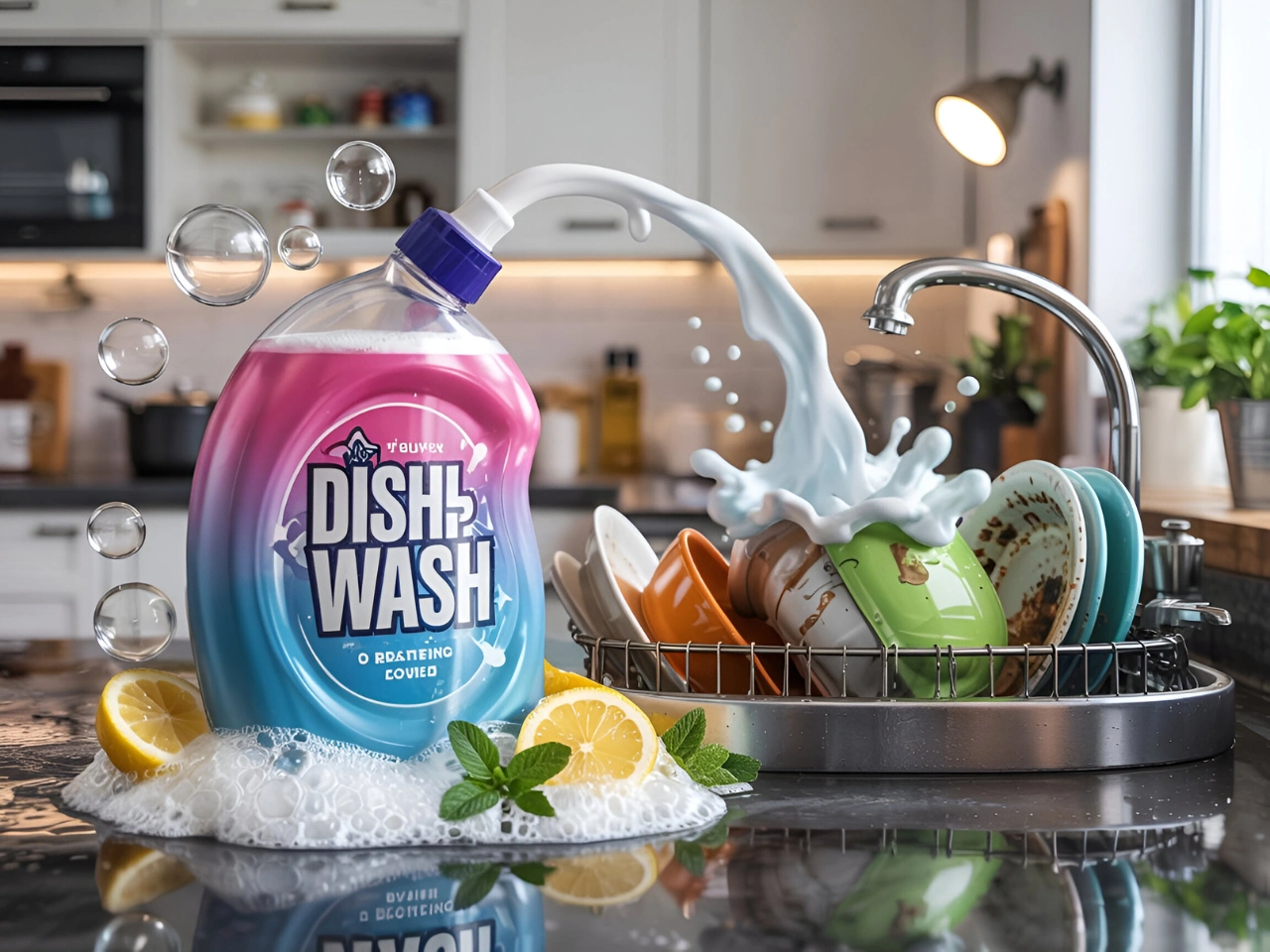
After eating at everyone’s house, we wash the dirty dishes with our dishwashing liquids. But you will be surprised to know that you are unknowingly consuming some harmful ingredients with your food. Most of the commercial dishwashing liquids are made with harsh chemicals and that not only irritate the skin also our health and environment.
In this post we’ll break down how Dishwashing Liquids made, expose the hidden ingredients and explain their effects.
Table of Contents
Ingredients Matter
As a common man, we have no alternative way to verify which product is harmful and which is not. Only the ingredient list can help us in this regard. There is no other way.
So, before buying anything, be sure to check the ingredient list.
Common Ingredients used
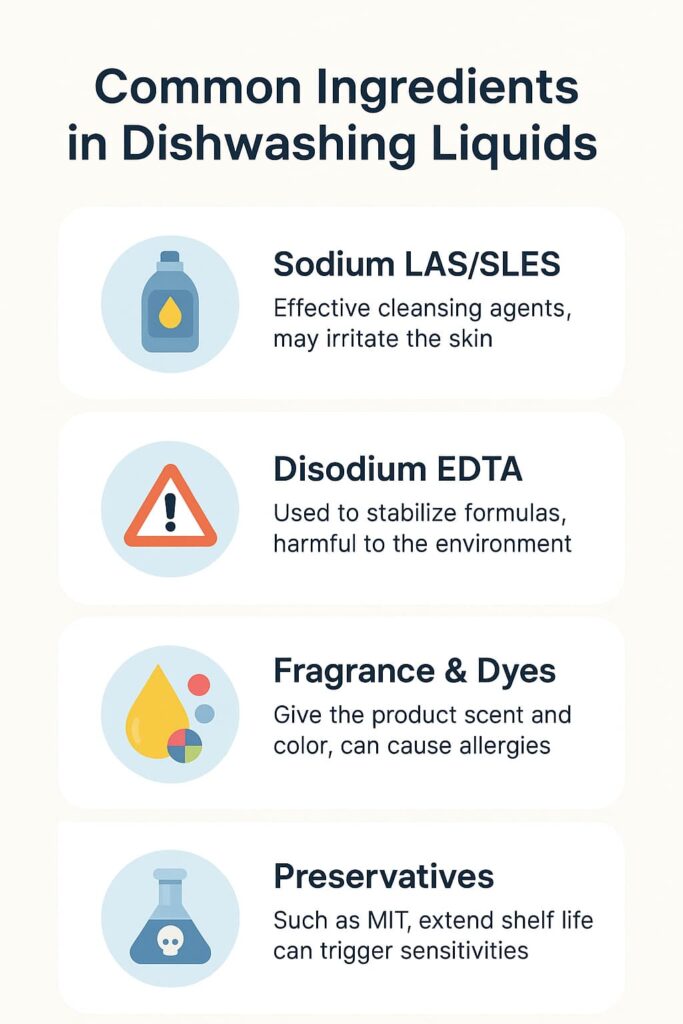
1. Sodium LAS ( Linear alkylbenzene Sulfonate)
It is used as primary surfactants most of detergents and other cleaning products due to its effective cleaning power (highly effective at removing dirt, including oil).
It can cause skin & eye irritation, toxicity to aquatic organisms and also possible links to cancer.
2. Synthetic ( SLS/SLES)
used as foaming agent. It can cause disrupt hormones, skin irritation.
Sulphate is the most dangerous because it is very small in size and sticks to the plate and even after cleaning with water, it remains and enters our body while eating. If you do this for a long time, there is a possibility of facing disease-growth.
3. Preservatives ( Methylisothiazolinone, Benzisothiazolinone)
Used for extend self life. It can cause strong skin irritation, potential neurotoxins.
4. Disodium EDTA
A chelating agent used for stabilizing and formulation enhance the cleaning power. It Can disrupt the surface of the skin cell.
5. Synthetic Fragrance
Used for pleasant smell. It can cause allergies (contain phthalates)
6. Dyes and colors
Make the product look attractive, It can cause allergies
7. Triclosan
Kill bacteria, can create hormonal effects.
These are the most common ingredients used to made dishwashing liquids.
What we use
Let’s discuss about dishwashing liquid that is used in 90% of Indian homes.
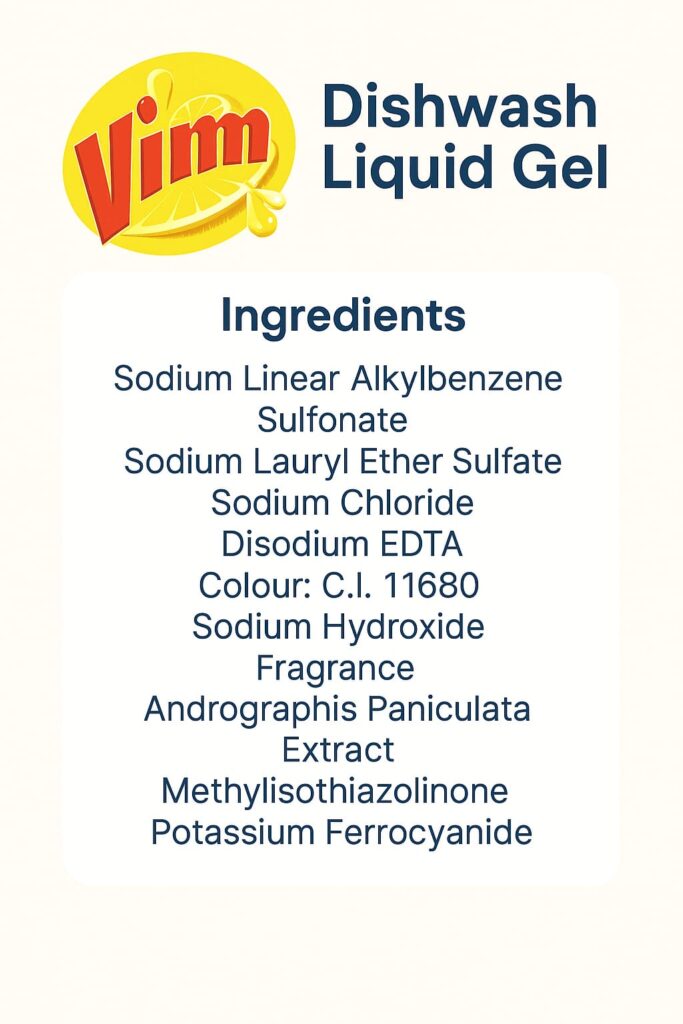
Vim dishwashing Liquid gel –
You would be surprised to know that vim dishwashing liquid does not fully disclose the ingredients list used in their product.
Used ingredients –
Sodium LAS
(SLES) sodium lauryl Ether sulphate
Disodium EDTA
Fragrance
concentrated lemon juice
cosmetic colourant
water & citric acid
All these things have been discussed above. Now consider for yourself, what are we cleaning our utensils with?
There are many other dishwashing Liquid gel available in the market, which claim to be nontoxic, it is not possible to discuss all of them. Hopefully, you can now verify them yourself.
Do they really clean?
Yes, the dishes certainly get clean, but the problem is, the tiny sulfate particles in them stick to our dishes, and since they are so small, they remain even after repeated cleaning with water, and when we eat, they enter our bodies and can cause various diseases due to long-term use.
Tips to avoid harmful ingredients
1. Always read the ingredients list even it is small or hidden.
2. Choose product like “SLS free,” “Paraben free,” “fragrance free,” or “Natural.”
3. Prefer products with clear labelling details, full disclosure.
Tips for healthier and safer alternatives
1. Look for Eco-certified product like USDA Organic, EWG verified.
2. look for plant based natural dishwashing liquid.
3. DIY dishwash.
There are some products available in market like –
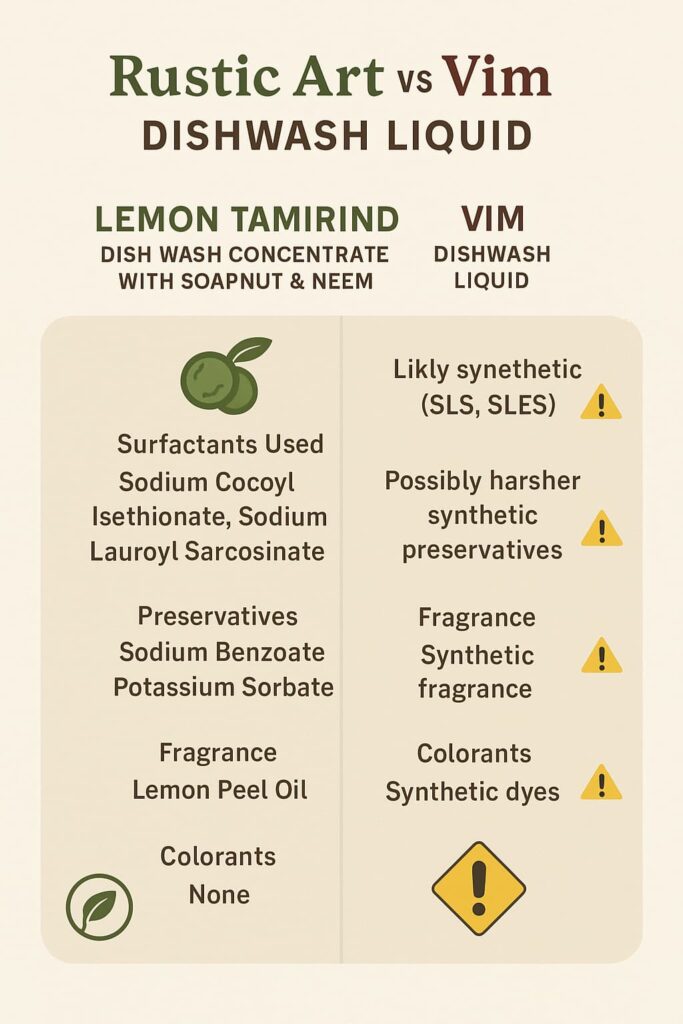
Rustic Art Lemon Tamarind – fully disclosed ingredients list, eco friendly and biodegradable.
Used ingredients – Plant based (Sodium Cocoyl isethionate, Sarcosinate), Sodium benzoate, potassium sorbate (mild or low risk), Natural lemon peel oil, Vegetable glycerin.
Read Labels like a pro
Order – Ingredients are arranged by volume of concentration (top 5 are main components, used by in high volume).
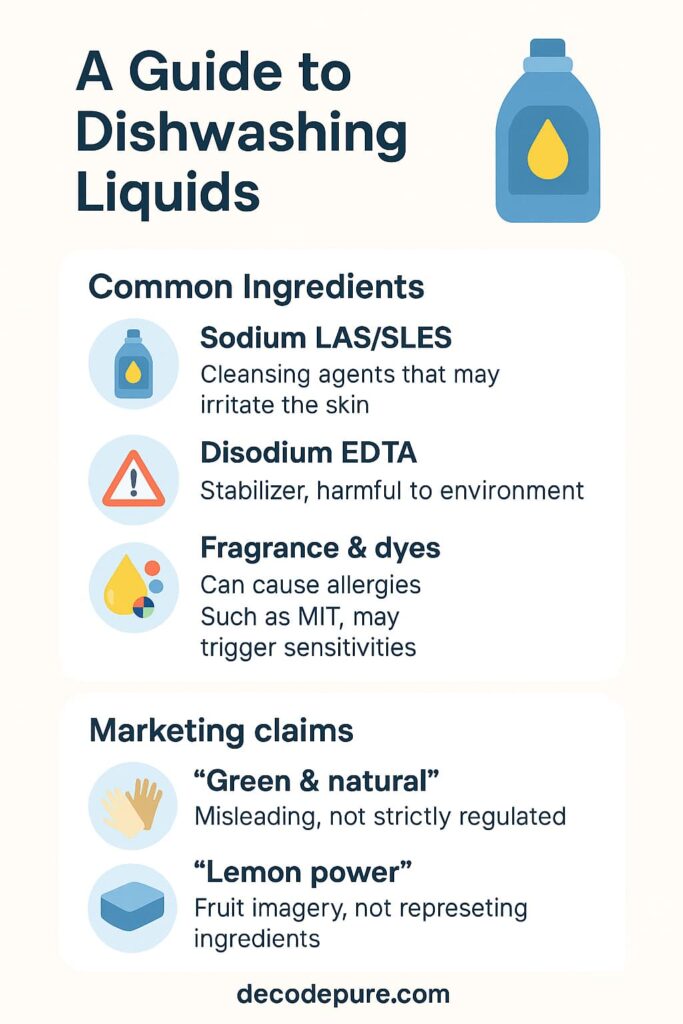
Don’t make fool terms like “100% lemon power,” “Soft on hand,” “Eco friendly,” “pH natural,” “Dermatologically Tested,” “Natural Fragrance,” “Nontoxic.”etc. Just because all levels are allowed to write doesn’t mean that, what is written is true
Make decision (Buy or Skip)
Spend 30 seconds to read the labels – your health will thank you .
So, without thinking about anything, first read the ingredients list. If you find any harmful chemicals…. just skip it.
Conclusion
You deserve to know what you are putting on your body.
Be smart, Choose pure.
Behind the shiny, eye catching bottles and fresh lemon scent, many dishwashing liquids hide harmful chemicals that may harm your skin, health, and the environment. But awareness is power. By reading labels, avoiding misleading marketing, and choosing natural or safer alternatives, you can protect your family—one dish at a time. Let your choices be as clean as your dishes.
I believe that buying anything shouldn’t be a guessing game. It’s time to we should start read labels and exploring healthier alternative.
I think now it’s very easy for you to identify. If I miss any ingredients? Whether you have a question, a suggestion, or just want to share your thoughts, feel free to reach out. I look forward to reading your messages.
Read more: Don’t brush blindly ! guide to decoding Toothpaste ingredients
Join WhatsApp Channel to Updated
Best Dishwashing Liquids in market
1. Rustic Art Home Lemon Tamarind Dish Wash Concentrate with Soap nut & Neem | Phthalate Free, Sulphate free.
2. Herbal Strategi Dishwashing Liquid Gel | Natural & Vegan with Refreshing Lemon Oil | Soft on Hands | Certified Eco-Friendly & Non-Toxic.
3. SacredEarth – Good For You. Safe For The Earth SacredEarth Natural Dish Wash Liquid

I’m Mehebub Alam Chowdhury, an M.Sc. Organic Chemistry student, and my mission with Decodepure is to simplify complex chemical ingredients in everyday products. With my knowledge of chemicals, I aim to help you make safer, healthier choices by breaking down product labels in an easy-to-understand way.