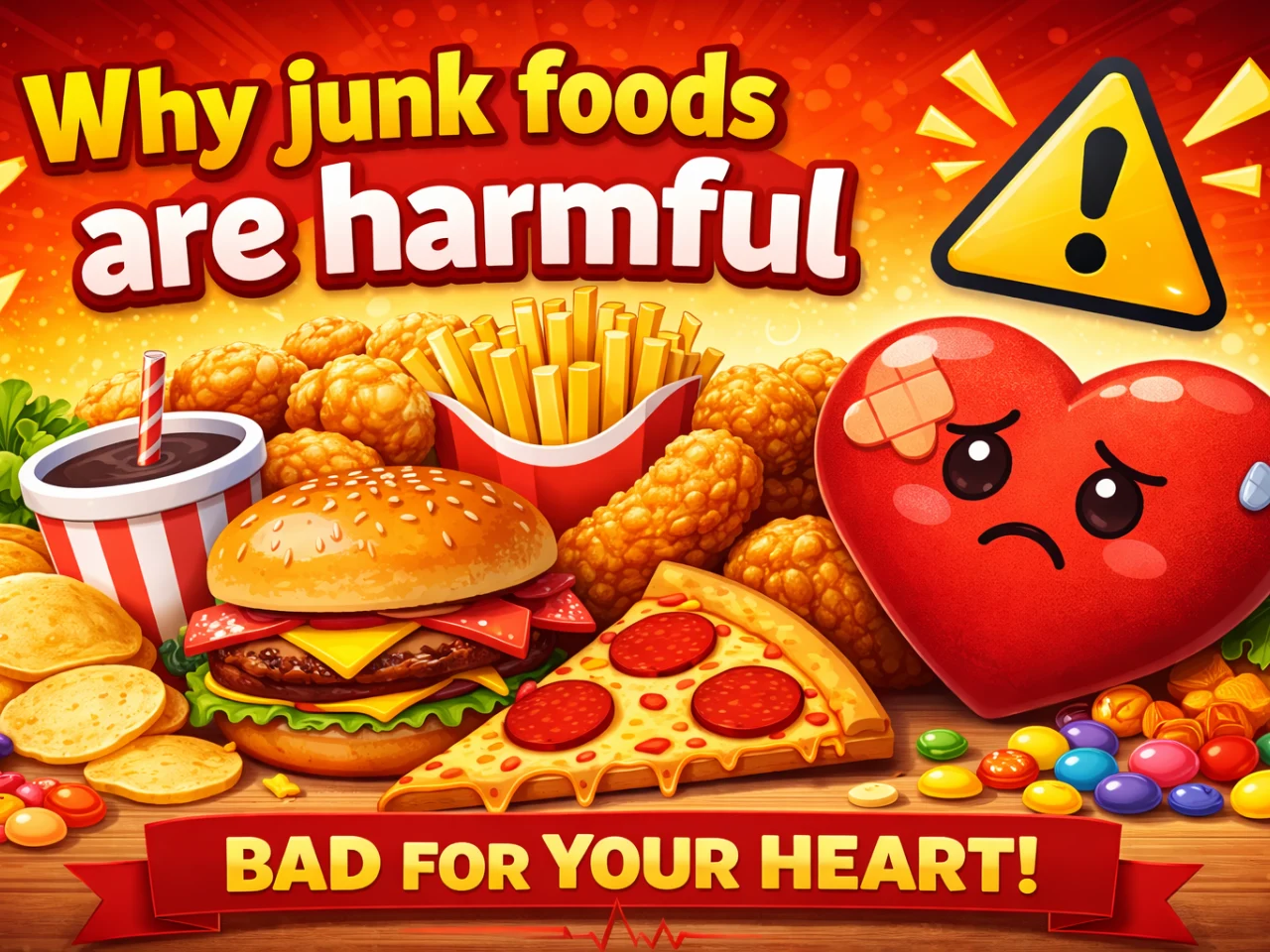
Junk foods look tasty, smell good, and are easily available. But behind the colourful packets and attractive ads, junk foods slowly damage our health. Let’s understand why junk foods are harmful.
Table of Contents
What Exactly Is “Junk Food”?
Junk food refers to any food that is high in calories, sugar, salt, and unhealthy fats — but low in actual nutrition. Think chips, burgers, fried chicken, sugary drinks, instant noodles, packaged pastries, and candy bars. These foods fill your stomach but don’t give your body the vitamins, minerals, or fiber it actually needs.
Junk foods are ultra-processed, not real food
Most junk foods are ultra-processed foods, meaning they are:
- Made in factories
- Stripped of natural nutrients
- Mixed with additives, colours, flavours, and preservatives
Why this is harmful:
- Low in fiber, vitamins, and minerals
- Harder for the body to digest
- Disrupt gut health and metabolism
Scientific finding: People who eat more ultra-processed food have higher risk of obesity, heart disease, and early death.
1. Increase blood sugar fast
When you eat junk food, the refined carbs and added sugars break down almost instantly. This causes a sudden spike in blood sugar, which forces your body to pump out a large amount of insulin. Then your energy drops, you feel tired, and within a short time, you’re hungry again.
This cycle, repeated over and over, can eventually lead to insulin resistance — the stepping stone to Type 2 diabetes.
According to the American Diabetes Association, refined carbs are one of the main drivers of blood sugar instability.
2. It’s Terrible for Your Heart
Junk food is packed with saturated fats, trans fats, and excess sodium. These work together to raise bad cholesterol (LDL), lower good cholesterol (HDL), and harden your arteries — a condition called atherosclerosis. The result? A much higher risk of heart disease, heart attack, and stroke.
Research published by the American Heart Association confirms that obesity driven by poor diet (including ultra-processed foods) is a major risk factor for cardiovascular disease.
📌 Source: PMC – Hidden Dangers of Processed Food
3. It Can Make You Gain Weight — Even When You Don’t Realize It
Junk food is energy-dense but nutritionally empty. It’s soft, easy to chew, and gets broken down quickly, meaning your brain’s “I’m full” signal arrives late. By then, you’ve already eaten more than you needed.
Studies show that ultra-processed foods can trigger overeating by stimulating two separate reward circuits in the brain, one for fat and one for sugar, at the same time, making it very hard to stop eating.
📌 Source: Medical News Today – Fast Food Effects
4. It Raises Your Blood Pressure
The shocking amount of sodium in junk food is a silent danger. High sodium intake forces your body to retain water, which increases the volume of blood, and that pushes up your blood pressure.
A 2024 study found that people who regularly eat ultra-processed foods have a significantly higher risk of hypertension compared to those who eat mostly whole, unprocessed foods.
📌 Source: Medical News Today – Fast Food and Blood Pressure
5. Junk foods damage gut health
Our gut needs fiber and natural nutrients. Junk foods mostly contain:
- Refined flour (maida)
- Added sugars
- Artificial additives
Why this is harmful:
- Kills good gut bacteria
- Causes bloating, constipation, acidity
- Weakens immunity (70% of immunity comes from the gut)
Science link: Poor gut health is linked to diabetes, obesity, and inflammation.
6. It Harms Your Mental Health
Here’s something most people don’t expect: junk food affects your mood and brain too.
A 2024 meta-analysis published in BMC Psychiatry, looking at nearly 160,000 people across 17 studies, found that people who eat lots of junk food have:
- 15% higher odds of having stress and depression symptoms
- 16% higher odds of developing mental health disorders overall
- 31% higher risk of experiencing heightened stress
This is partly because junk food causes chronic inflammation, and partly because it disrupts the balance of neurotransmitters like serotonin and dopamine — the chemicals that regulate your mood.
📌 Source: BMC Psychiatry – Junk Food & Mental Health Meta-Analysis
7. It Can Damage Your Liver
Your liver processes fat. When you overload it with the kind of unhealthy fats found in junk food, it starts storing fat it can’t process, leading to non-alcoholic fatty liver disease (NAFLD). Over time, this can progress to liver damage and even increase the risk of liver cancer.
8. It Increases Cancer Risk
A study published in the journal PLOS Medicine found that people who eat the most junk food have a higher risk of stomach, colorectal, and respiratory tract cancers. This is linked to chronic inflammation, oxidative stress, and the preservatives and artificial additives found in processed foods.
📌 Source: Fortis Healthcare – Harmful Effects of Junk Food
9. It Wrecks Your Skin
A 2021 research review confirmed that diets high in fats, refined carbs, and sugar are directly linked to acne. Junk food causes spikes in insulin, which can trigger excess oil production in your skin.
📌 Source: Fortis Healthcare – Harmful Effects of Junk Food
10. It Affects Kids and Teenagers Even More
Research published in Frontiers for Young Minds found that frequent junk food consumption in children and teens is linked to lower cholesterol health, higher blood pressure, tooth decay, and constipation, and it sets up unhealthy eating habits that are very hard to break later in life.
📌 Source: Frontiers for Young Minds – Junk Food Impacts
Final Thoughts
The science is clear: junk foods might taste good in the moment, but it quietly harms your heart, brain, liver, skin, blood sugar, and mental health over time. The good news is that every healthier choice you make today adds up. You don’t need a perfect diet, just a better one.
Eating junk foods occasionally isn’t going to ruin your health. The real problem is regular, frequent consumption — when it becomes a habit rather than a treat.
Your body is working hard for you every single day. Feed it well.
Q. Why is junk food bad for heart health?
Junk food contains high salt, sugar, trans fats, and refined oils. These increase bad cholesterol (LDL), raise blood pressure, and cause fat buildup in arteries, making the heart work harder.
Q. How does junk food increase cholesterol?
Trans fats and refined oils in junk foods increase LDL (bad cholesterol) and reduce HDL (good cholesterol). This leads to plaque formation inside arteries, increasing heart disease risk.

I’m Mehebub Alam Chowdhury, an M.Sc. Organic Chemistry student, and my mission with Decodepure is to simplify complex chemical ingredients in everyday products. With my knowledge of chemicals, I aim to help you make safer, healthier choices by breaking down product labels in an easy-to-understand way.