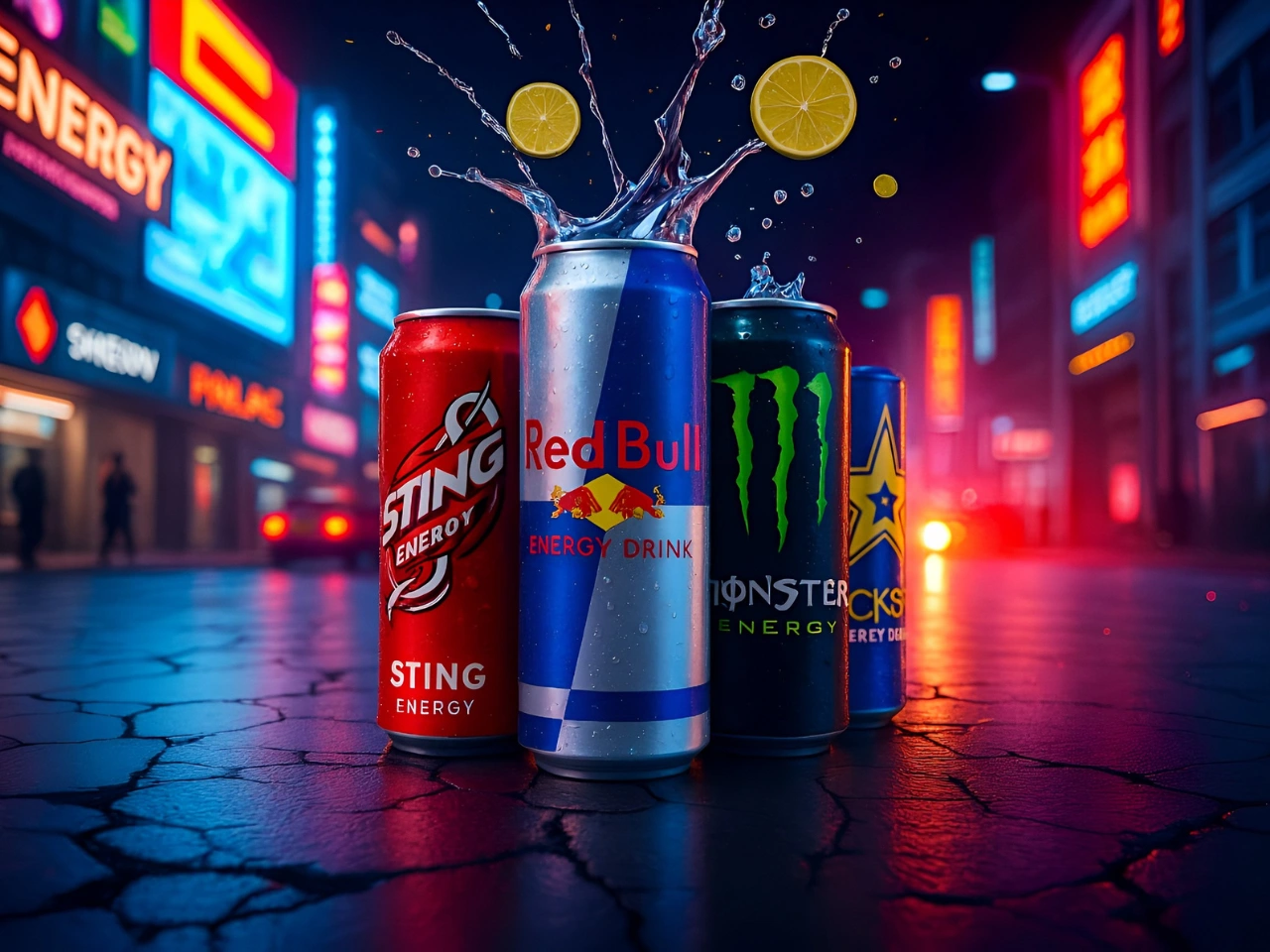
Do you really know what you are putting to your body, have you ever read the ingredients list on your favorite energy drinks. Especially young professional, teenagers and students are drink such energy drinks mostly. For today’s generation Energy drinks have become only solution for instant energy.
In the blog post we will decode all the ingredients, the making process and it’s health impact.
Table of Contents
Ingredients matter
As a common man, we have no alternative way to verify which product is harmful and which is not. Only the ingredient list can help us in this regard. There is no other way.
So, before buying anything, be sure to check the ingredients list.
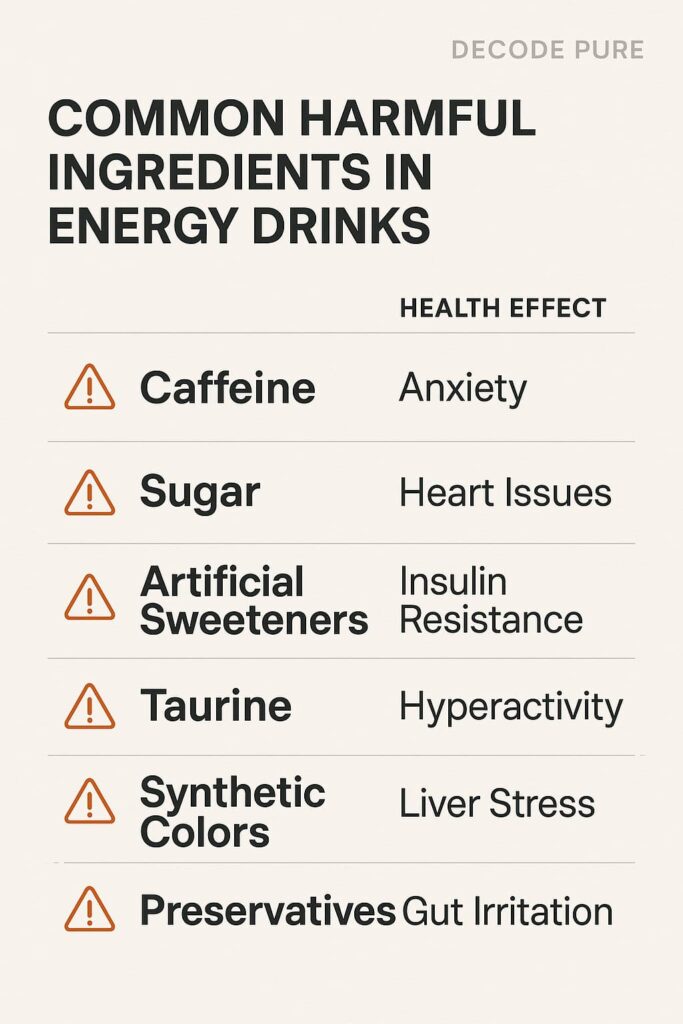
Common ingredients in energy drinks
1. Caffeine
Due to the presence of caffeine it can help elevate mood, making individuals feel more positive and energised. You Feel fresh and active 30 minutes after drinking it.
- 80-300 mg per can (a cup of coffee has ≈95mg).
Health effects
- High amount caffeine consume (>400 mg/day) is associated with increased blood pressure, dehydration and even cardiac arrhythmias in sensitive individuals.
- Exercise amount it can cause insomnia, anxiety, jitteriness and heart palpitations.
- Become more dangerous when mixed with alcohol
Reference: EFSA. “Scientific Opinion on the Safety Of Caffeine.” EFSA Journal, 2015
2. Sugar (Glucose/Sucrose/high fructose corn syrup)
Sugar also provides quick energy source and improved test of the energy drinks.
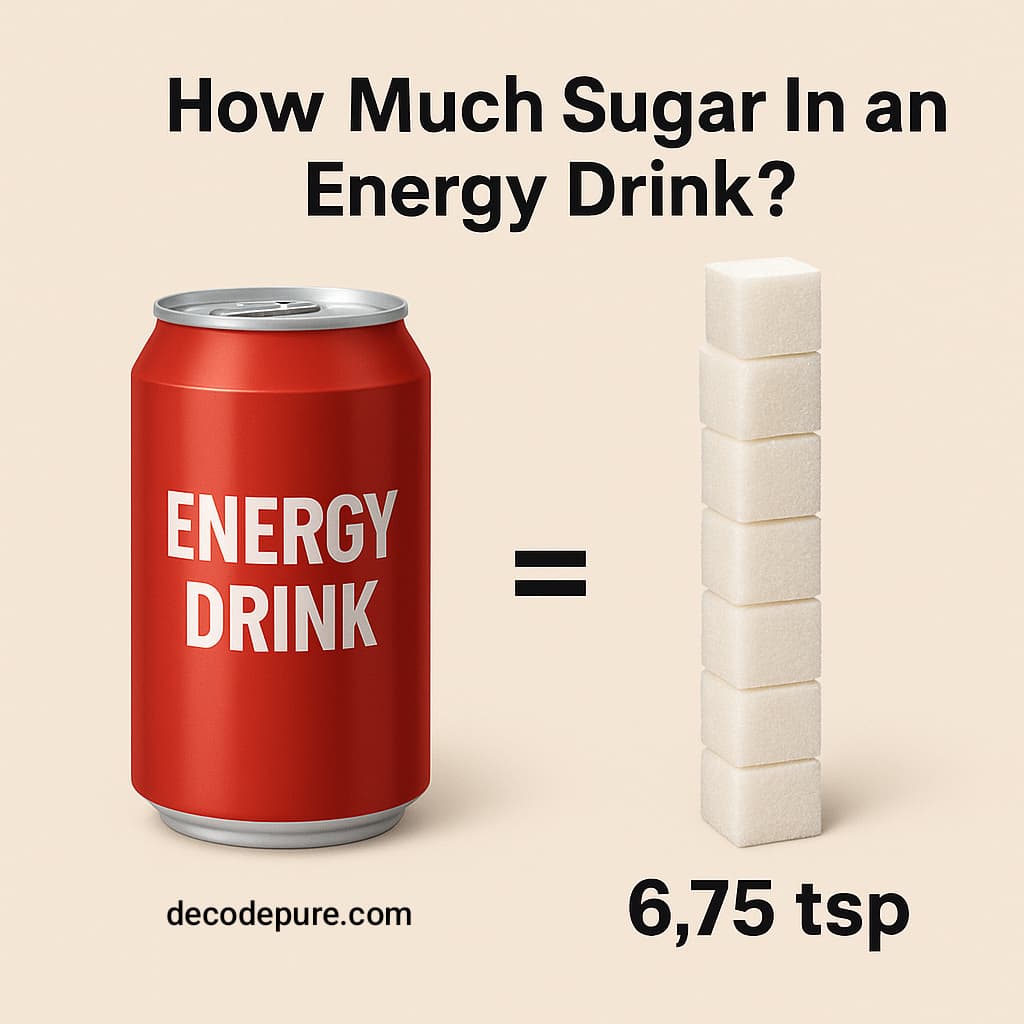
- 20-35 gm per can (about 5-9 teaspoons)
Health effects
For long-term excessive sugar consumption can lead weight gain, tooth decay, raises blood pressure and insulin level, joints pain, skin aging, liver damage, Type 2 diabetes, pancreatic breakdown, kidney failure, Heart attack risk increase.
Reference: Harvard Health: The sweet danger of Sugar, Who – Guideline, Sugar intake for adults and children, World Health Organization, 2015
3. Artificial sweeteners (e.g., Aspartame, Acesulfame K, sucralose)
Used as sugar substitute (in sugar free version).
Health effects
- Linked to headache, mood changes.
- Increase glucose intolerance, can alter gut microbiota.
4. Taurine
Amino acid that supports neurological development and regulates water and minerals level in blood . Taurine is used due to its prescribed benefit for athletic performance and mental focus.
Health effects
- Generally considers safe in moderate does (up to 3000 mg per day).
- It can be harmful for heart and nervous system, when mixed with high caffeine levels.
Reference: European Food Safety Authority (EFSA), 2009
5. B Vitamins (B3, B6, B12 etc)
It act as Coenzymes, helps convert food into energy.
Health effects
- Safe in moderate Consumption, but high dose especially B6 can cause nerve damage
Reference: Institute of Medicine. “Dietary Reference Intakes.” National Academies Press, 1998.
6. preservatives sodium benzoate
Helps to extend self life
Health effects
- Associated with hyperactivity in children
- In the presence of Vitamin C, combine with it and may form benzene a well known carcinogen.
7. Artificial colours (Red 40 yellow 5)
Used for visual appeal
- Banned in several countries or require warning levels
- Linked to hyperactivity, behavioral issues.
Reference: CSPI. “Food Dyes: Rainbow of Risks,” 2010.
8. Caramel color (F150a to F150d)
This is the colorant that gives the drinks dark brown color. Caramel may contain 4-MEI, a potential carcinogen.
The international Agency for Research on Cancer (IARC) has classified 4-MEI as “possibly carcinogenic to humans.”
Tiny amount not harmful but regular intake can cause long-term health risk.
These three Brands are most popular in India. All of them are contains high amount of sugar. Consuming so much sugar is enough to make us excessively sick.
There are many other brands of energy drinks available in the market like- Coca cola burn energy, Tzinga (by Hector Beverages) etc. It is not possible to discuss all of them. Hopefully, you can now verify them yourself whether they are healthy or unhealthy.
Top energy drinks brands in the market
1. Red Bull
India’s most popular and widely available Energy drink.
Ingredients: Carbonated Water,Sucrose & Glucose,Citric Acid, Taurine (1000 mg), Caffeine (80 mg), Inositol, B-group Vitamins (Niacinamide, Pantothenic Acid, B6, B12), Flavorings, Color: Caramel E150c.
- Sucrose & Glucose are sugar (11gm sugar per 100ml), means
250ml can contain = 11 × 2.5 = 27.50 gm (≈7 teaspoons of Sugar).
- The amount of Caffeine is ok (80mg), ≈ one cup of coffee. 400mg/day is considered safe for most healthy adults.
Caffeine + high sugar and most of the other harmful ingredients makes red bull unhealthy. It is very bad for diabetes patients.
2. Sting (by PepsiCo)
Badget-friendly energy drink targeting teenagers mostly.
Ingredients: Carbonated Water, Sugar (7gm sugar per 100ml), Citric Acid, Taurine, Caffeine (72 mg), Artificial Flavors, Color (INS 110 – Sunset Yellow), Preservatives (Sodium Benzoate).
- Contain 7gm sugar per 100ml, means
250ml can contain = 7 × 2.5 = 17.5 gm (≈4.5 teaspoons of Sugar).
Amount of sugar and caffeine low as compare to Red Bull, but still high amount of sugar, caffeine and other harmful ingredients makes Sting unhealthy, especially for diabetes patients.
Note: Sting clearly mentioned that “Not recommended for Children.” But these drink are most popular amongst children.
Reference: PepsiCo India Product Label
3. Monster Energy
Known for high caffeine and sugar content marketed to youth and gamers.
Ingredients (India version): Carbonated Water, Sucrose, Glucose, Citric Acid, Natural Flavors, Taurine (1000 mg), Caffeine (160 mg per 500 ml can), Panax Ginseng Extract, L-Carnitine, Sodium Benzoate, Sorbic Acid (preservatives), B Vitamins (Niacin, B6, B2, B12), Artificial Colors (Grapeskin Extract), Artificial Sweetener (sucralose).
- Contain 12gm sugar per 100ml, means
350ml can contain = 12 × 3.5 = 42 gm (≈10.5 teaspoons of Sugar). Also added Artificial Sweetener (sucralose). Can you imagine how much sugar used.
- Caffeine level is double then Red Bull and sting.
Too much sugar, caffeine and other harmful ingredients make monster energy too much unhealthy.
Note: Monster energy drink clearly mentioned that “Not recommended for Children, pregnant or Lactating women.”
These three Brands are most popular in India. All of them are contains high amount of sugar, caffeine, caramel type color, artificial sweeteners, Taurin etc harmful chemicals.
There are many other brands of cold drinks available in the market like- Tzinga (Hector Beverages), Coca-Cola’s Burn energy etc. It is not possible to discuss all of them. Hopefully, you can now verify them yourself whether they are healthy or unhealthy.
Reference: Monster Energy official
Health Impact
If we consume these types of energy drinks for a long time, it can cause various diseases like – Increased heart rate, anxiety or irritability, caffeine dependency, poor sleep quality, dehydration, insulin level disbalance etc.
Read Labels like a pro
Order – Ingredients are arranged by volume of concentration( top 5 are main components, used by in high volume)
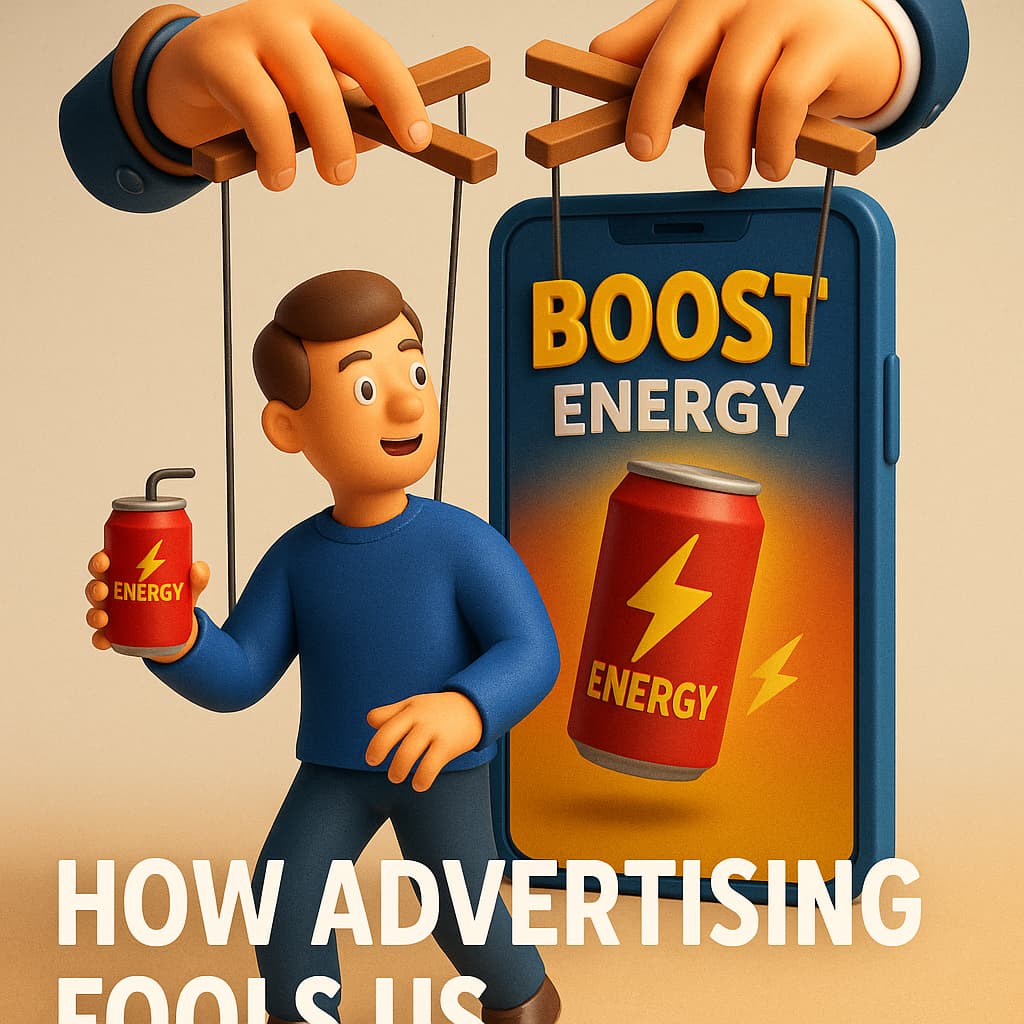
Don’t make fool marketing terms like “instant energy” or “performance booster”, “Gives you wings”, “Charged to perform,” etc. Just because all levels are allowed to write doesn’t mean that , what is written is true.
Is this article helpful?
How we are being fool?
Most of us buy something not because we understand them – but because we trust the fake promises, high quality advertisement by companies. Flashy visuals, bold promises like “instant energy,” or “performance booster,” and influencer endorsements often convince us to grab.
So, we have take responsibility ourself, try to gain knowledge of ingredients and yes, must ‘Read the Ingredients list at first’ before buying anything.
Make decision (Buy or Skip)
Can Buy ✅
If you are healthy person, with no heart, liver and sleep related issues can consume occasionally (once in a while, not daily).
Skip ❌
- Teenagers (<18) – brain still developing, caffeine effects on mood, sleep and focus.
- People with Heart problem – Stimulants raises blood pressure and heart rate.
- People with Anxiety – caffein and taurine can tigger anxiety attacks.
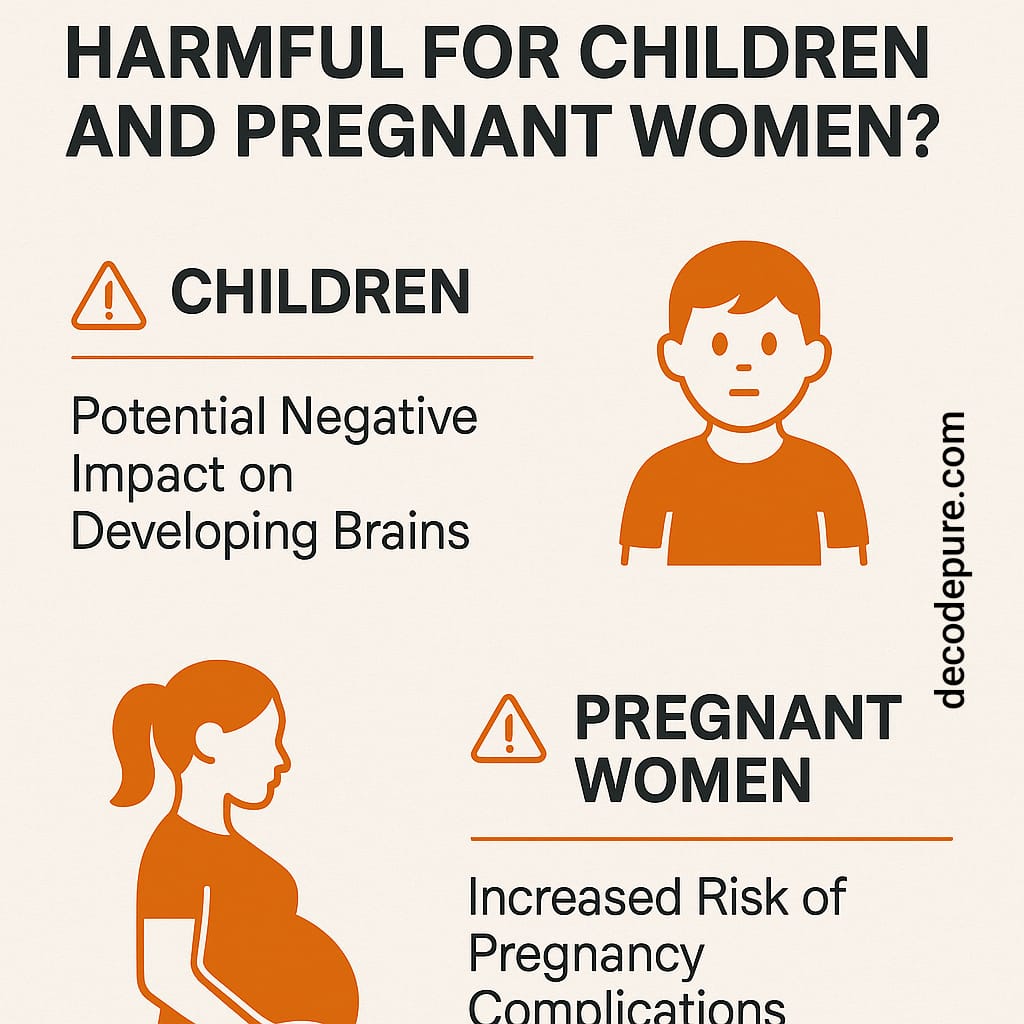
- Pregnant or Breastfeeding women – high caffeine intake increase risk of miscarriage, low birth weight and irritability in babies.
- Diabetes – High amount of sugar and artificial sweeteners increase blood sugar.
- People with liver Disease – B vitamins harmful for liver.
Read More: The Bitter Truth Behind Your Sweet Sips : Exposing the Dark Side of Cold Drinks
Conclusion
Your body deserves better than a chemical boost.
Energy drinks may seem like quick solution for low energy, but they come with serious health risks – especially for children and pregnant women. I believe that buying anything shouldn’t be a guessing game. It’s time to we should start read labels and exploring healthier alternative.
I think now it’s very easy for you to identify. If I miss any ingredients? Whether you have a question, a suggestion, or just want to share your thoughts, feel free to reach out. I look forward to reading your messages.
Q. Is energy drinks healthy or unhealthy?
Unhealthy, contain high amount of sugar, caffeine and other harmful ingredients like – caramel type color, artificial sweeteners, Taurin etc make it unhealthy.
Q. Is Sting good for kids?
No, Sting clearly mentioned that “Not recommended for Children.” But these drink are most popular amongst children. For kids, brain still developing, caffeine effects on mood, sleep and focus.
Q. Is Red Bull everyday, Ok?
No, if you are healthy person, with no heart, liver and sleep related issues can consume occasionally (once in a while, not daily).
Q. How much alcohol is in Red Bull?
Red Bull doesn’t contain alcohol.

I’m Mehebub Alam Chowdhury, an M.Sc. Organic Chemistry student, and my mission with Decodepure is to simplify complex chemical ingredients in everyday products. With my knowledge of chemicals, I aim to help you make safer, healthier choices by breaking down product labels in an easy-to-understand way.