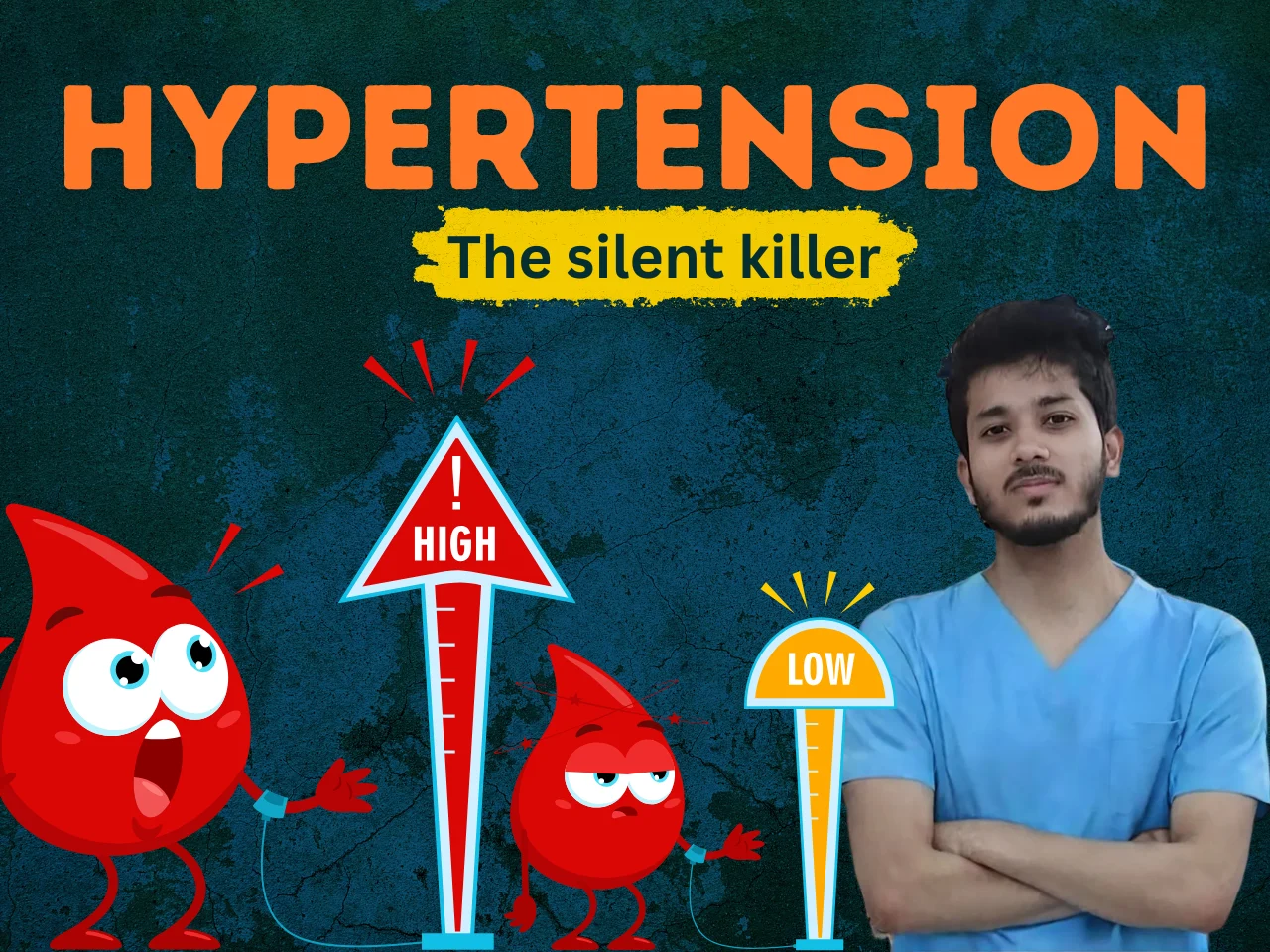

This article written by Munna Aziz Chowdhury, MBBS final year student, Diamond Harbour Government Medical College & Hospital
Hypertension means high blood pressure. The force of the blood on the arterial wall is high. It often develops silently without symptoms; with time, it can develop severe complications and death. This is why hypertension is known as the silent killer.
HTN is a chronic condition with elevated blood pressure >=140/90 mmHg. Globally, it affects ~1.3 billion people, with ~35% prevalence in Indian adults. Major risk factors include obesity, rich food, high salt intake, and a sedentary lifestyle. Only 50% of patients are aware, and 15-20% achieve control. Lifestyle modifications have a great role in controlling hypertension. Nowadays it is more dependent on medication.
Table of Contents
Definition
HTN is a chronic medical condition with persistent elevated systemic arterial blood pressure, defined as
≥140 mmHg systolic (when the heart pumps) or >= 90 mmHg diastolic (when the heart relaxes). As per WHO & ESC.
≥130/80 mmHg for high-risk patients as per ACC/AHA 2017.
Source: 2020 International Society of Hypertension Global Hypertension Practice Guidelines
Types
Primary Hypertension
- High blood pressure with unknown reasons, idiopathic.
- Most common type ~90-95%.
- Causes: family history, obesity, chronic stress, etc.
- Develops gradually over the years.
- Often asymmetric until a complication arises like heart disease or stroke.
Manage with lifestyle modifications & long-term medication.
Secondary Hypertension
- High blood pressure with an underlying medical condition or medication.
- Accounts for ~5-10% of cases.
- Common causes: kidney disease, endocrine disease, obstructive sleep apnea, etc.
- Sudden onset in nature.
- Often resistant to standard treatment.
- Generally symptomatic.
- Manage by treating the root cause
Source: WHO, Hypertension
Classification
Category Systolic, mmHg Diastolic, mmHg
Normal < 120 < 80
Elevated 120–129 < 80
Stage 1 HTN 130–139 80–89
Stage 2 HTN ≥ 140 ≥ 90
Hypertensive Crisis >180 >120
Note -WHO considers ≥140/90 mmHg as hypertension threshold.
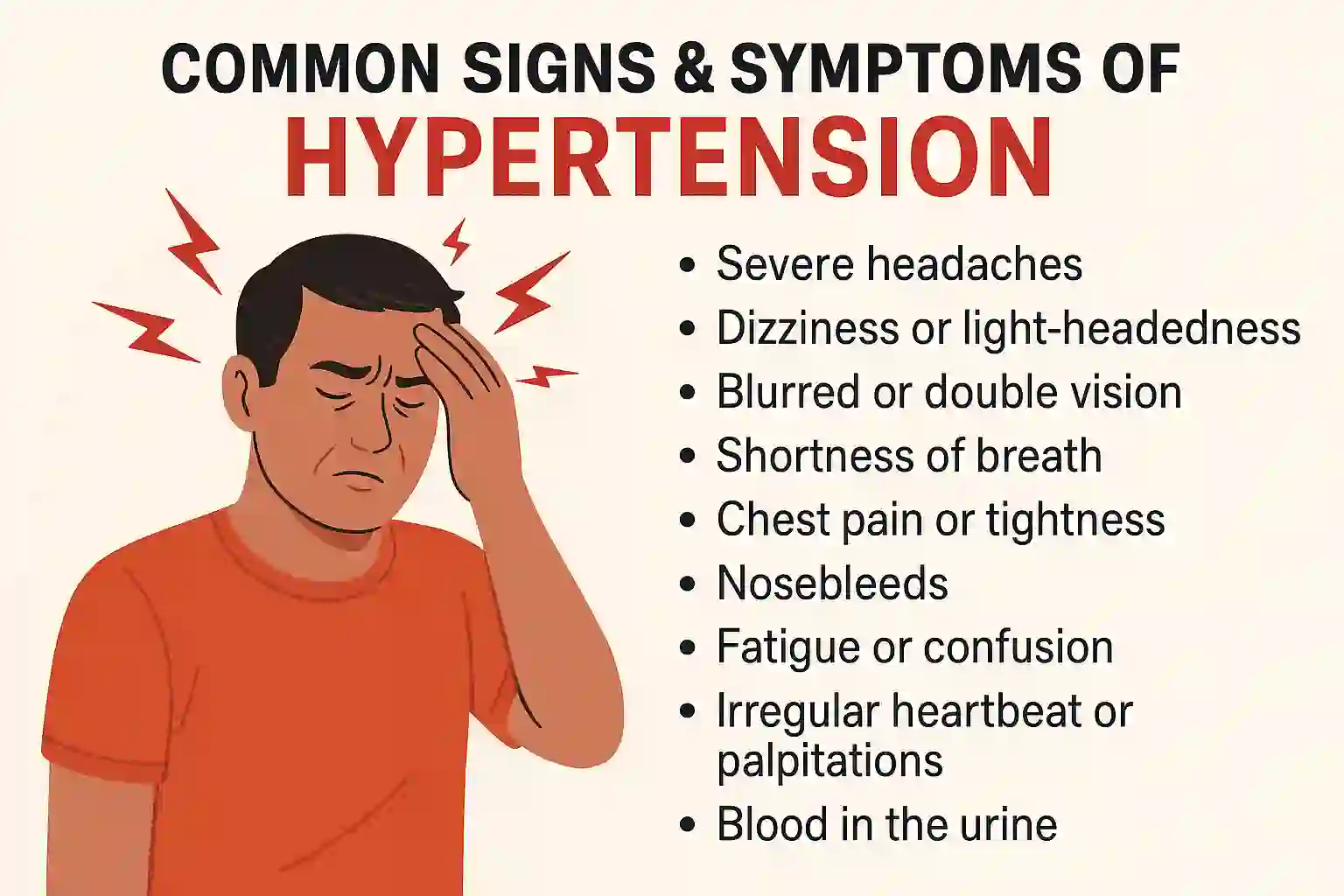
Common signs & Symptoms
It is important to note that hypertension is often asymptomatic. Commonly seen signs & symptoms are-
- Headache
- Dizziness or lightheadedness
- Blurred vision
- Palpitations
- Epistaxis – Bleeding from nose, not very common.
- Fatigue or confusion
- Nausea & vomiting – Hypertensive emergency.
Causes & Risk factors
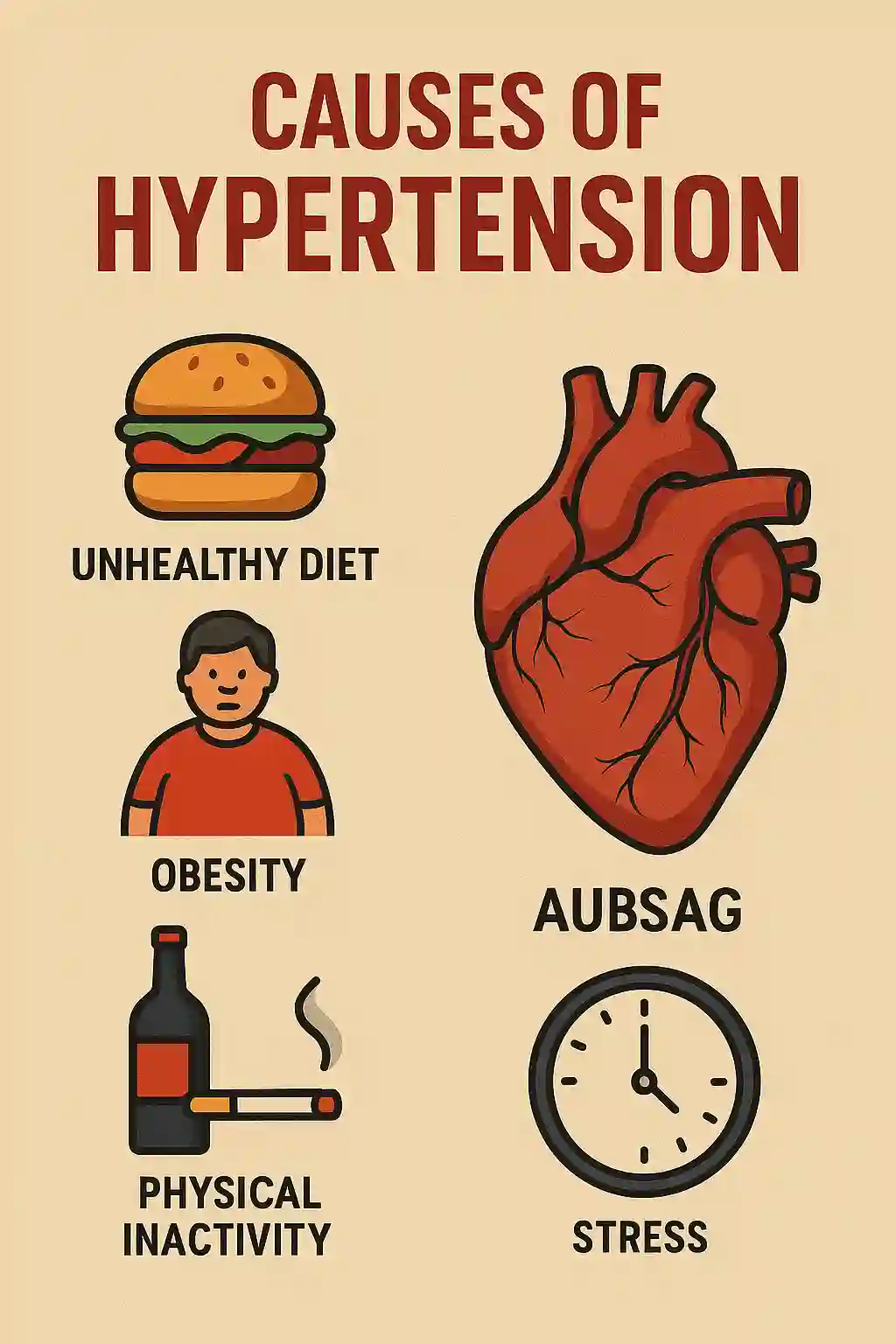
Broadly, there are 2 types—modifiable & non-modifiable risk—and sometimes they may have an association.
Non-Modifiable Risk factors
- Age—Risk increases with age.
- Genetics/Family history—Risk is higher if parents or siblings have HTN.
- Race/Ethnicity—African Americans tend to have HTN earlier & more severely.
- Gender—Men are at more risk. Women are at risk after menopause.
Modifiable Risk factors
These are lifestyle related factors.
- Obesity
- High salt intact
- Sedentary lifestyle/Physical inactivity
- Low potassium diet
- Tobacco – Smoking, Vaping
- Rich food intake
- Chronic stress
- Sleep apnea
Other cause
Medical condition
- Diabetes
- High cholesterol
- Kidney disease
- Pregnancy – Gestational hypertension.
Medication & substance
- NSAIDS- Ibuprofen, Naproxen.
- Oral contraceptives
- Cocaine
- Pseudoephedrine
Also, air pollutants & gut microbe imbalance may cause hypertension.
Complications
Heart disease can lead to CAD, heart attack, heart failure, left ventricular hypertrophy (enlarged heart), hypertensive encephalopathy, and TIA (transient ischaemic attack).
Stroke – increases risk of both ischaemic and haemorrhagic strokes due to damaged brain vessels.
Kidney Damage—causes chronic kidney disease-like KD, ESRD (end-stage renal disease), and glomerulonephritis.
Eye Problems—damages retinal blood vessels, leading to hypertensive retinopathy, papilledema & vision loss.
Aneurysms—high pressure weakens artery walls, causing bulges (aneurysms) that can rupture.
Cognitive Defect—increases risk of memory loss, dementia, and poor brain function over time.
Sexual Dysfunction—can affect sexual performance in both men and women.
Malignant Hypertension—blood pressure > 180/120 mmHg with end-organ damage.
Is this article helpful?
Prevention & Management
Lifestyle Modifications
DASH Diet
Dietary approaches to stop hypertension: a scientifically proven diet plan to prevent & control high blood pressure – hypertension.
Key principles
Sodium: Limit to <2300 mg/day, ideally <1500 mg/day. Lower sodium reduces blood pressure.
Potassium: Increase to 4700 mg/day (via fruits/veggies). Potassium counteracts sodium’s effects.
Calcium & Magnesium: Get from low-fat dairy, leafy greens Essential for vascular function.
Fiber: High fiber from whole grains, fruits, and vegetables. Fiber improves heart and gut health.
Foods to include
- Fruits & vegetables: bananas, oranges, and spinach.
- Whole grains—oats, brown rice
- Low-fat dairy—yogurt, skim milk.
- Lean protein—chicken, fish, beans.
- Nuts & Seeds: Almonds, walnuts.
- Healthy fat—olive oil.
Foods to Avoid
- High-salt food: chips, pickles.
- Fatty meats—red meats.
- Sugary foods—cakes, soda, sweets.
- Trans fats—butter, bakery items.
- Alcohol.
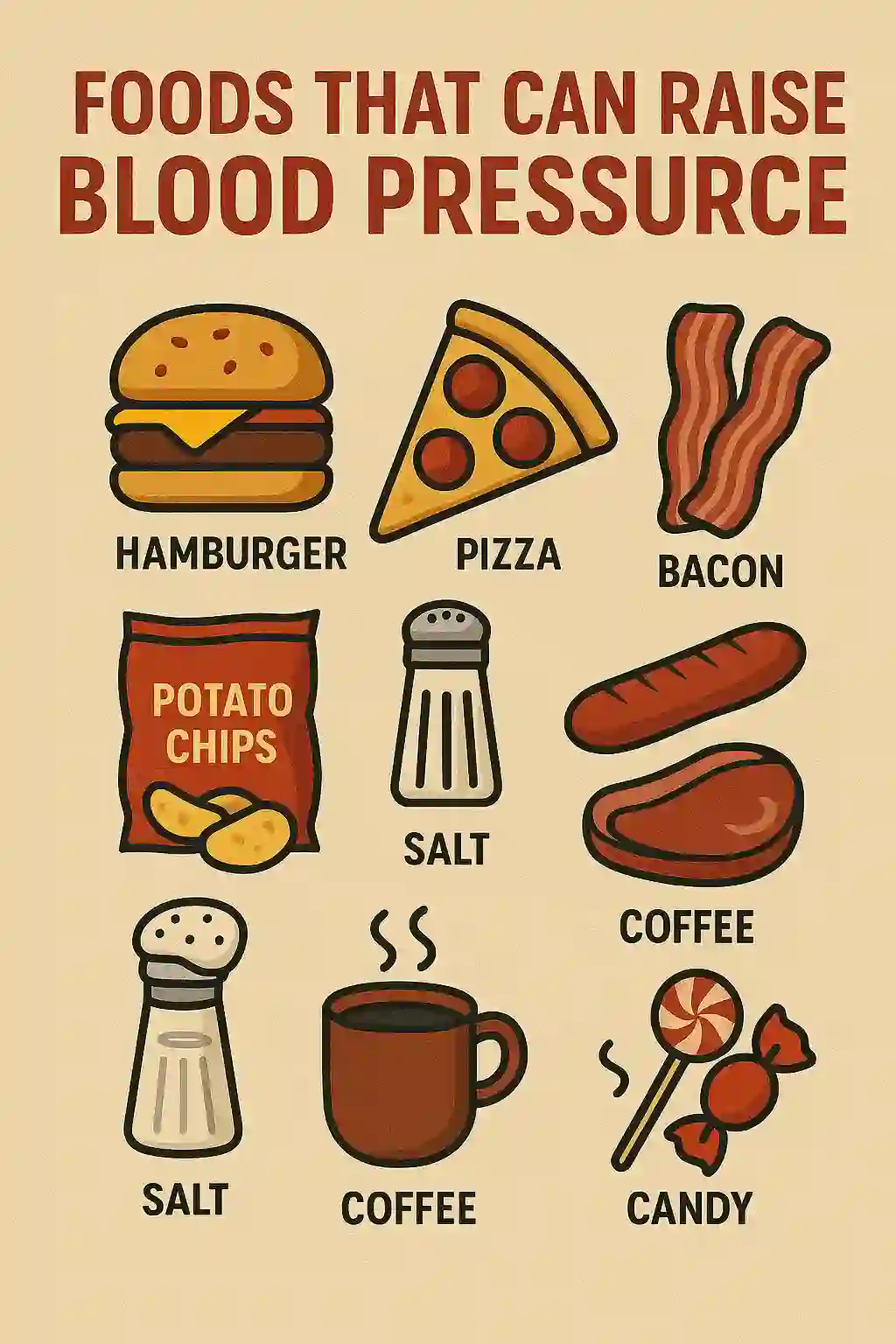
Diet control—Restrict salt intake.
- Maintain weight by diet control, and exercise.
- Don’t smoke and limit alcohol intake.
- Good sleep & manage stress.
Medication
- ACE inhibitors—lisinopril, enalapril, ramipril
- ARBs (angiotensin II receptor blockers): losartan, valsartan.
- CCBs (calcium channel blockers): diltiazem, verapamil, amlodipine, and nifedipine.
Others: thiazide diuretics, beta-blockers, and direct vasodilators like hydralazine.
Monitoring—Regular monitoring and checkups prevent the development of complications.
Common Myths and Facts
Myth: If I feel better, my blood pressure must be normal.
Fact: HTN is a silent disease. It may be asymptomatic.
Myths: Red wine is good for me, so more alcohol helps the heart.
Fact: Excess wine raises blood pressure, even. Limit to moderate drinking (≤1 drink/day for women, ≤2 for men) or none at all. Heavy drinking greatly increases BP and health risks.
Myth: Now my blood pressure is under control on medication, I can stop taking it.
Fact: HTN is a chronic disease. You can long-term medication. Always consult your doctor before your own preference.
Hypertension is a common & serious condition linked to heart disease, stroke, and kidney failure. It is often hidden for its silent behaviour & asymptomatic nature. But the good news is it is manageable as well as preventable. Lifestyle modifications—a balanced diet, exercise, and reduced salt intake—have a great role. Please consult your doctor & strictly follow the instructions given by your doctor. And for the patient who already has HTN, regular checkups and monitoring are a must to prevent complications. Stay alert, stay safe.
Q. Hypertension meaning?
Hypertension is a medical condition characterized by consistently high blood pressure in the arteries.
Q. Can stress cause hypertension?
Yes, stress can contribute to hypertension.
Q. What is the main cause of hypertension?
The main cause of hypertension is often a combination of genetic factors, poor diet (high in salt and low in potassium), lack of physical activity, obesity, excessive alcohol consumption, and chronic stress.
Q. What are the 4 stages of hypertension?
Normal: Systolic < 120 mm Hg and Diastolic < 80 mm Hg
Elevated: Systolic 120-129 mm Hg and Diastolic < 80 mm Hg
Hypertension Stage 1: Systolic 130-139 mm Hg or Diastolic 80-89 mm Hg
Hypertension Stage 2: Systolic ≥ 140 mm Hg or Diastolic ≥ 90 mm Hg
Q. What is blood pressure?
Blood pressure is the force of blood against the walls of the arteries as the heart pumps it around the body. It is measured in millimeters of mercury (mmHg) and is expressed with two numbers: systolic (pressure during heartbeats) over diastolic (pressure between heartbeats).
Q. How to bring blood pressure down?
Maintain a healthy weight.
Exercise regularly (at least 150 minutes of moderate aerobic activity per week).
Eat a balanced diet rich in fruits, vegetables, whole grains, and low-fat dairy products.
Reduce sodium intake (aim for less than 2,300 mg per day).
Limit alcohol consumption (no more than one drink per day for women and two for men).
Manage stress through relaxation techniques such as meditation or yoga.
Avoid tobacco smoke and exposure to secondhand smoke.
Monitor blood pressure regularly.
Follow your doctor’s recommendations regarding medications if prescribed.
Q. Normal blood pressure level?
Normal blood pressure levels are typically around 120/80 mmHg.
Q. What is the best treatment for hypertension?
Consult a healthcare professional for personalized treatment options for hypertension. Common treatments include lifestyle changes, such as diet and exercise, and medications like ACE inhibitors, beta-blockers, or diuretics.
Q. Is blood pressure curable?
Blood pressure is not curable, but it can be managed effectively with lifestyle changes and medication.

I’m Mehebub Alam Chowdhury, an M.Sc. Organic Chemistry student, and my mission with Decodepure is to simplify complex chemical ingredients in everyday products. With my knowledge of chemicals, I aim to help you make safer, healthier choices by breaking down product labels in an easy-to-understand way.









You are doing a amazing job ,munna by sharing the knowledge with the world ,waiting for the next ….Good luck
Thank you 😊