You went to the market to buy Organic apples but got confused after seeing the differences in apples. Some apples are very shiny, and some are less. Some apples have stickers on them, and each sticker has a different number.
If you are a health-conscious person, you must have noticed all these things.
So let us explain all these things to you. And if you buy an apple with chemicals by mistake, we will try to show you how to make it chemical free (Organic apples)
Table of Contents
Most common harmful chemicals
1. Pesticides – e.g., chlorpyrifos, Imidacloprid, Captan (carcinogen). (banned in many countries, but still used in some)
It can cause of hormonal disruption, headache, affects brain development in children, also effects on bee population, increase cancer risk, skin, eye and respiratory irritation.
The Environmental Working Group ( EWG ) found 90% of apples contain pesticides.
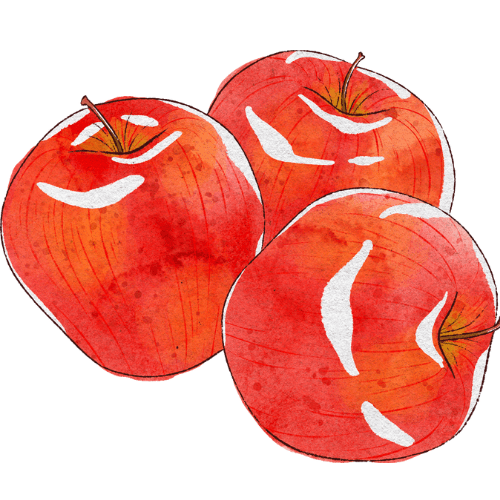
2. Synthetic Wax coating:– used to make apples shiny & extends self-life.
Synthetic wax trap pesticides underneath, so very difficult to washout.
3. Synthetic Fungicides – Thiabendazole
It can cause liver damage, skin irritation.
4. DPA (Diphenylamine) – used for preventing browning color during storage.
Banned in EU due to worrying over carcinogenic byproducts.
Step by step guide to choose chemical free apples
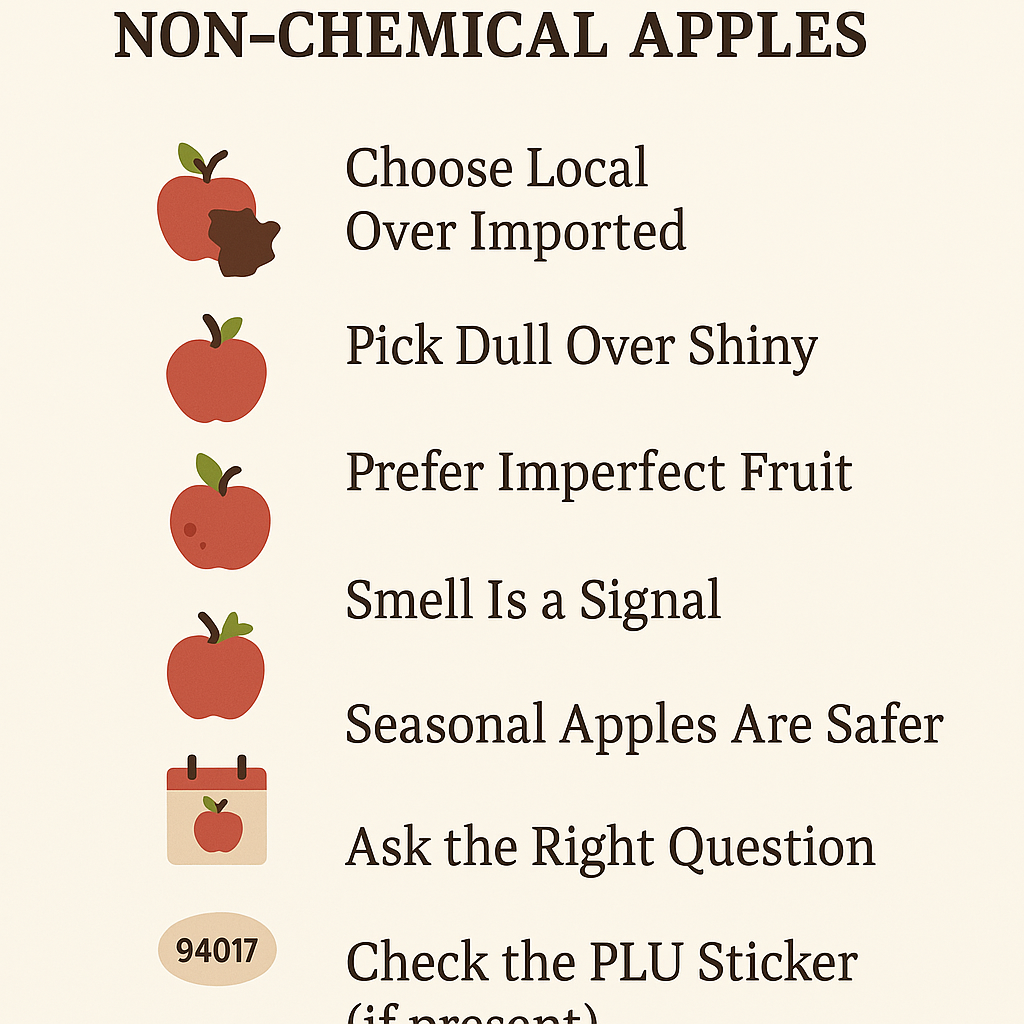
- Prefer Local apples –
- Local apples are usually fresher and contain fewer toxic chemicals especially from small farms or farmer market . Support your Neighbour.
- Prefer Organic apples –
- Always prioritize Organic look labels like “Organic” or “Certified Organic” due to USDA Organic certification bans synthetic pesticides, artificial wax etc.
- Stickers on apples –
- Look for PLU codes (price look-up codes) starting with no.9 (e.g.,94011 = Organic) and try to avoid code starting with no 4,8 (e.g.,84017).
- Try to skip shiny apples –
- try to avoid over shiny apples specially unsealed. Most of the cases shiny apples comes from wax coating used to preserved them for long time. Go for natural appearance like mate or dull surface.
- Smell the apple –
- Chemically made apples smells like has chemical odor or nothing to smell, but a healthy fresh chemical free apple has fruity like natural smell.
- Ask the seller –
- Don’t be hesitate to ask “Do you have any organic apple”. Farmer markets are great for these.
- Seasonal apples –
- Try to buy apples in their natural season.
Make apples Chemical free
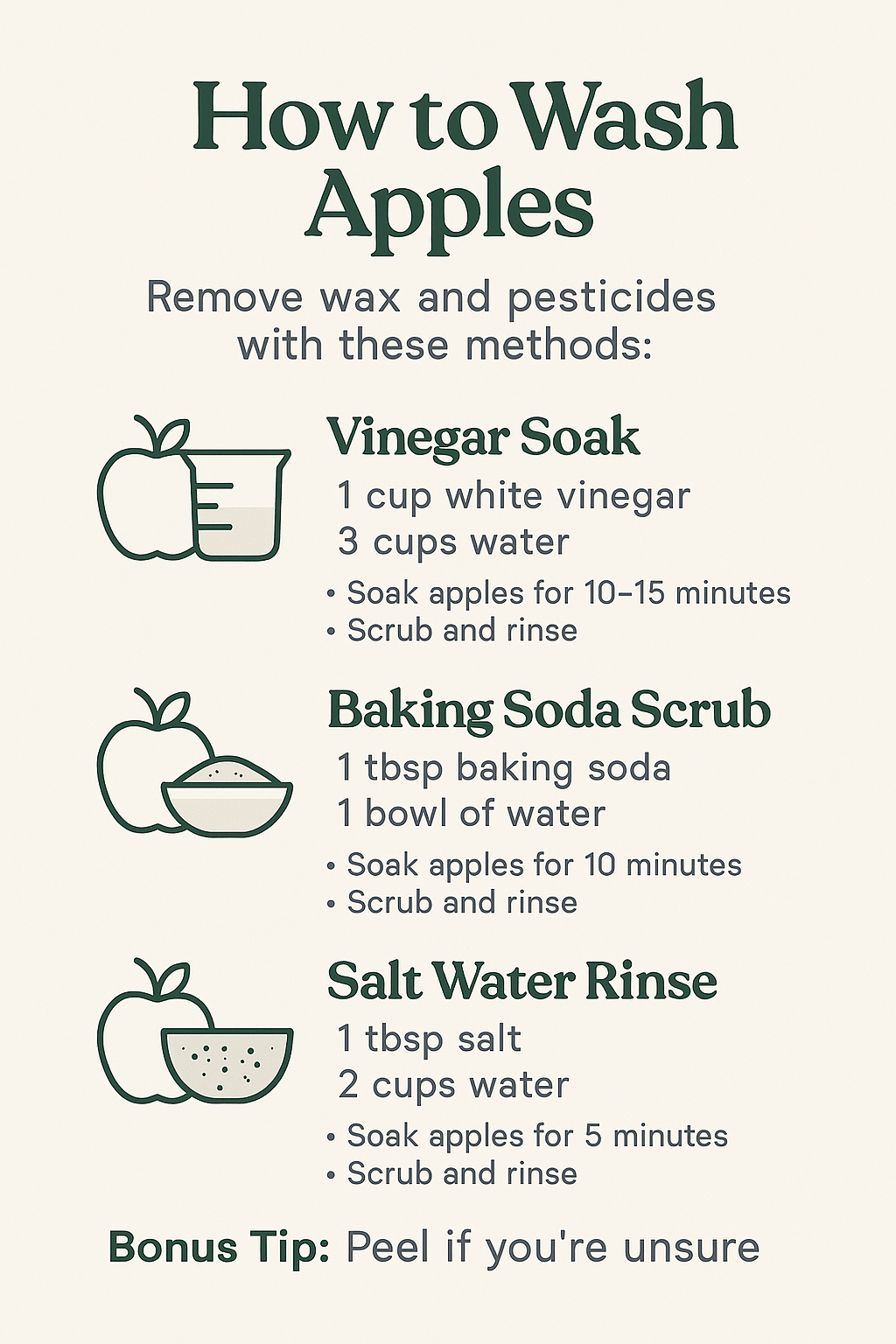
Even if you buy non organic apple, follow the following steps to make it chemical free
Vinegar Soak: –
Step 1:- Take 3 cup of water & 1 cup vinegar in a large size bowl.
Step 2: – take the apples in it for 10 to 15 minutes. After that, gently scrub with your hand or soft brush. And finally clean with normal water.
Saltwater Rinse: –
Step 1: – Take 2 cup water & 1 tablespoon salt in a bowl
Step 2: – Take the apples in the bowl for 5 minutes. After that make it clean with normal water.
Baking Soda: –
Step 1: – take 1 bowl of water & 1 tablespoon baking soda.
Step 2: – take the apples in it for 10 minutes. After that, make it clean by clean cloth or soft brush and at last use water.
What is the meaning of PLU Code Stickers on apple
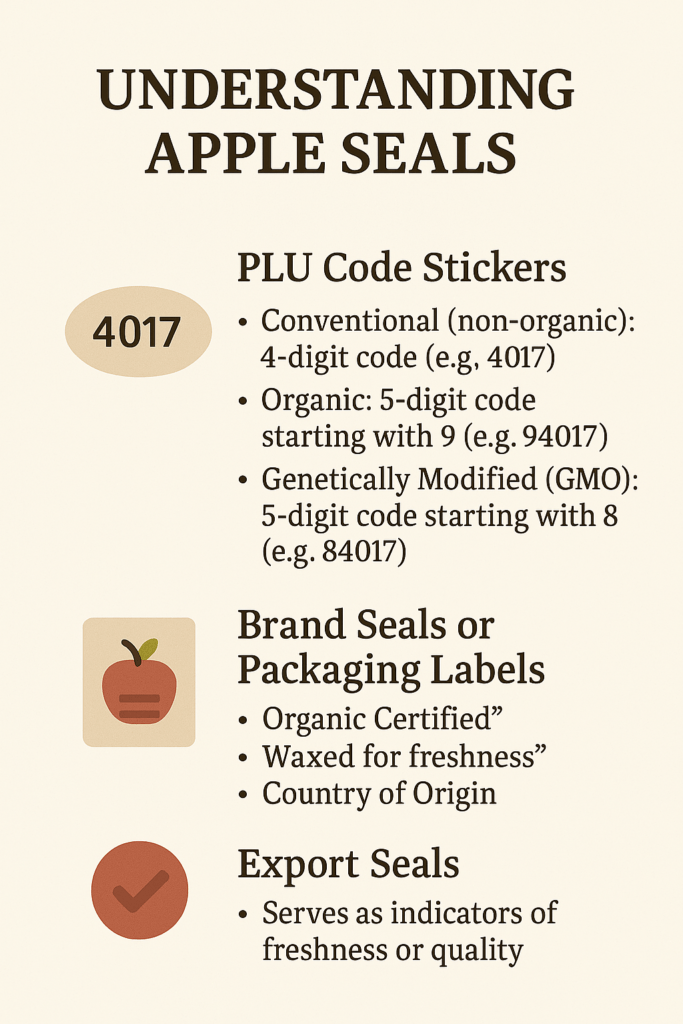
PLU (Price Look-Up Codes) Important information carried by those seal or stickers on apples and this is helpful to find Organic apples.
- 5-digit code starting with 9 (e.g. 94017), means those apples grown without synthetic chemicals – Organic
- 4-digit code starting with 4 (e.g. 4017), means those apples grown with synthetic chemicals, fertilizer or pesticides – non-organic
- 5-digit code starting with 8 (e.g. 84017) – GMO (Genetically Modified)
Note :- Try to avoid PLU code starting with ‘4’ and ‘8’
Is this article helpful?
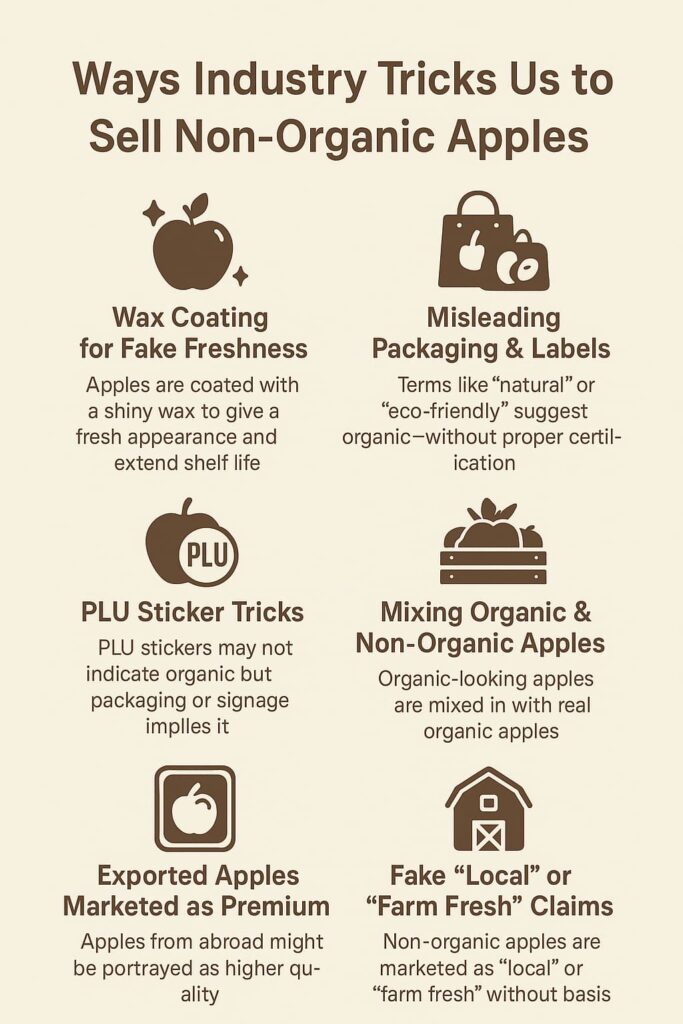
How industry fool us
- Shiny means fresh in our mind, to look apples fresh and perfect they apply wax coating.
- Misleading us by packaging & labels, Use terms like ‘’ Natural”, “farm fresh”, “ecofriendly”. Don’t believe these marketing terms, just because all levels are allowed to write doesn’t mean that, what is written is true.
- Apples exported from abroad are sold as premium and expensive and that’s why you think they are better and Organic apples; it is also possible that they have been stored for a long time with chemicals.
Don’t make fool :-
Use terms like ‘’ Natural”, “farm fresh”, “ecofriendly”. Don’t believe these marketing terms, just because all levels are allowed to write doesn’t mean that, what is written is true.
Make decision (Buy or Skip)
Without thinking about anything, first check the PLU codes Sticker. If you find any code starting with ‘4’ and ‘8’ …. just skip it. Try to avoid shiny apples.
Join WhatsApp Channel to Updated
Conclusion:-
Every bite of an apple should nourish you, not harm you.
Next time, before buying an apple, be sure check PLU sticker codes and then make a decision. Always choose Organic apples and protect your family from harmful pesticides.
I believe that buying anything shouldn’t be a guessing game.
I think it’s now very easy for you to choose chemical-free organic apples. If I miss any ingredients? let me know in the comments. Share this information with others to help avoid non-organic apples.
Spend 30 seconds to read the PLU codes Sticker – your Health will thank you.
Q. What does 94017 means on Apples?
5-digit code starting with 9 (e.g. 94017), means those apples grown without synthetic chemicals – Organic
Q. What does 4017 means on Apples?
4-digit code starting with 4 (e.g. 4017), means those apples grown with synthetic chemicals, fertilizer or pesticides – non-organic
Q. What does 84017 means on Apples?
5-digit code starting with 8 (e.g. 84017) – GMO (Genetically Modified)
Q. What is the meaning of PLU Code Stickers on apple?
PLU ( Price Look-Up Codes ) Important information carried by those seal or stickers on apples and this is helpful to find Organic apples.
Q. What is the full form PLU?
PLU stands for Price Look-Up.

I’m Mehebub Alam Chowdhury, an M.Sc. Organic Chemistry student, and my mission with Decodepure is to simplify complex chemical ingredients in everyday products. With my knowledge of chemicals, I aim to help you make safer, healthier choices by breaking down product labels in an easy-to-understand way.