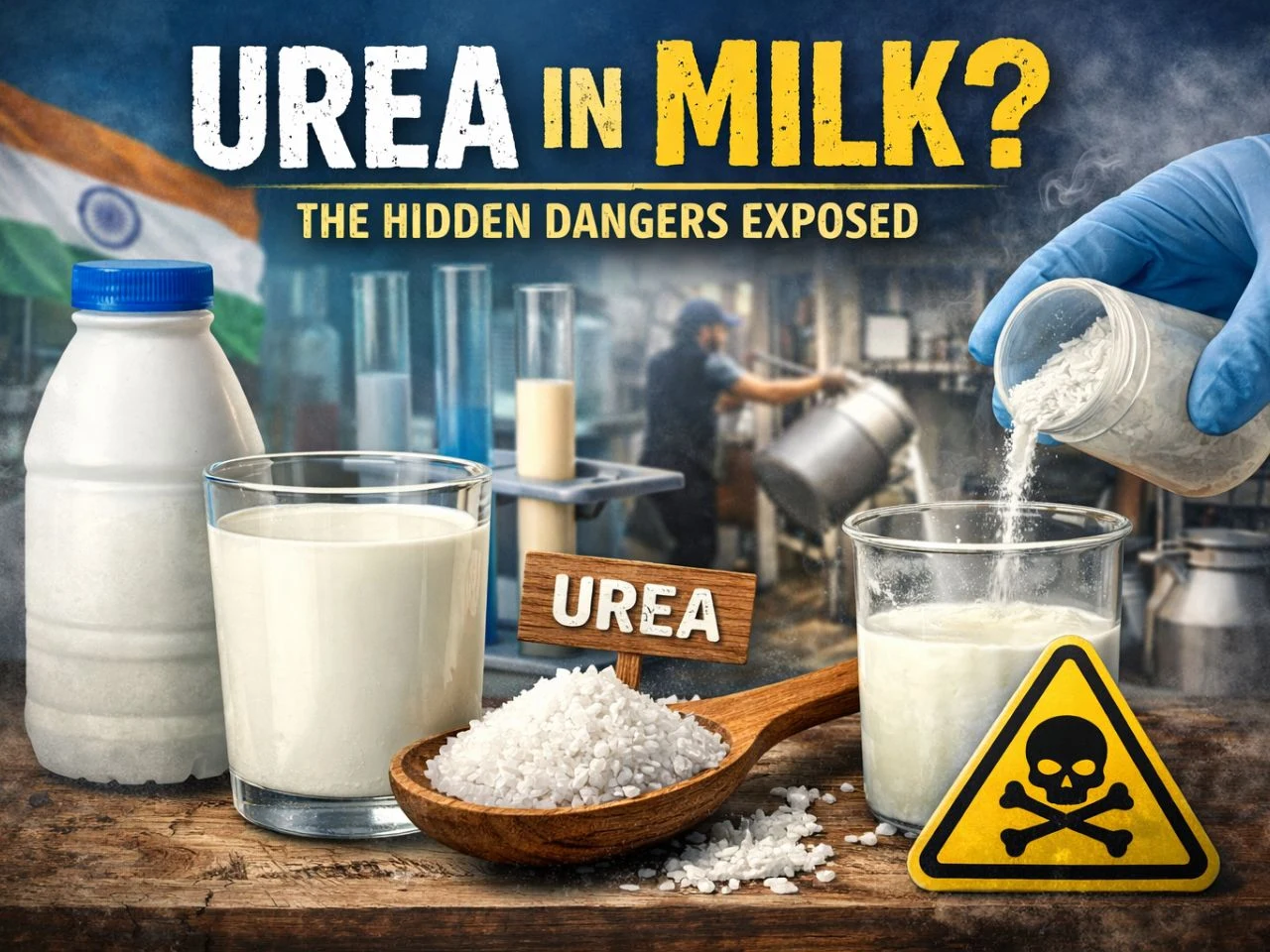
If you’ve been following the news lately, you’ve probably come across disturbing reports of adulterated milk being seized from various places across India. Most recently, in February 2026, five people died and several others fell critically ill in Rajamahendravaram, Andhra Pradesh, after consuming milk supplied to nearly 150 households, milk that was suspected to contain urea, caustic soda, or other harmful chemicals. (The Federal, Feb 2026)
Urea in milk has been a recurring problem in India for decades. But why would someone add urea, a compound found in fertilisers and even human urine, to milk? And what does it actually do to your body? Let’s break it all down in simple language.
Table of Contents
What Is Urea?
The chemical formula for urea is CH4N2O, often written as NH2CONH2 to better represent its structure. In its structural form, a carbonyl group (C=O) is attached to two amine groups (-NH2).
Molar Mass: 60.06 g/mol
Appearance: White, odorless solid (often in pellets or prills).
Solubility: Highly soluble in water.
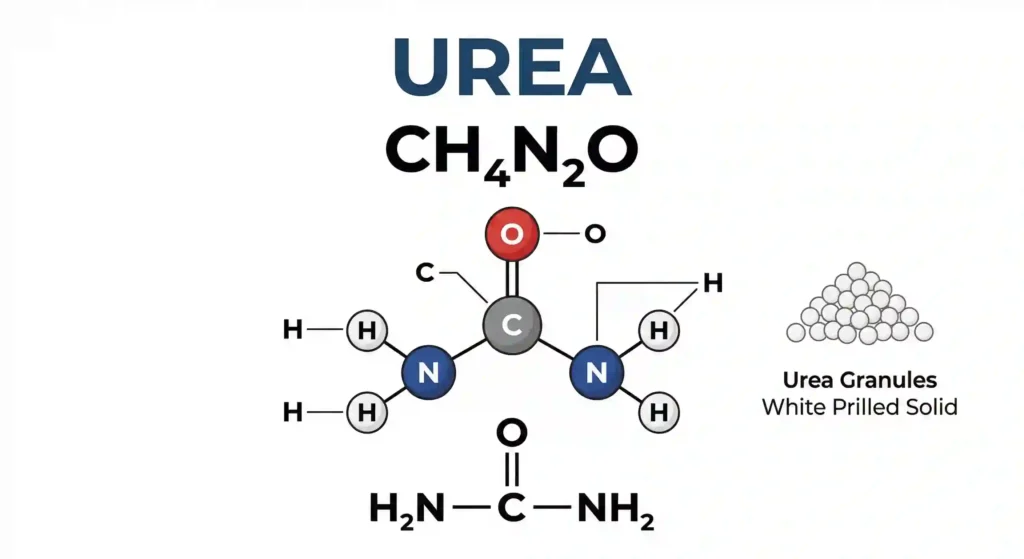
Our own liver produces it as a waste product when your body breaks down proteins, and it gets filtered out through your kidneys into your urine. In industry, urea is mass-produced as a fertiliser for crops. It’s also used in skincare products, animal feed, and various chemical processes.
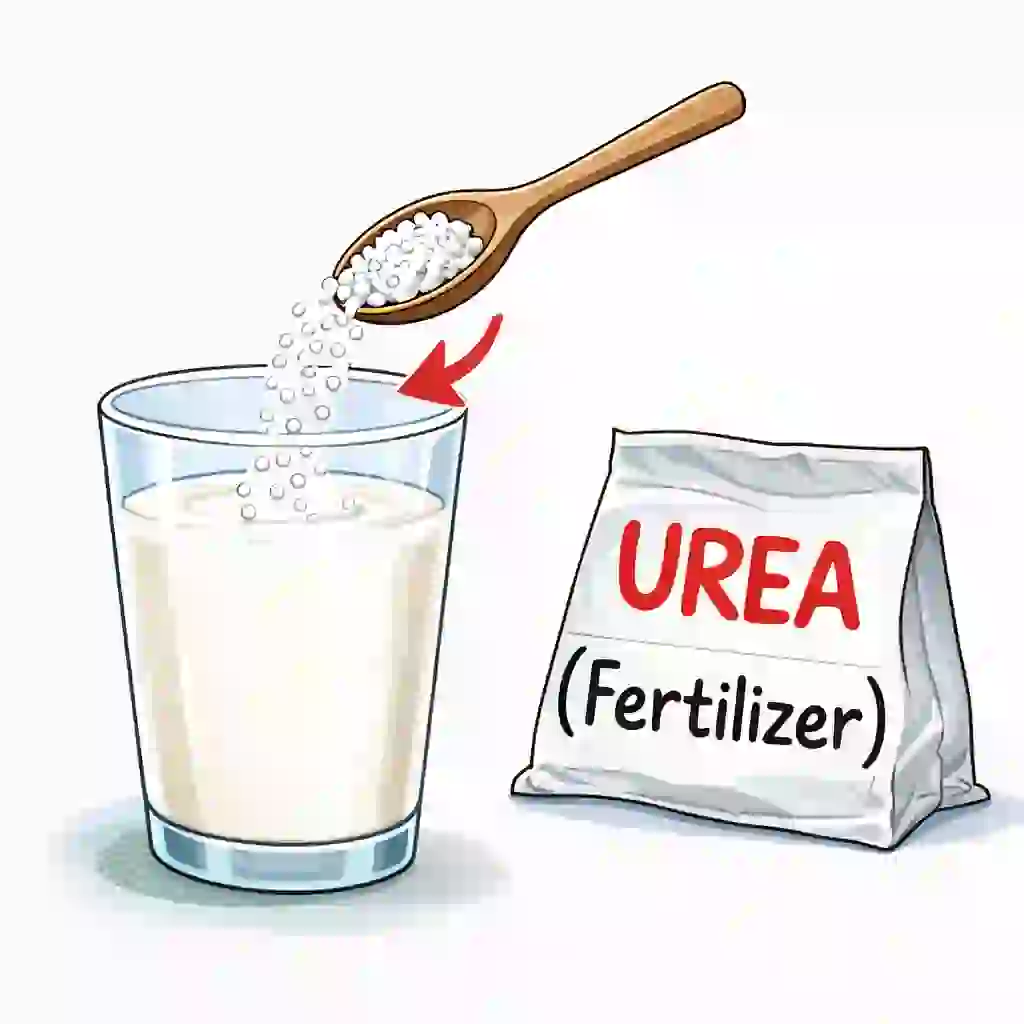
So yes, the same urea used to grow crops is what some dishonest milk sellers are adding urea in milk. The question is: why?
Why Do People Add Urea in Milk?
There are two main reasons, and both come down to money and deception.
- To hide dilution: When milk is watered down, its natural thickness and density drop. Adding urea helps bring back the density and color, making the milk look richer and closer to pure milk. (Reference)
- To fake quality tests: Standard milk tests measure “protein” based on nitrogen levels. Urea contains nitrogen, so it makes diluted milk appear to have more protein than it actually does, fooling some lab machines. (Reference)
In simple terms, urea acts like a cheap trick to make low-quality or diluted milk seem like good milk, and that is fraud.
Is this article helpful?
What Are the Health Risks?
When urea enters your body through contaminated milk, it doesn’t just pass through harmlessly. Here’s what it can do:
Short-term effects:
- Nausea, vomiting, and stomach pain
- Gastroenteritis (inflammation of the stomach and intestines)
- Diarrhoea
Long-term or severe effects:
- Kidney damage – your kidneys have to work overtime to filter out the excess urea and nitrogen.
- Liver damage – the liver is responsible for processing urea, and constant overload leads to damage.
- In severe cases (as seen in Rajamahendravaram), victims suffered anuria, a condition where the kidneys completely stop producing urine, causing toxic waste to accumulate in the blood, which can be fatal
Children, the elderly, and people with existing kidney or liver conditions are at the highest risk.
Conclusion
Adding urea to milk is not magic; it’s deception. It can make watered-down milk look richer, but it doesn’t make it safer or more nutritious. In fact, it can harm your health. With recent incidents showing fake milk being distributed widely, it’s more important than ever to stay informed and choose safe, real dairy.
If you found this article helpful, please share it, especially with people in your community who buy loose milk daily. Awareness is the first step toward safer food.
Q. Is urea naturally present in milk?
Yes, small amounts of urea are naturally present in milk. It comes from the normal metabolism of protein in cows. However, the amount is very low (around 20–40 mg per 100 ml). When much higher levels are found, it usually indicates adulteration.
Q. Why do some people add urea to milk?
Some dishonest sellers add urea to milk to increase the nitrogen content, which can make diluted milk appear richer in protein during testing. It can also restore thickness and whiteness when milk is mixed with water.

I’m Mehebub Alam Chowdhury, an M.Sc. Organic Chemistry student, and my mission with Decodepure is to simplify complex chemical ingredients in everyday products. With my knowledge of chemicals, I aim to help you make safer, healthier choices by breaking down product labels in an easy-to-understand way.