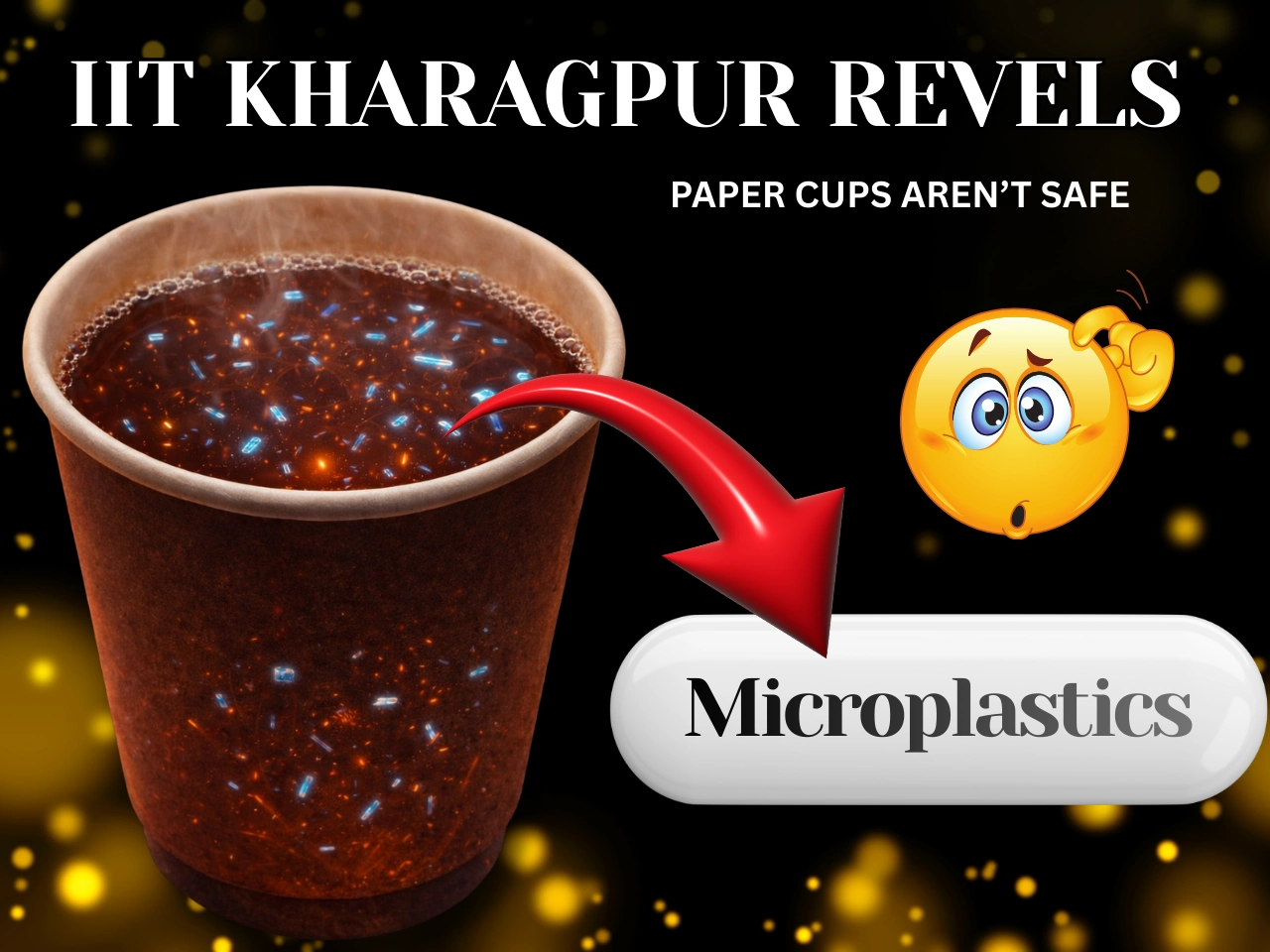
Every morning, most of us stop at a street tea stall. Hot tea, a paper cup, a quick sip, feels good… right? But you’re shocked to know that, with every sip from that paper cup, you’re drinking thousands of invisible plastic particles. Sound dramatic? Let me tell you what IIT Kharagpur discovered.
IIT Kharagpur has uncovered some alarming facts about paper cups and microplastic contamination that every tea lover, especially in India, needs to know.
Table of Contents
What Did the IIT Kharagpur Study Find?
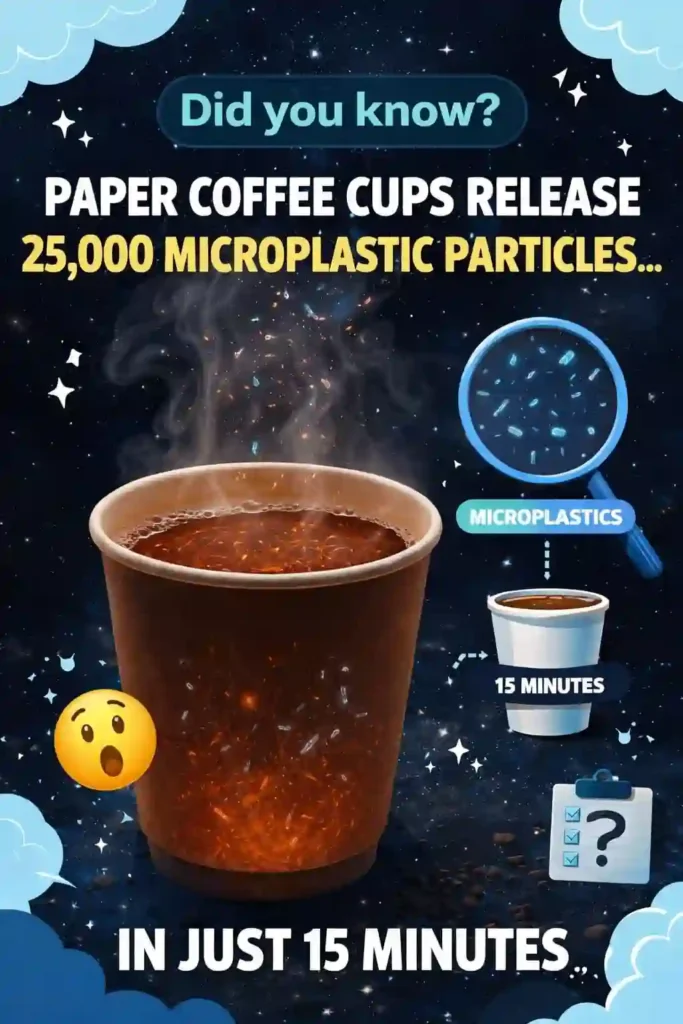
In 2020, Dr. Sudha Goel and her team at IIT Kharagpur did something simple but eye-opening. They bought regular paper cups from local stores – the same ones we all use, poured hot water in them, and waited 15 minutes.
The result? 25,000 microplastic particles released into just 100ml of water. That’s roughly one small cup of chai.
Their research, published in the Journal of Hazardous Materials, wasn’t just a lab experiment. These were real cups, real temperatures (85-90°C – typical chai temperature), and real-world conditions.
Aren’t Paper Cups Made of… Paper?
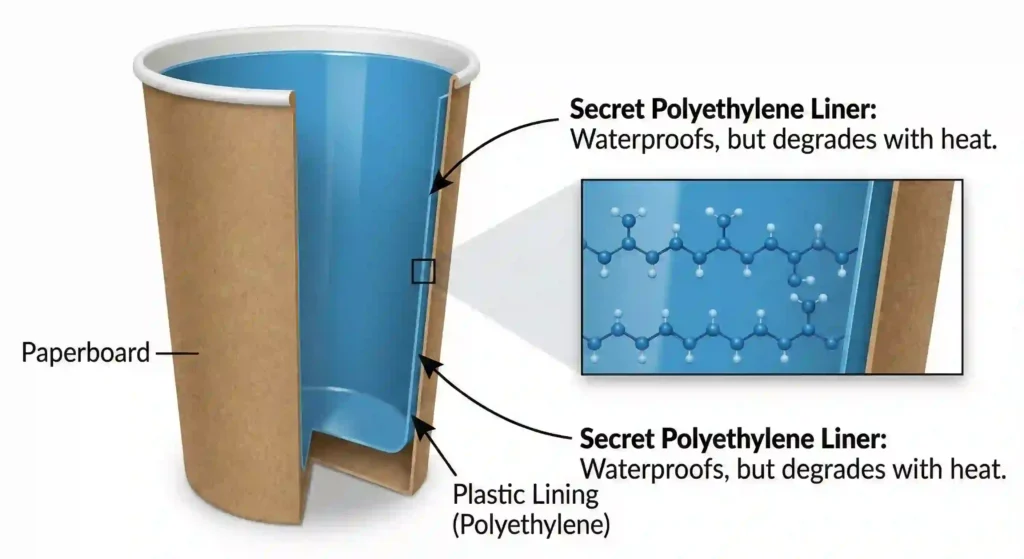
Paper cups have a thin plastic lining (usually polyethene) to prevent leaks. When hot tea in paper cups hits this lining, the heat causes it to break down. The result? Tiny plastic particles floating in your drink.
Numbers That Shock
If you’re like most Indians, drinking 3 cups of chai daily from paper cups:
- 75,000 microplastic particles per day
- 27.4 million particles per year
- Over a lifetime? About 55 kg of microplastics
That’s literally the weight of an average person – in plastic.
Why Should You Care?
- Microplastics have been found in human stools, lungs, blood, and even the placenta, meaning they can enter and circulate in the body.
- Research links microplastic consumption to: Hormone disruption, Reproductive issues, Potential organ damage, etc.
- The IIT Kharagpur team found that these plastics contain toxic heavy metals, including Palladium, Chromium, and Cadmium. So you’re not just drinking plastic; you’re drinking plastic loaded with harmful metals.
As Dr. Goel explained, microplastics act as carriers, allowing heavy metals and toxins to enter our bodies through our digestive system.
The 15-Minute Danger Zone
The researchers specifically tested 15 minutes because that’s how long most of us take to finish our chai. The hotter the liquid and the longer it sits, the more plastics leach out.
Street tea, often served near-boiling? Even worse.
So, What Can We Do?
I’m not here to spread panic, but to create awareness. Here are some practical alternatives:
Switch to Reusable Options
- Carry your own glass or stainless steel, or ceramic cup to your tea stall.
- Choose Clay Kulhads
Traditional clay cups (kulhads) are biodegradable and completely safe. They add a unique earthy flavor to the tea. Support local pottery artisans
Is this article helpful?
Scientific Sources You Can Check Yourself
Here are some studies and reports that back these points:
🔹 IIT Kharagpur research on microplastics released from paper cups — hot liquid causes plastic lining degradation and particle release. Press Information Bureau
🔹 Disposable paper cups contaminated by plastic coatings and ions — showing chemicals leach into hot drink. Stormwater Shepherds
🔹 Other research on microplastics from cups and containers — supports the fact that heat increases microplastic leaching. ScienceDirect
Q. Are paper cups really made of plastic?
Not fully, but most paper cups are lined with a thin layer of plastic, usually polyethylene (PE).
This plastic lining prevents leakage and helps the cup hold hot liquids like tea or coffee.
Q. Why is plastic used inside paper cups?
Pure paper absorbs liquid and becomes weak quickly.
The plastic lining:
Makes the cup waterproof
Allows it to hold hot beverages
Improves durability
Without plastic, paper cups would collapse within minutes.
Q. What did the IIT Kharagpur study find about paper cups?
According to publicly reported findings from IIT Kharagpur, when hot liquid remains in a paper cup for around 10–15 minutes, the plastic lining can release thousands of microplastic particles into the beverage.
This happens due to heat-induced degradation of the plastic layer.
Q. How many microplastics can be released from one paper cup?
Scientific studies have shown that one paper cup can release around 25,000 microplastic particles into a single cup of hot tea or coffee within about 15 minutes.
These particles are invisible to the naked eye.

I’m Mehebub Alam Chowdhury, an M.Sc. Organic Chemistry student, and my mission with Decodepure is to simplify complex chemical ingredients in everyday products. With my knowledge of chemicals, I aim to help you make safer, healthier choices by breaking down product labels in an easy-to-understand way.