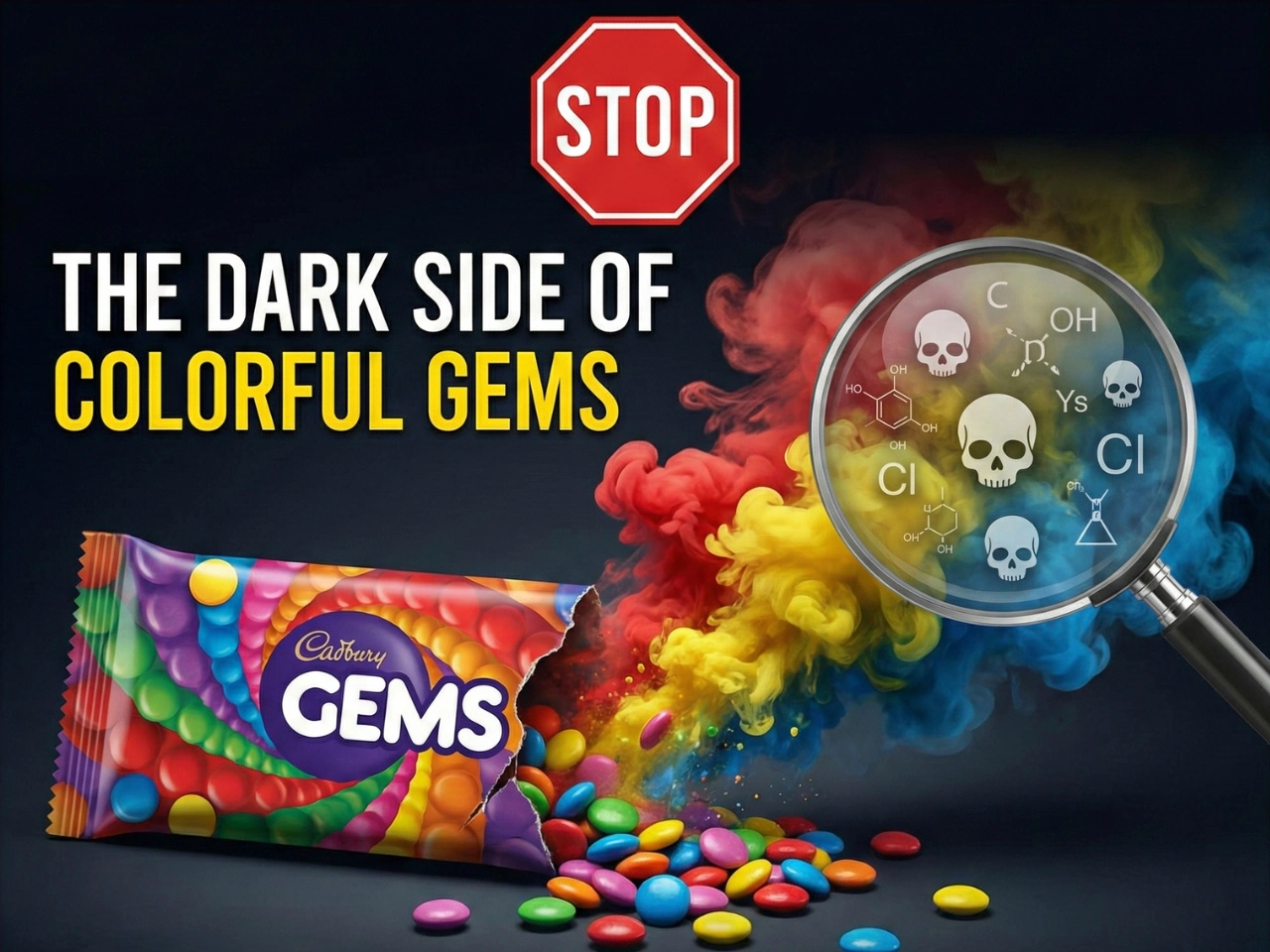
If you’re a parent in India, you’ve definitely seen kids going crazy for those purple packets of Cadbury Gems; they’re everywhere, like in lunchboxes, at birthday party return gifts, etc. One day, a kid next to me was eating Cadbury. I took the packet from him. But as a chemistry student, I don’t just eat; I read labels. And when I looked closely at the back of a Gems packet recently, what I found was less “magic” and more chemistry lab.
I thought I should share this with you. Let’s decode the ingredients of Cadbury Gems to help you understand what you’re really giving your children. No judgment, just facts and science.
Table of Contents
Ingredients Breakdown
Here’s the actual ingredient list:
Sugar, Hydrogenated Oils, Milk Solids, Cocoa Solids (8%*), Refined Wheat Flour (Maida), Emulsifiers (414, 442, 476), Colours (171, 102, 133, 124, 127, 122, 132, 110), Glazing Agent (903), Liquid Glucose, Cocoa Butter, Flavours (Natural, Nature-identical and Artificial)
1. Sugar
When sugar is the first ingredient, it means it’s present in the highest quantity. Sugar is horrible for children if consumed in excess amounts.
- Long-term consumption in children is linked to obesity, tooth decay and hyperactivity, Dental cavities
- Development of sugar addiction and cravings
- Higher risk of type 2 diabetes later in life
Sugar Calculation
The Nutrition Facts confirm the scary truth: 70.77g of total sugar per 100g. That’s over 70% sugar! Even more telling, 68.2g is “Added Sugars.
That means, if you eat 100g of Gems, you are eating nearly 70g of pure sugar. That is roughly 17 teaspoons of sugar.
20g Pack
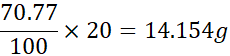
So a 20g pack contains approx. 14.1g sugar. That’s about 3.5 teaspoons of sugar.
One Cadbury Gem ≈ 0.45g. So, a 20g pack contains approximately 40 – 45 pieces of gems.


If you eat 15 Cadbury Gems, you’re consuming ~4.8 grams of sugar, equal to 1.2 teaspoons of sugar (since 1 tsp ≈ 4g) with artificial colours, flavours, Wheat Flour (Maida), Emulsifiers, etc.
WHO Guideline: Sugar intake for adults and children
2. Hydrogenated Oils
These are partially or fully hydrogenated vegetable oils, which are very bad for heart health.
The nutrition label shows 17.1g of Saturated Fat per 100g (and 0.2g Trans Fat). Hydrogenation often creates trans fats, the worst kind for heart health, linked to increased bad cholesterol (LDL) and decreased good cholesterol (HDL). The American Heart Association recommends limiting trans fat intake as much as possible
While 0.2g might seem minimal, remember that children often consume multiple servings, and these effects accumulate.
3. Cocoa Solids (8%)
The front of the pack says “Chocolate,” but the ingredients tell a different story. Real Chocolate is defined by the presence of Cocoa Butter and a significant amount of cocoa mass. When a product contains only 8% cocoa solids, it is barely chocolate. It is technically a Sugar Confectionery.
4. Maida (Refined Wheat Flour)
Maida has no fiber, no vitamins, easily converted to sugar.
5. Emulsifiers (414, 442, 476)
These are used to keep the ingredients mixed together, giving a smooth texture.
| Code | Name | Known Concerns |
|---|---|---|
| 414 | Gum Arabic | Safe in low doses |
| 442 | Ammonium Phosphatides | Linked to digestive discomfort |
| 476 | Polyglycerol Polyricinoleate | Linked to liver enlargement in rat studies at high doses |
You will see codes like 476 –
E476 (PGPR – Polyglycerol Polyricinoleate): PGPR is used as a replacement for expensive Cocoa Butter. Cocoa butter is the main ingredient for chocolate.
6. Artificial Colors (171, 102, 133, 124, 127, 122, 132, 110)
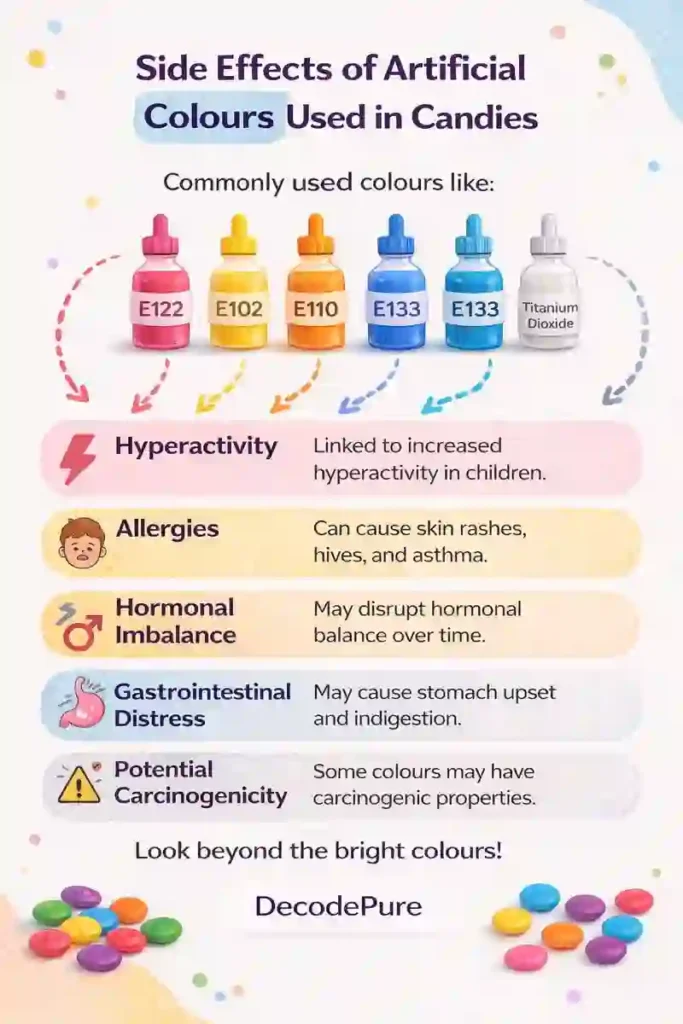
This is the most critical part of my analysis. The beautiful colors of Gems are not natural. They are a cocktail of synthetic azo dyes and inorganic pigments. Eight different artificial colors are used to create those attractive shells.
- 171 (Titanium dioxide):
Banned in Europe as a food additive since 2022 due to potential DNA damage concerns.
- 102 (Tartrazine)
Associated with hyperactivity in children, requires warning labels in the EU.
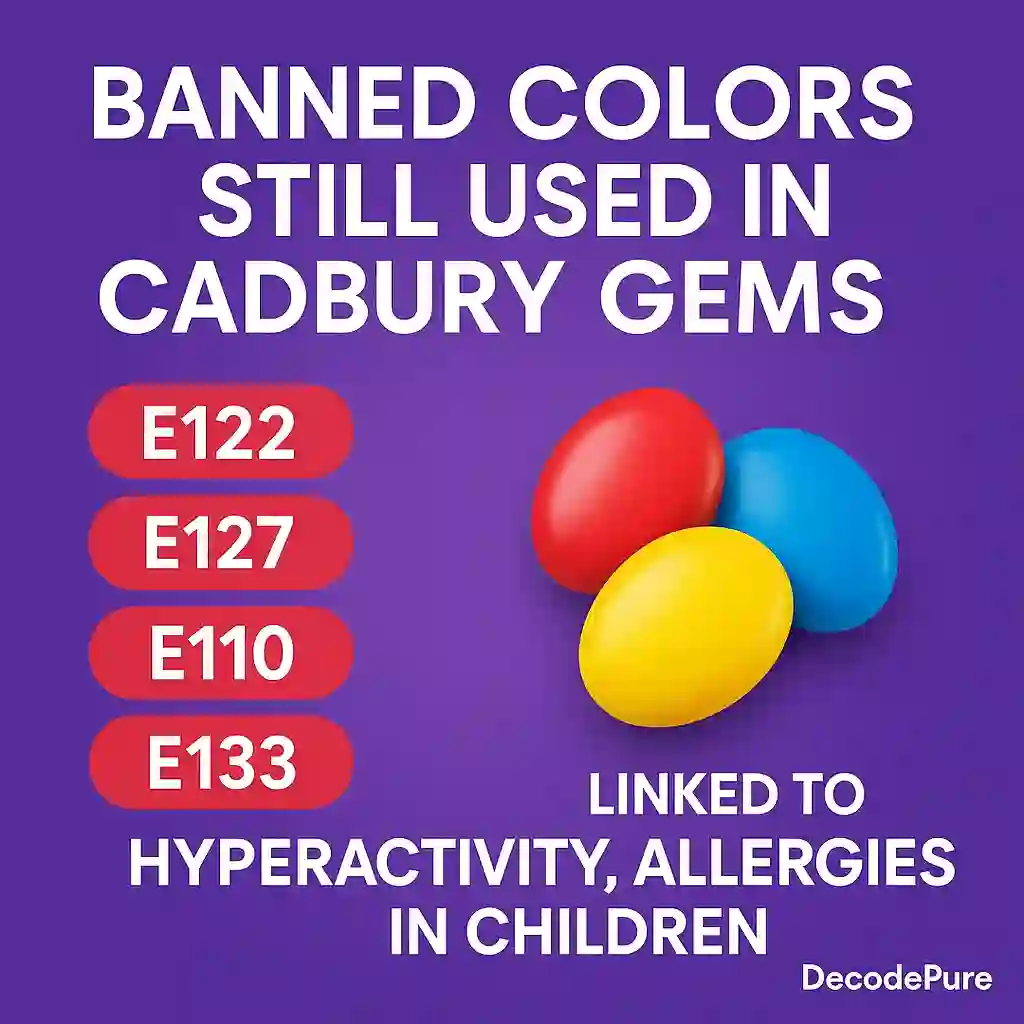
- E122, E124, E127, E133, E132
Linked to hyperactivity and allergic reactions. Many banned or restricted for children in EU
- 110 (Sunset Yellow)
It can cause allergic reactions, especially in people with aspirin sensitivity.
📢 The Southampton Study: Food additives and hyperactive behaviour in 3-year-old and 8/9-year-old children in the community – The Lancet
Studies show these colours may contribute to:
- ADHD-like behaviour
- Allergic reactions
- Potential DNA damage (E171)
8. Glazing Agent (903)
Carnauba wax is used to give Gems their characteristic shine. While generally safe, it’s purely cosmetic and adds no nutritional value.
9. Liquid Glucose
Yet another form of sugar. It’s added separately from regular sugar to achieve the right texture and sweetness.
So… Is Gems Real Chocolate?
Technically:
- ❌ It is not pure chocolate.
- ❌ It is not even close to dairy milk or premium chocolate.
- ✔️ It is a sugar-based confectionery with colours and flavouring.
Cadbury Gems is more of a marketing-driven colourful candy than a chocolate.
Most of the cost goes into:
Colour coating, Packaging and marketing for children. Not the chocolate quality itself.
Should You Give This to Your Kids?
Look, I’m not here to judge your parenting choices. But I believe parents deserve to know what they’re actually buying.
Here’s my honest take
If you’re buying it occasionally as a fun treat – fine. But if children are eating it regularly,
Then you’re feeding them:
- 70% sugar
- Banned/controversial colours
- Hydrogenated oils
- Artificial flavours
- Highly processed ingredients
📌 Nutritionally, it offers zero health benefits.
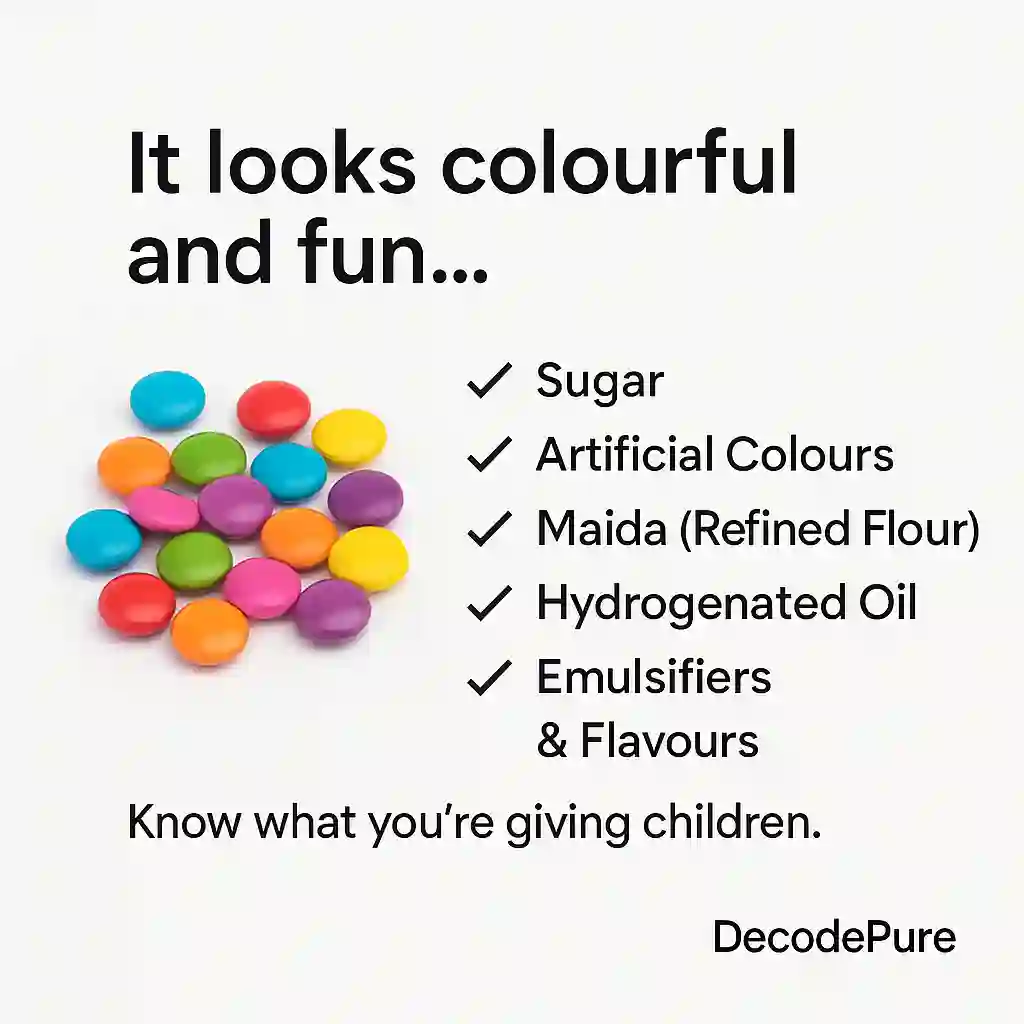
If you want to give your child chocolate, look for a bar where “Cocoa Butter” is the first or second ingredient, not Sugar. For now, treat Gems as a rare “sugar candy,” not a chocolate snack.
Final Verdict
After considering everything above, it can be concluded that, the reality of this product is -about 71% sugar, contains multiple artificial colors (some banned in other countries), uses hydrogenated oils with trans fats, and has only 8% cocoa.
The product succeeds because of brilliant marketing, attractive packaging, and the fact that kids naturally love sweet, colorful things. But as parents and conscious consumers, we need to look beyond the purple packet and understand what we’re really feeding our children.
Am I saying never buy it? No. But I am saying be informed, be intentional, and be mindful of how often these treats make their way into your child’s diet.
Your kids might not thank you for saying no to Gems today, but their bodies will thank you in the long run.

I’m Mehebub Alam Chowdhury, an M.Sc. Organic Chemistry student, and my mission with Decodepure is to simplify complex chemical ingredients in everyday products. With my knowledge of chemicals, I aim to help you make safer, healthier choices by breaking down product labels in an easy-to-understand way.