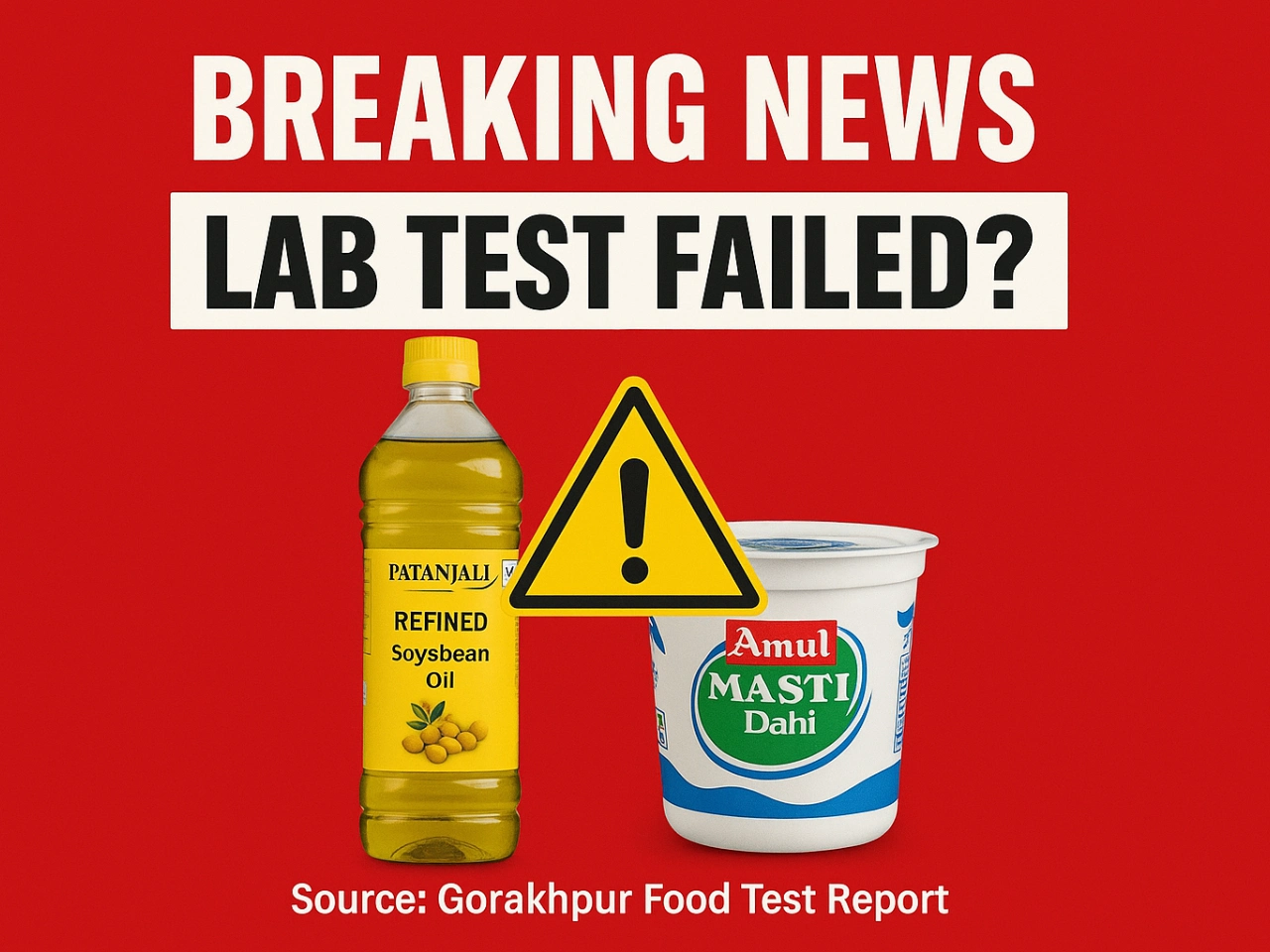
When we pick up products from trusted brands, we rarely question what’s inside. After all, household names like Patanjali and Amul have built their reputations over decades.
But recent test results, Patanjali and Amul have reportedly failed basic purity and quality tests in lab inspections carried out by the Food Safety and Drug Administration Department (FSDA) in Gorakhpur, Uttar Pradesh.
Table of Contents
What Happened?
- The FSDA had seized around 1,260 litres of refined, soybean and palm oil from a local warehouse linked to Patanjali. The tins were reportedly damaged — the oil had been transferred to plastic drums for storage, which violates food-safety norms. (Newspoint)
- Lab results, revealed months later, confirmed the oil sample did not meet purity standards; in other words, the oil was “sub-standard” or possibly adulterated. (Amar Ujala)
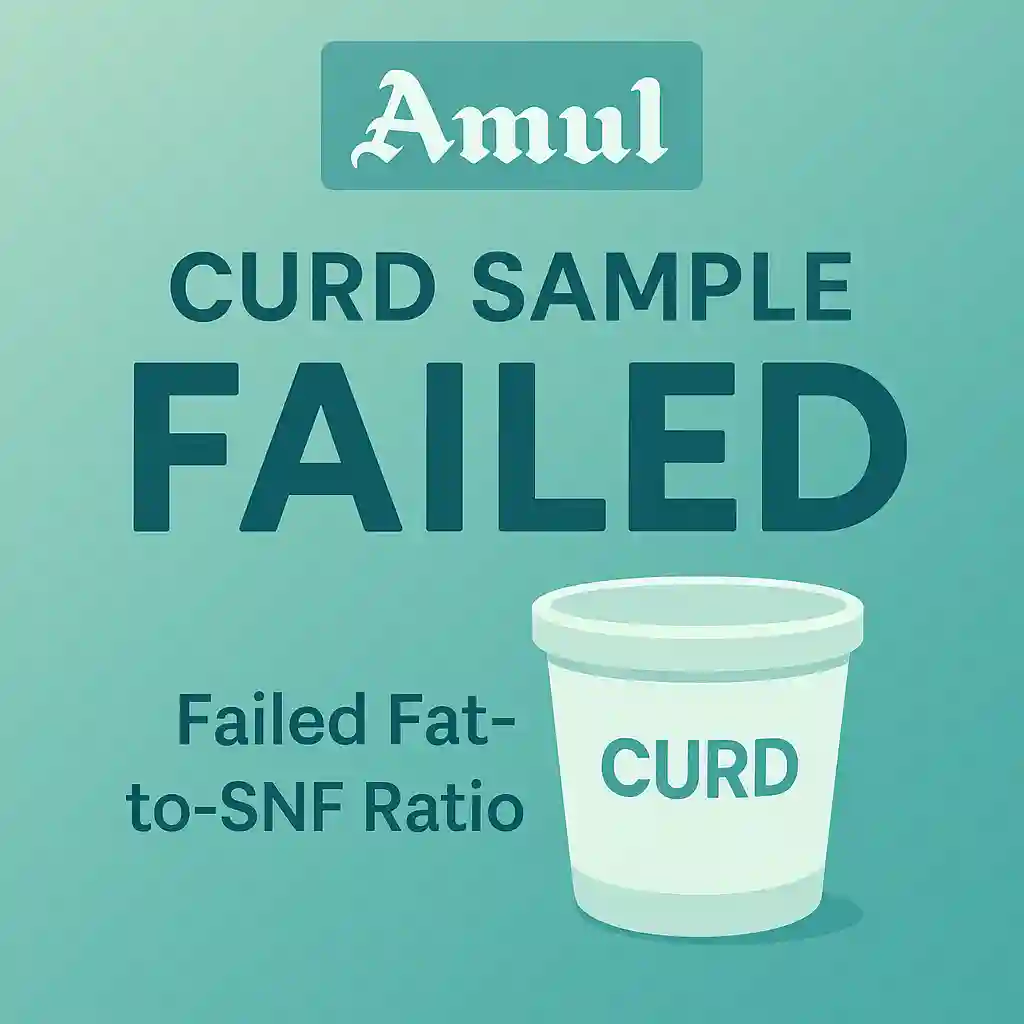
- In a separate inspection, curd from an Amul supply vehicle was sampled. The test report reportedly found that this curd also failed to meet required “quality & purity norms.”
- According to specific news-site claims, a sample from one batch of Amul curd in Gorakhpur failed the fat-to-SNF test. However, there is no evidence that this reflects all Amul products nationwide (HearinGuru)
What This Does — And Doesn’t — Mean
This does not necessarily mean that all Patanjali oils or all Amul curd across India are unsafe. The failure was reportedly for specific samples collected from a particular district and batch.
Why It Matters — Especially for Consumers
Brands like Patanjali and Amul enjoy massive trust and are often chosen because people assume they maintain high quality and safety. When such big names are flagged – even if only for certain batches – it shakes that trust.
Many consumers don’t verify batch numbers, manufacturing dates or storage conditions — especially for everyday staples like oil and curd.
What Action Is Being Taken?
The FSDA has sent the reports to higher authorities for legal action against suppliers and distributors. Notices have been issued to both companies seeking explanations. If they can’t justify the discrepancies, penalties or legal proceedings may follow under the Food Safety and Standards Act.
Both Patanjali and Amul have reportedly said they’ll review the batch details and may request retesting if necessary.
How Can You Protect Yourself?
1. Always Check Labels Carefully
Before buying anything – whether it’s curd, oil, bread, or snacks – make it a habit to:
- Read the ingredients
- Check the manufacturing date
- Check the expiry or best-before date
- Look for batch numbers and FSSAI license details
If the label feels incomplete, unclear, or suspicious → don’t buy.
2. Check How Products Are Stored
Food quality doesn’t just depend on the brand — it depends on handling.
- Refrigerated products must be stored in cold environments.
- Oils should never be sitting in leaking, open, or repacked containers.
- Dairy products should never be kept outside or exposed to heat.
If storage doesn’t look right → skip it.
3. Learn to Identify Signs of Adulteration
Some simple red flags:
- Curd that tastes too sour or watery
- Oil with unusual smell or extra foam when cooking
- Honey that crystallizes instantly or tastes sugary
- Ghee that smells like oil instead of butter
When something feels “off” → trust your senses.
4. Report Anything That Seems Wrong
If you purchase a suspicious or spoiled product:
- Keep the packaging and bill
- Take photos
- File a complaint with FSSAI (Food Safety Connect App)
Your report helps authorities track and act against bad batches.
The Bottom Line
This incident is a wake-up call. Brand trust is important, but it shouldn’t make us complacent. Whether it’s Patanjali, Amul, or any other brand, no one is above scrutiny when it comes to what goes into our bodies.
The good news? The fact that these tests are happening means the system is working, at least to some extent. The bad news? These reports took months to come out, and by then, who knows how much of these products were already consumed.
Your health is more valuable than any brand name or discount.
Disclaimer: This article is based on reports from regional news outlets covering FSDA testing in Gorakhpur, Uttar Pradesh. We encourage readers to stay updated as official statements from the companies and regulatory authorities may provide additional clarity on these findings.
Sources & References
- Patanjali oil, Amul curd fail purity test, report comes after six months – Newspoint App
- Patanjali Refined Oil and Amul Curd Fail Quality Test in UP – HearinGuru

I’m Mehebub Alam Chowdhury, an M.Sc. Organic Chemistry student, and my mission with Decodepure is to simplify complex chemical ingredients in everyday products. With my knowledge of chemicals, I aim to help you make safer, healthier choices by breaking down product labels in an easy-to-understand way.