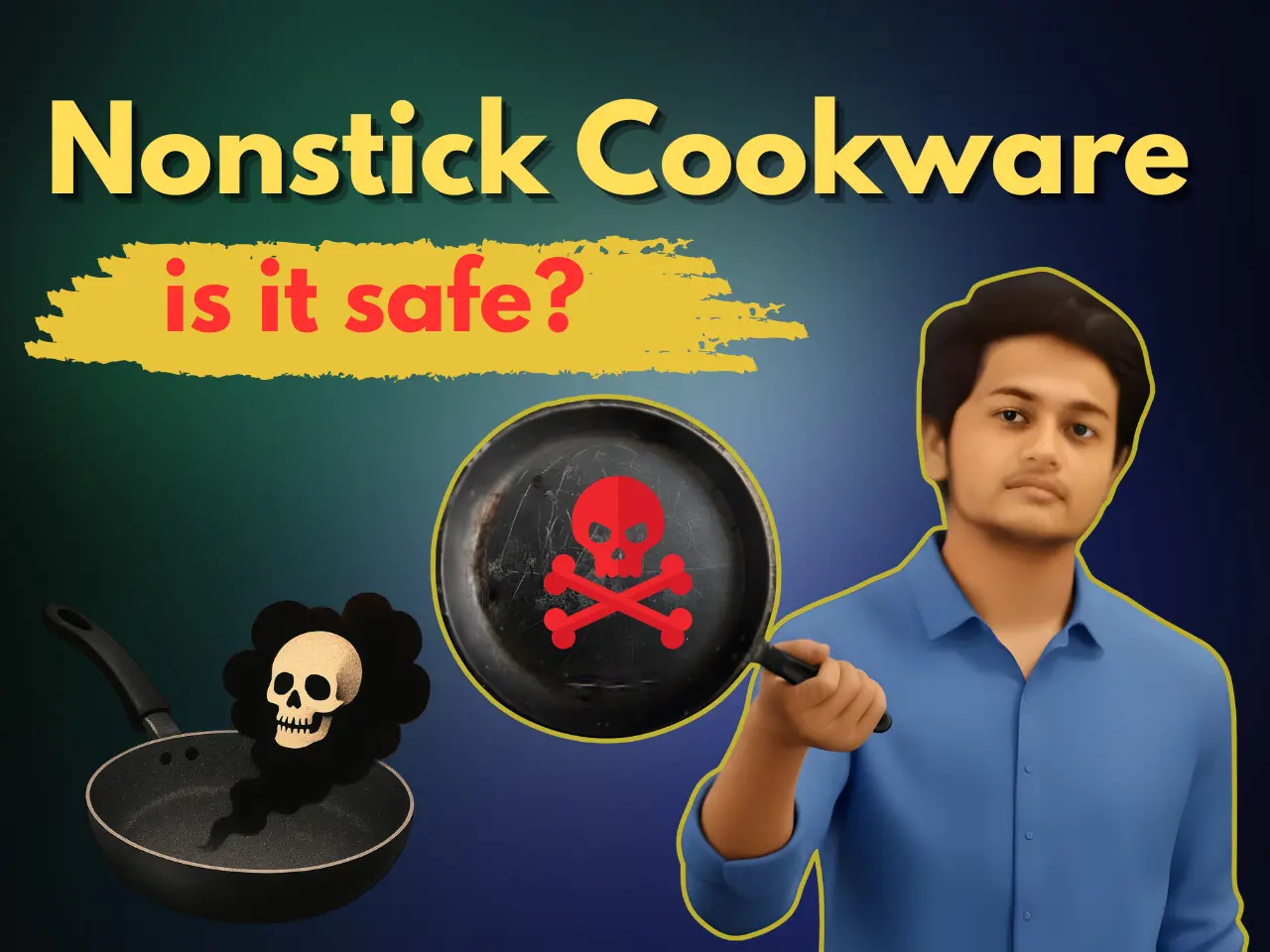
There’s a quiet revolution happening in the heart of every Indian home—the kitchen. If you look, you’ll see it. The trusted, heavy-bottomed brass and steel vessels are now sharing space with a modern hero: the lightweight, non-stick tawa, found in almost every Indian kitchen today.
They look modern, save time, and promise oil-free cooking. In this blog post, we look deeper into this and uncover the truth behind it.
Table of Contents
What is Nonstick Cookware Made Of?
Older nonstick pans (before ~2013) were made using PFOA (Perfluorooctanoic acid); studies found that PFOA was a “forever chemical”—it doesn’t break down in the environment or in our bodies. It has been linked to health conditions such as kidney and liver disease.
Thankfully, PFOA has been phased out worldwide.
Nowadays, most nonstick pans are coated with polytetrafluoroethylene (PTFE), commonly known as Teflon.
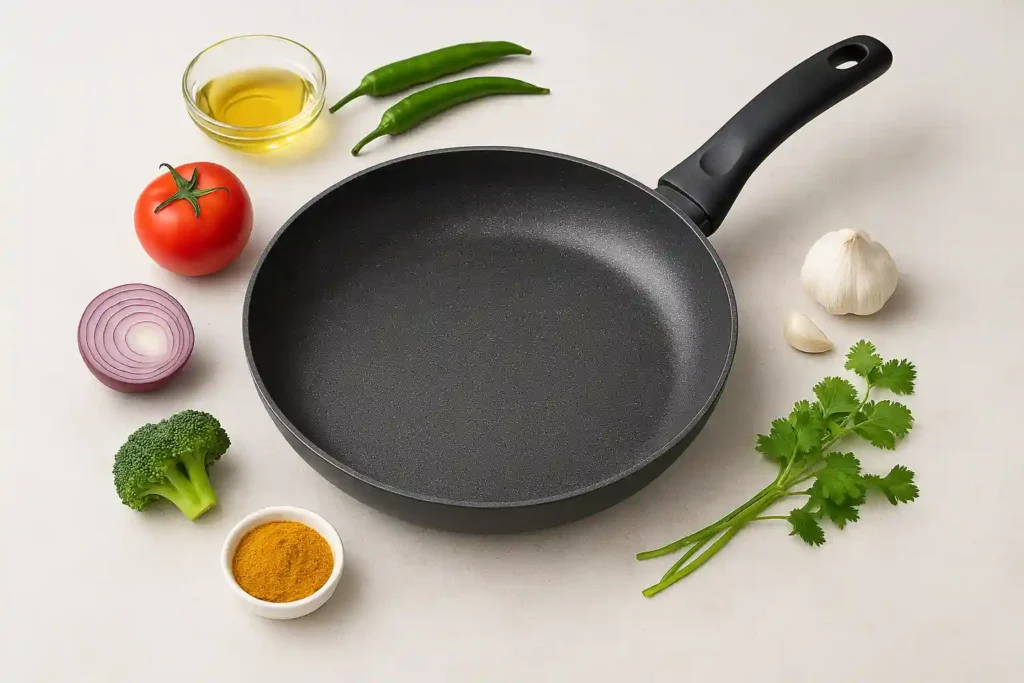
Modern nonstick cookware is marketed as “PFOA-free.” If you buy a new non-stick pan from a reputable brand today, it should not contain PFOA.
Health Concerns with Nonstick Cookware
1. Toxic Fumes in High Heat
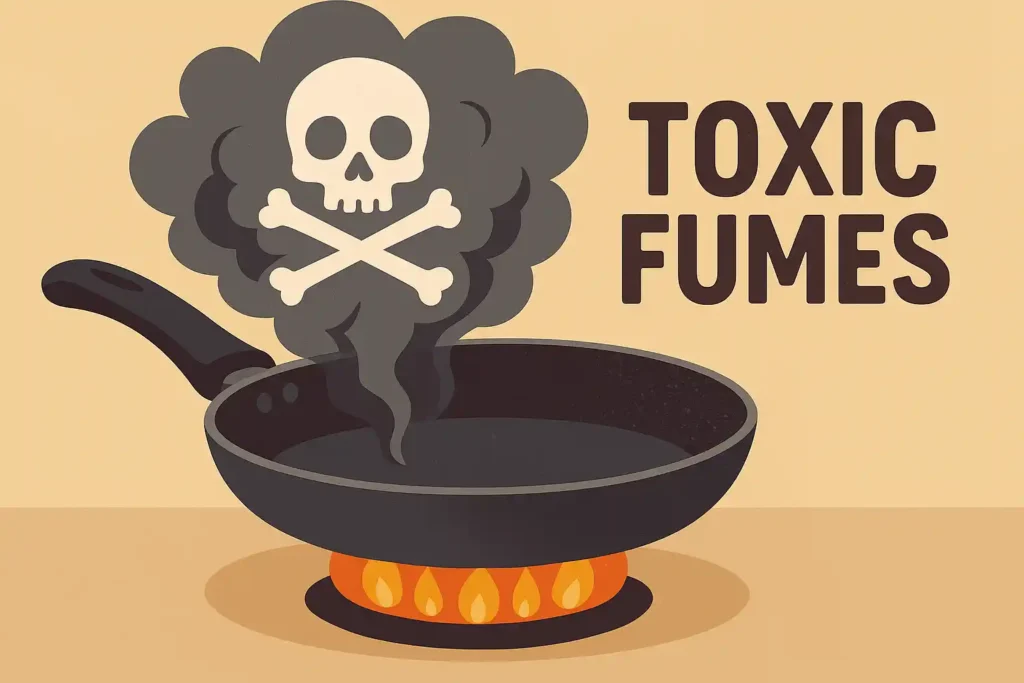
If an empty pan is left on high heat for several minutes at temperatures above 260°C (500°F), when PTFE overheats, it begins to break down and release toxic fumes. This is called polymer fume fever or “Teflon flu.”
What is “Teflon Flu”?
Inhaling these fumes can cause temporary, flu-like symptoms in humans:
- Headache
- Fever and chills
- Body aches
- A sore throat and cough
- and is deadly for birds.
2. Scratching and Damage
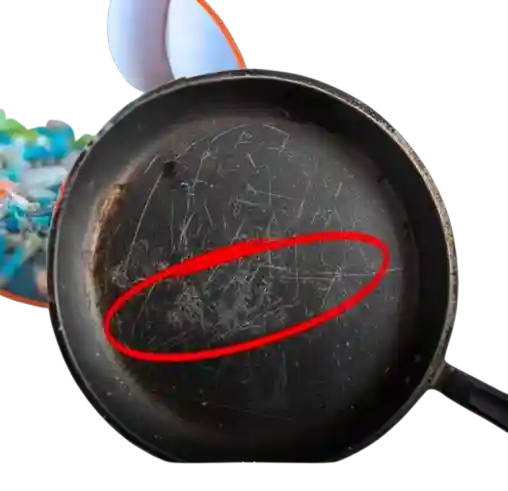
When the coating gets scratched, it will be dangerous for you. These scratches can flake off into your food (not great to eat) and also degrade the pan’s non-stick properties, making you more likely to overheat it next time.
Note
Nonstick cookware is not good for high-heat cooking styles; on the other hand, Indian cooking often involves:
- High-heat cooking (which releases more toxic fumes)
- Long cooking times
- Frequent use of the same pans
This means potentially higher exposure to these chemicals compared to Western cooking styles.
Reference: NIH (National Library of Medicine, Pub Med
Tips to minimize your risk when cooking
1. Avoid empty heating – never heat the pan without food or oil.
2. Avoid cooking on high heat—cook on medium or low heat and avoid broiling.
3. Acidic Foods: Cooking highly acidic foods like tomato-based curries, tamarind, or lemon-based dishes in a damaged or old non-stick pan can cause the metal underneath to leach into the food. While usually in tiny amounts, it’s not ideal.
4. Use wooden, silicone, or plastic utensils—metal utensils can lead to scratches on the nonstick surface.
5. Replace when scratched/peeling → A worn-out pan is unsafe.
6. Gently wash your pans with a sponge and soapy, warm water.
7. Replace old cookware—replace it if it is scratched.
Is this article helpful?
The Verdict: Should You Use It?
Yes, you can use non-stick cookware safely. It’s a fantastic and easy-to-use tool for specific tasks like
Do use it for:
- Eggs (omelettes, scrambled)
- Dosas, pancakes, chilla
- Reheating food………. etc
Don’t use it for:
- High-heat or deep-frying foods.
- Making your everyday tadka or curries that require initial heat.
Nonstick cookware isn’t “poison” as some people say, but it’s also not the healthiest choice long-term (especially for the Indian cooking style). If you use it, handle it properly.
Reference: Healthline
Better Alternatives for Indian Kitchens
Cast Iron → Adds natural iron to food. Perfect for dosa, rotis, and curries.
Stainless Steel → Long-lasting and non-reactive.
Ceramic cookware → Good for slow cooking
Clay Pots → Best option, Traditional, adds minerals, but needs care.
Q. Is nonstick cookware safe for daily use in Indian households?
Yes, nonstick cookware is generally safe if used correctly—avoid overheating, don’t use metal spoons, and replace when scratched.
Q. What are the dangers of nonstick cookware?
At very high heat, nonstick pans can release toxic fumes, and old/scratched pans may leach harmful substances.
Q. What are the safest alternatives to nonstick cookware?
Cast iron, stainless steel, and clay pots are healthier and long-lasting options for Indian kitchens.
Q. Is it safe to cook Indian curries and acidic food in nonstick pans?
No. Acidic foods like tomato curry, rasam, or lemon-based dishes can damage the coating and leach harmful substances.

I’m Mehebub Alam Chowdhury, an M.Sc. Organic Chemistry student, and my mission with Decodepure is to simplify complex chemical ingredients in everyday products. With my knowledge of chemicals, I aim to help you make safer, healthier choices by breaking down product labels in an easy-to-understand way.