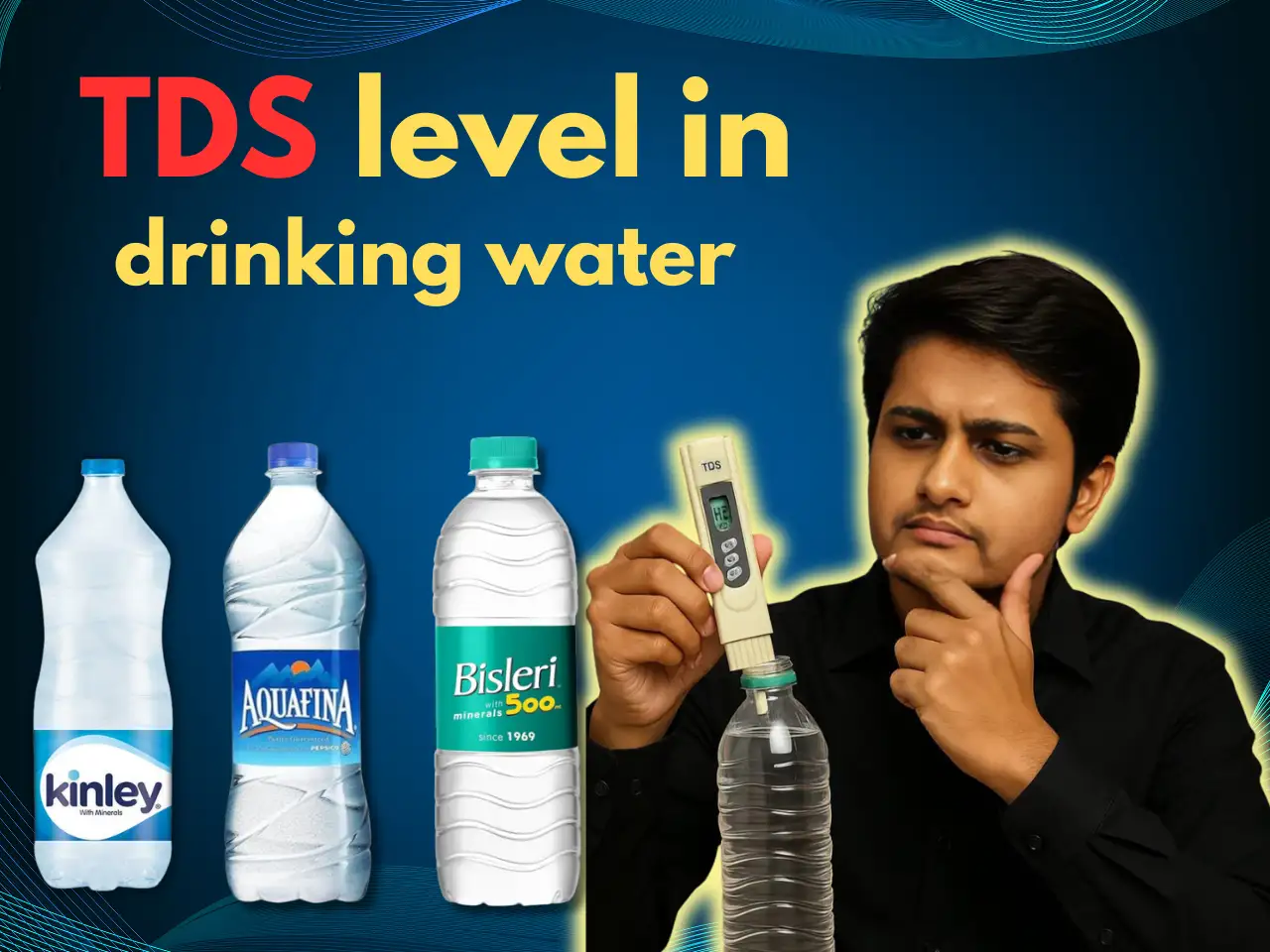
Water is one of the most powerful medicines we use daily. Most of us think that if water is crystal clear, it’s automatically safe—but the truth is, the safety and taste of water also depend on its TDS (Total Dissolved Solids) level. The right TDS ensures a balance of minerals and good taste, while too low or too high TDS can affect your health.
In this blog, we’ll explore the ideal TDS Levels in Water according to the Bureau of Indian Standards (BIS) and how it works, etc.
Table of Contents
What is TDS?
TDS Levels in Water refers to the total amount of inorganic salts, minerals, and small amounts of organic matter dissolved in water. These include:
• Minerals: Calcium, magnesium, potassium, sodium
• Anions: Bicarbonates, chlorides, sulfates, nitrates
• Trace elements: Iron, zinc, copper, fluoride
• Other dissolved substances: Sometimes even contaminants like lead or arsenic in unsafe sources.
TDS Levels in water is measured in milligrams per liter (mg/L) or parts per million (ppm).
How Does TDS Work?
Water is called the universal solvent because it naturally dissolves minerals and salts as it flows through soil, rocks, and pipes.
• Natural sources like rivers and groundwater pick up minerals from rocks.
• Municipal supply water may have added minerals for taste and health.
• RO (Reverse Osmosis) systems often reduce TDS drastically, sometimes too much.
TDS itself isn’t a direct health hazard—the type of dissolved solids matters more. For example:
Calcium & magnesium → Good for bones and heart health
Excess sodium → Risky for people with hypertension
Heavy metals → Harmful even in small amounts.
Some dissolved minerals (calcium, magnesium, and potassium) are beneficial and essential in water and good for bone and heart health.
Removing them completely (for example, by overuse of RO without mineral restoration) may reduce this benefit. Also, if TDS is high due to harmful ions (lead, arsenic, nitrates, etc.), health risks increase.
What Are the Ideal TDS Values?
The Bureau of Indian Standards (BIS) specifies the maximum acceptable TDS Levels in Water as 500 mg/L.
In the absence of an alternative source, the maximum permissible limit is 2000 mg/L.
The World Health Organization (WHO) considers TDS Levels in Water less than about 300 mg/L as good, 300-600 mg/L as fair/good, etc., for taste and palatability.
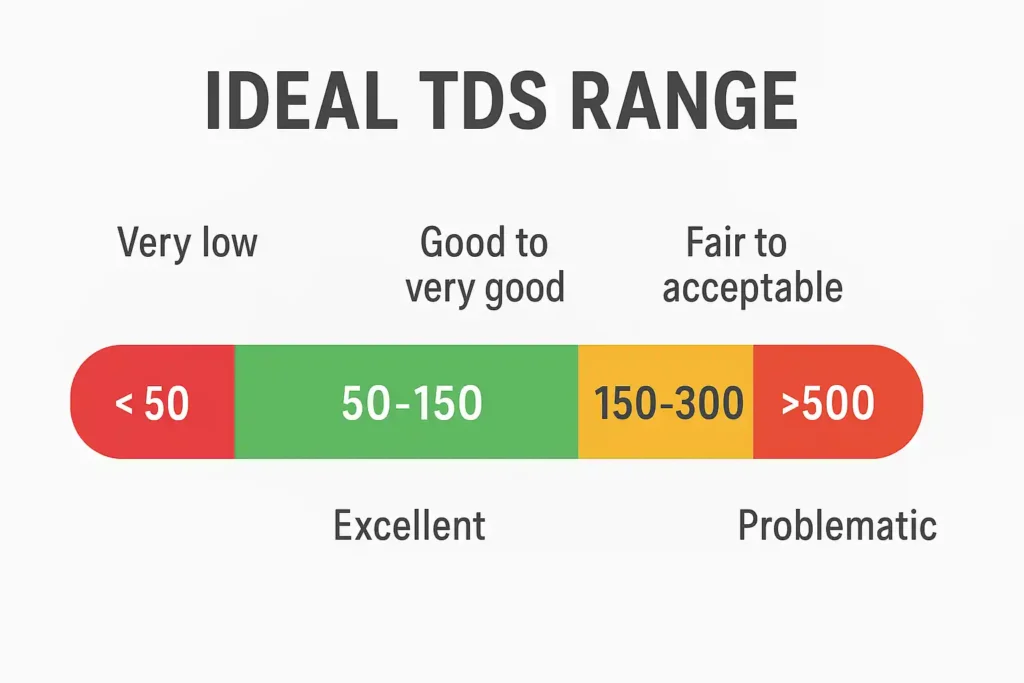
| Range (mg/L or ppm) | Quality / Suitability | Notes |
|---|---|---|
| < 50 | Very low / too pure | Lacks in essential minerals; taste may be flat. (Netsol Water) |
| 50-150 | Excellent | Good mineral content + good taste. Many recommend RO output target here. (Livpure) |
| 150-300 | Good to very good | Still palatable; retains minerals; acceptable for daily consumption. (RoCare India) |
| 300-500 | Fair to acceptable | Tastes may start to shift; if contaminants are benign, still usable; regulatory upper desirable limits in many parts of India are here. (Kent RO Systems) |
| >500 | Problematic / requires treatment | BIS upper limit is 500 mg/L. Above that, taste may be bad, risk of harmful substances, scale, etc. (India Water Portal) |
| 2000 (permissible in absence of other sources) | Extreme | Only used in emergency / when no other choice. Not recommended for daily drinking. (Romegamart) |
Why TDS Matters When Choosing Water
1. Taste:
• Low TDS (<50) → Bland, flat taste
• Moderate TDS (50–300) → Fresh, pleasant taste
• High TDS (>500) → Salty, metallic, or bitter
2. Health:
• Essential minerals like calcium & magnesium support bone and heart health
• Very low TDS water may cause mineral deficiencies over time
Popular Brand Water TDS Levels (in India)
Bisleri – 74 (not bad)
Kinley – 24 (bad)
Aquafina – 7 (shocking)
Key Takeaways
• Ideal TDS Levels in India: 50–150 ppm for RO water, up to 300 ppm for natural sources
• Too low TDS = Lacks minerals, flat taste
• Too high TDS = Possible health risks, unpleasant taste
• Always balance purity with mineral content for the healthiest choice.
Is this article helpful?
Conclusion
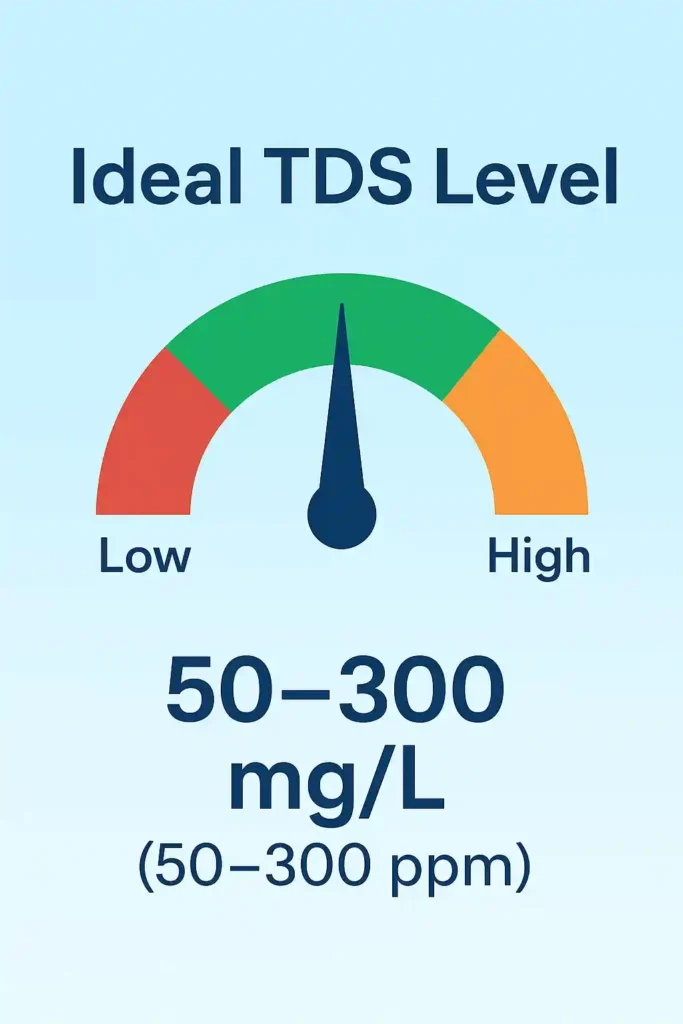
The right TDS Levels in Water isn’t just about numbers—it’s about health, taste, and peace of mind. Aim for 50–300 mg/L to keep your water safe and balanced, because clean water means a healthier life.
Q. What is TDS in water?
TDS (Total Dissolved Solids) means all the minerals, salts, metals, etc., dissolved in water. These include calcium, magnesium, sodium, chlorides, sulphates, etc
Q. What is a safe or acceptable TDS level?
In India, the BIS (Bureau of Indian Standards) sets the upper acceptable limit for TDS at 500 mg/L (ppm).
Experts often recommend that for daily drinking water, a TDS between 50-300 mg/L is ideal.
Q. Bisleri water TDS level?
Bisleri – 74
Q. Does a safe TDS guarantee safe water?
No. A “safe” TDS only implies the overall amount of dissolved solids is in acceptable range; it does not tell which solids are dissolved. For safety you need to check for specific contaminants.

I’m Mehebub Alam Chowdhury, an M.Sc. Organic Chemistry student, and my mission with Decodepure is to simplify complex chemical ingredients in everyday products. With my knowledge of chemicals, I aim to help you make safer, healthier choices by breaking down product labels in an easy-to-understand way.





Outstanding, love it.