Energy drinks are everywhere these days, and one name that grabs attention in India is Sting. With its flashy red bottle, sweet taste, and “instant energy” promise, it has become a popular choice among students, youngsters, and even working adults who want a quick boost.
In this article, I’ll break down every ingredient of Sting and explain how it affects your health. And in the end, you’ll know exactly what you’re drinking when you open that bottle.
Table of Contents
Ingredients Breakdown
Main Ingredients: Carbonated Water, Sugar,Acidity Regulators (330, 331), Sequestrants (452ii, 385), Taurine, Caffeine (0.03%), Preservatives (211, 202), Sweeteners (955, 950), Inositol, Vitamins Premix, Contains Permitted Synthetic Food Colour (129), and Added Flavouring Substances (Natural and Nature-Identical Flavouring Substances).
1. Carbonated Water
Carbonated water is just fizzy water. Safe, but carbonation can cause bloating in sensitive people.
2. Sugar—The Biggest Culprit
7g per 100ml (so a 250ml bottle has ~17.5g sugar). The World Health Organization recommends limiting added sugar intake to 25 g per day.
3. Acidity Regulators (330, 331)
330 = Citric acid (common in sodas, gives tang).
331 = Sodium citrate.
Generally safe, but excess citric acid can erode tooth enamel.
4. Taurine
Taurine is an amino acid naturally found in our bodies. Marketed as an “energy booster,” small amounts are safe. But in energy drinks, combined with caffeine, it is not good for the heart.
5. Caffeine (0.03%)
That’s about 30 mg of caffeine per 100 ml (≈75 mg in a 250 ml bottle). Similar to a cup of tea. Gives temporary alertness but can cause anxiety, rapid heartbeat, and sleep problems if overconsumed.
6. Preservatives (211, 202)
Helps to extend the shelf life.
- 211 = Sodium benzoate—safe in small amounts, but when combined with Vitamin C, can form benzene (a potential carcinogen).
- 202 = Potassium sorbate is generally safe but may irritate sensitive people.
7. Sweeteners (955, 950)
May disrupt gut bacteria in long-term use. Used to keep calories low while still making the drink sweet.
8. Inositol
Sometimes called “Vitamin B8” or “brain booster,” It’s generally considered safe.
9. Synthetic Food Colour (129)
Allura Red (129) gives the sting its red color and is banned in some countries for links to hyperactivity in children [EFSA, 2009].
10. Vitamin Premix (B3, B6, B12)
It acts as a coenzyme, helping convert food into energy.
Nutritional Information (per 100 ml)
- Energy: 28 kcal
- Carbohydrate (all sugar): 7g
- Fat & Protein: 0g
- Sodium: 53 mg
- Vitamins: Small amounts of B3, B6, and B12
Sugar Calculation
Contains 7 gm of sugar per 100 ml, which means
250 ml can contain 7 × 2.5 = 17.5 gm (≈4.5 teaspoons of sugar).
A 500 ml can contain 7 × 5 = 35 gm (≈9 teaspoons of sugar).
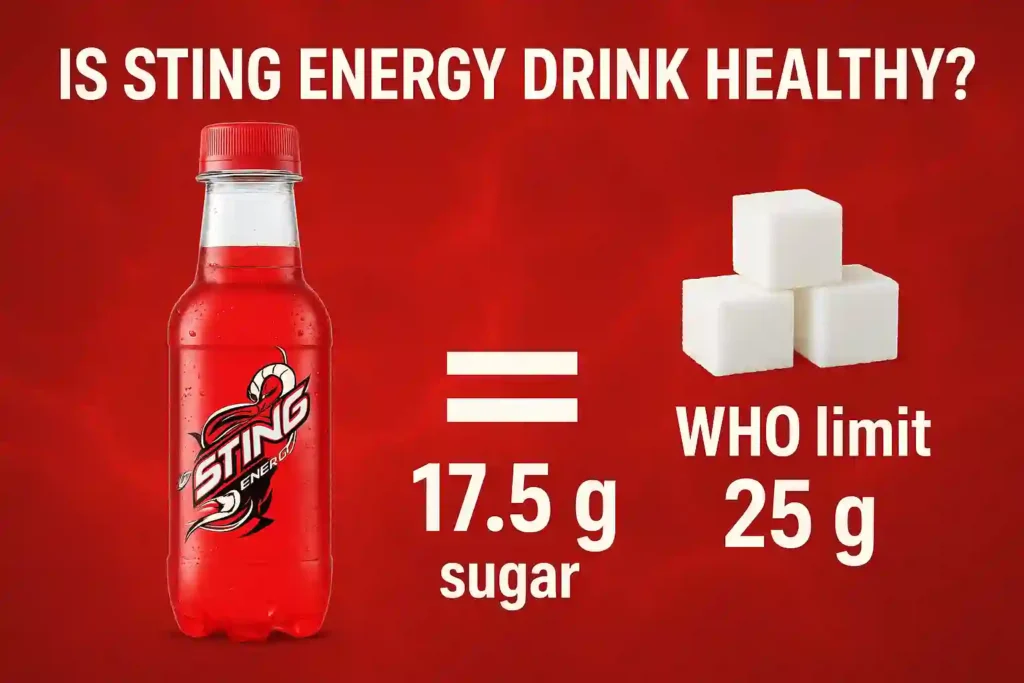
In a 250 ml bottle—
- Calories: ~70 kcal
- Sugar: 17.5 g (4 teaspoons!)
- Sodium: ~133 mg
For long-term excessive sugar consumption can lead to weight gain, tooth decay, raised blood pressure and insulin level, joint pain, skin aging, liver damage, Type 2 diabetes, pancreatic breakdown, kidney failure, and increased heart attack risk.
According to the American Heart Association, “Too much sugar is not sweet for your health.”
According to the WHO
10% limit → ~50 grams (≈ 12 teaspoons) of sugar per day – (Maximum limit).
5% limit → ~25 grams (≈ 6 teaspoons) of sugar per day – (Safer limit).
Reference: WHO, Guideline: sugars intake for adults and children.
⚠️ Health Impact
· Sugar Overload → Promotes obesity, diabetes, fatty liver, and heart issues.
· Caffeine + Taurine Combo → May raise blood pressure and overstimulate the heart.
· Artificial Sweeteners (955, 950) → Can disrupt gut bacteria in long-term use.
· Synthetic Colour (129) → Risk of hyperactivity in children, banned in some countries.
· Empty calories—70 calories per bottle with minimal nutritional value
· Preservatives → Long-term exposure can increase oxidative stress.
When Sting Energy Drink Is “Most Dangerous”
1. For Children & Teenagers
Kids’ bodies are more sensitive to caffeine, sugar, and synthetic colors.
2. For People with Heart or Blood Pressure Issues
3. When mixed with alcohol, it’s a dangerous combo.
4. Daily or Excessive Consumption
Regular consumption can create problems like sugar addiction, insulin resistance, weight gain, and liver stress.
When Sting Energy Drink Might Be “Less Harmful”
If you are a healthy person with no heart, liver, or sleep-related issues, you can occasionally consume (once in a while, not daily).
Is this article helpful?
Is It Healthy?
Absolutely NOT.
Sting Energy Drink is basically:
- Carbonated sugar water + artificial sweeteners
- Caffeine + taurine (for a temporary or instant “kick”)
- Preservatives, synthetic color, and marketing vitamins.
It gives you quick energy for 30–40 minutes but leaves you with a sugar crash, dehydration, and potential long-term health risks if consumed regularly.
Note: Sting clearly mentioned that it is “not recommended for children.” But these drinks are most popular amongst children.
Final Verdict
Your body deserves better than a chemical boost. Energy drinks may seem like a quick solution for low energy, but they come with serious health risks—especially for children and pregnant women. I believe that buying anything shouldn’t be a guessing game.
Q. Is Sting Energy Drink good for health?
No. Sting contains high sugar, caffeine, synthetic colours, artificial sweeteners, and preservatives. It gives a temporary energy boost but can harm your heart, liver, and metabolism if consumed regularly.
Q. How much sugar is in one bottle of Sting?
A 250 ml Sting bottle contains about 17.5 g sugar (≈ 4.5 teaspoons).
Q. Is Sting safer than other energy drinks like Red Bull or Monster?
No. Sting is just a cheaper version. It still contains sugar, caffeine, taurine, preservatives, and synthetic colour. All energy drinks carry similar health risks.
Q. Can kids drink Sting Energy Drink?
Absolutely not. Children are more sensitive to caffeine and sugar. It can cause hyperactivity, sleep problems, obesity, and heart palpitations. Energy drinks are unsafe for kids and teenagers.

I’m Mehebub Alam Chowdhury, an M.Sc. Organic Chemistry student, and my mission with Decodepure is to simplify complex chemical ingredients in everyday products. With my knowledge of chemicals, I aim to help you make safer, healthier choices by breaking down product labels in an easy-to-understand way.