Heart attacks, once thought to be a disease primarily affecting the elderly, are now taking the lives of young Indians. You’ve probably seen the headlines: a 25-year-old collapses at the gym, a seemingly fit 32-year-old dies dancing at a wedding, another young man passes away while jogging, Kannada superstar Puneeth Rajkumar (46 yrs.), popular singer KK (53 yrs.), Bollywood actor Siddharth Shukla (40 yrs.), Satish Kaushik (66 yrs.), and recently Shefali Jariwala (42 yrs.) passed away due to heart attacks.
And the shocking thing is that all are physically fit.
Table of Contents
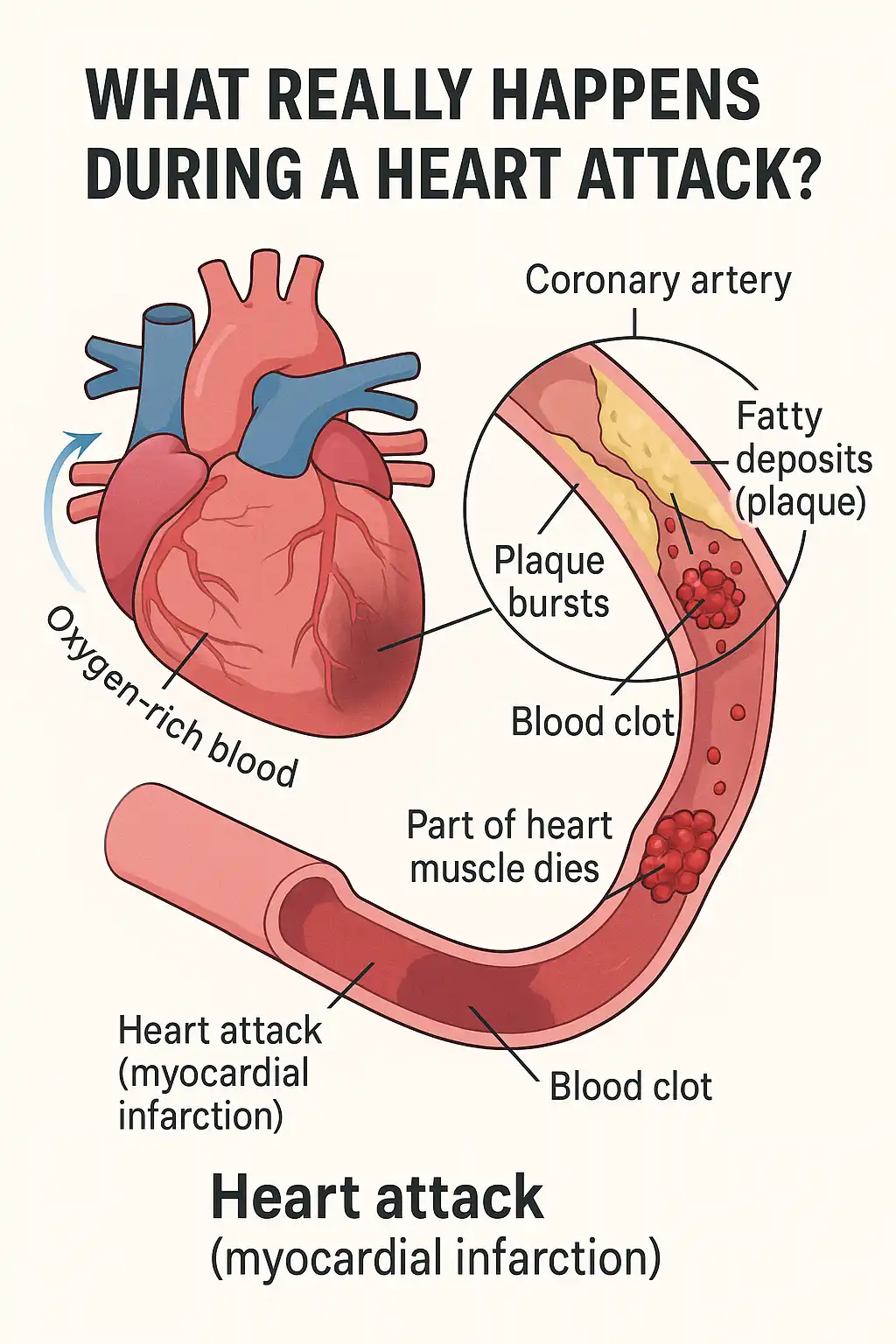
What Really Happens During a Heart Attack?
Think of your heart like an engine. It needs fuel (oxygen-rich blood) to keep pumping. That fuel is delivered through coronary arteries—like pipelines.
But over time, due to unhealthy food, stress, smoking, or genetics, fatty deposits (called plaque) start building up in those arteries. This condition is known as atherosclerosis.
Suddenly, one of these plaques bursts—and the body thinks it’s an injury. So it sends platelets to form a clot.
But that clot blocks the entire blood flow to a part of the heart muscle.
And when that part doesn’t get oxygen, it begins to die—this is called a heart attack (or myocardial infarction).
If the blockage isn’t cleared quickly, it can lead to
- Irreversible heart damage
- Irregular heartbeat
- Or even sudden death
Let’s Break Down the Real Reasons
Ultra-Processed Food and Junk Lifestyle
We are living in the era of instant foods like noodles, sugary drinks, fried snacks, and packaged foods loaded with trans fats, high sodium, refined carbs, and chemical preservatives.
Salt, Sugar & Maida: The Dangerous Trio in your Daily Plate
Refined flour (Maida), sugar, and salt are three ‘silent villains’ in our everyday Indian diet; they may look innocent, but they are also silent contributors to the rising number of heart attacks, especially among young Indians.
1. Refined flour (maida)—the white killer
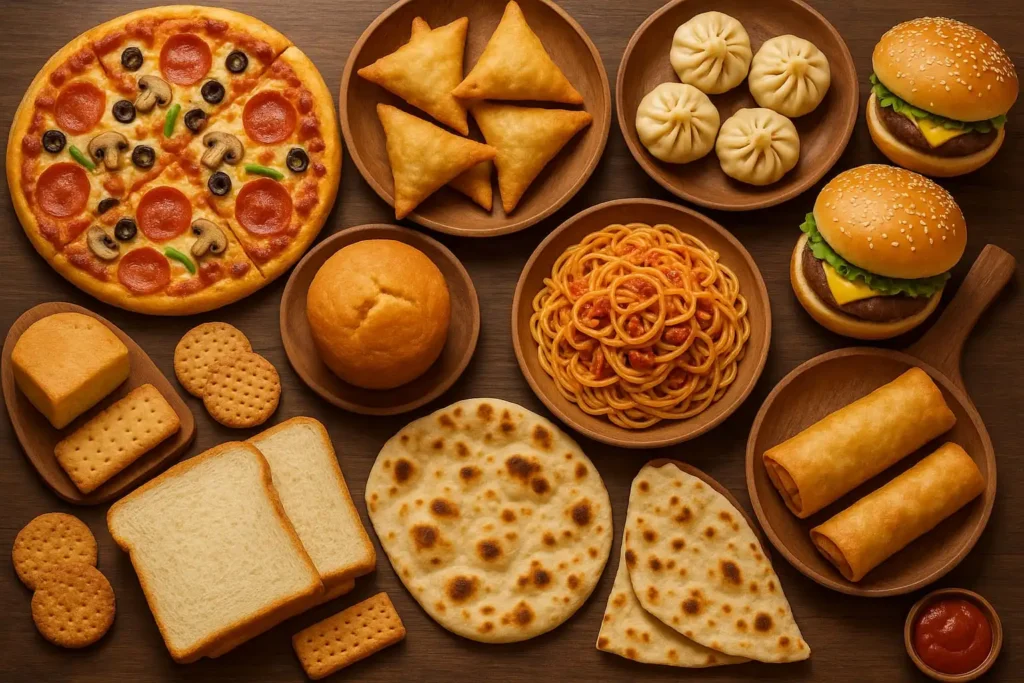
Day by day, Indians are more inclined toward eating outside than at home. Whatever the reason, be it work pressure or lack of time, eating outside means eating refined flour (Maida). Because almost 95% of the food outside is made from refined flour, foods like
Pizzas, samosas, momos, burgers, pasta, egg rolls, naan, white bread, biscuits, cakes, bakery items, even so-called brown bread, etc.
Maida is made by separating bran (a nutrient powerhouse, e.g., vitamins, minerals, & fiber) and germ from wheat grain, and to make it white, chlorine & benzoyl peroxide are used.
Due to a lack of fiber (Zero Fiber), it can slow our digestion, and when mixed with water, it’s sticky… also called “Glu for the gut.”
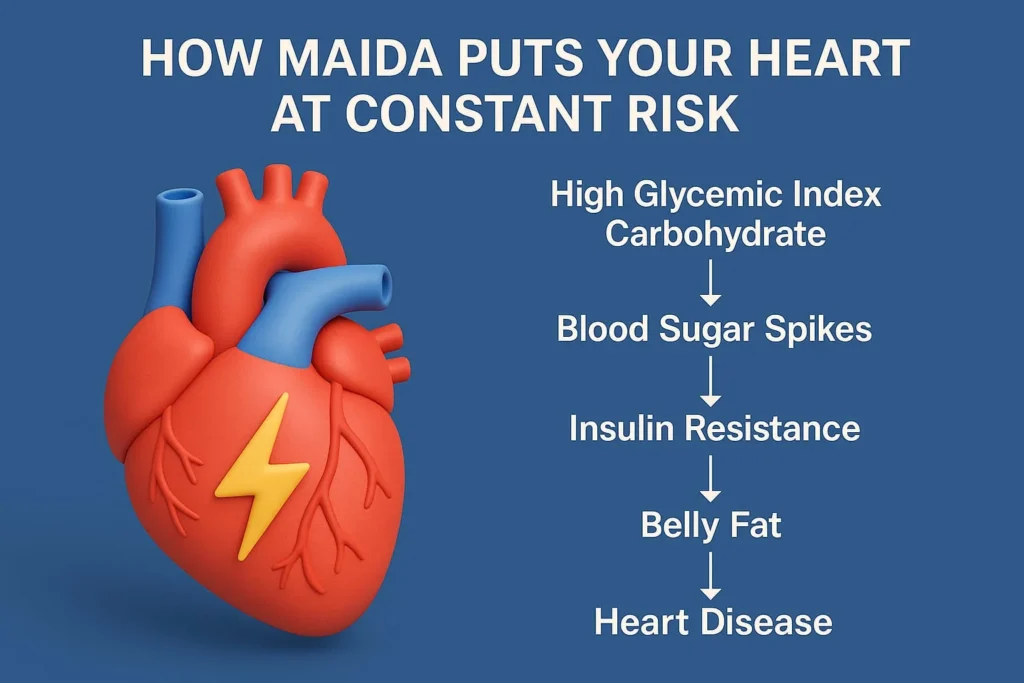
For long-term consumption, it can cause
- Digestive problems
- Spike blood sugar levels
- Insulin resistance
- Weight gain
- Obesity
- Higher risk of diabetes
- More fat around arteries
And all this puts your heart at constant risk.
2. Sugar—Sweet but Deadly
Sugar is sweet to eat, but the harm it does to our body will actually taste bitter to you. Most foods available in the market use lots of sugar, foods like
Sweets, chocolates, cold drinks, soft drinks, health drinks, fruit juices, desserts, protein bars, ice cream, ketchup, and even bread, etc.
According to the World Health Organization (WHO) and American Heart Association (AHA): Recommended Added Sugar Limits:
- Men: ≥36 grams (9 teaspoons) per day
- Women: ≥25 grams (9 teaspoons) per day.
Ideal target: below 30 g/day for adults.
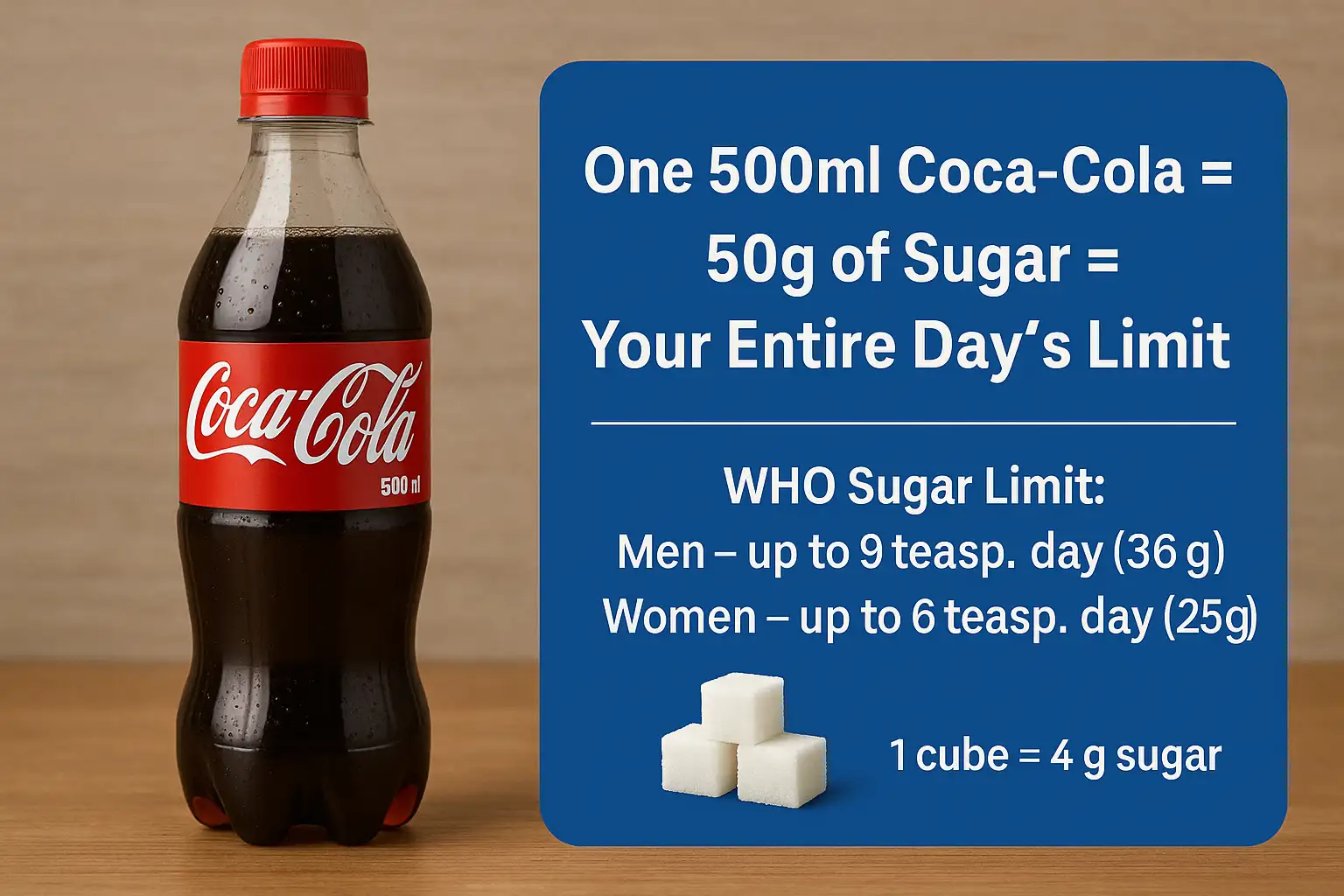
We drink one bottle (500 ml) of Coca-Cola at once. A 500 ml bottle contains 53 grams of sugar.
500 ml bottle – 10.6 × 5 = 53 gm (≈ 13.25 teaspoons of sugar)
That’s the maximum daily limit recommended by WHO (World Health Organization).
For long-term excessive sugar consumption can lead
- weight gain
- tooth decay
- raises blood pressure and insulin level
- joints pain
- skin aging
- liver damage
- Type 2 diabetes
- pancreatic breakdown
- kidney failure
- Increase bad cholesterol (LDL) and decreases good cholesterol (HDL).
- A major risk factor for heart diseases and increase the risk of Heart attack.
Reference: WHO, Guideline: sugars intake for adults and children.
3. Salt—The Hidden Sodium Bomb
We Indians eat a little too much salt in everything. Found in: chips, bread, pickles, papad, processed foods, etc. Bread is among the top sources of hidden sodium, even more than salty snacks in some cases.
Recommended daily sodium intake
WHO (World Health Organisation):
Less than 2,000 mg (2gm) of sodium per day.
U.S. Guidelines (FDA / CDC):
Less than 2,300 mg of sodium per day for adults. Ideal intake for those with hypertension, kidney disease or heart problem, 1500 mg/day.
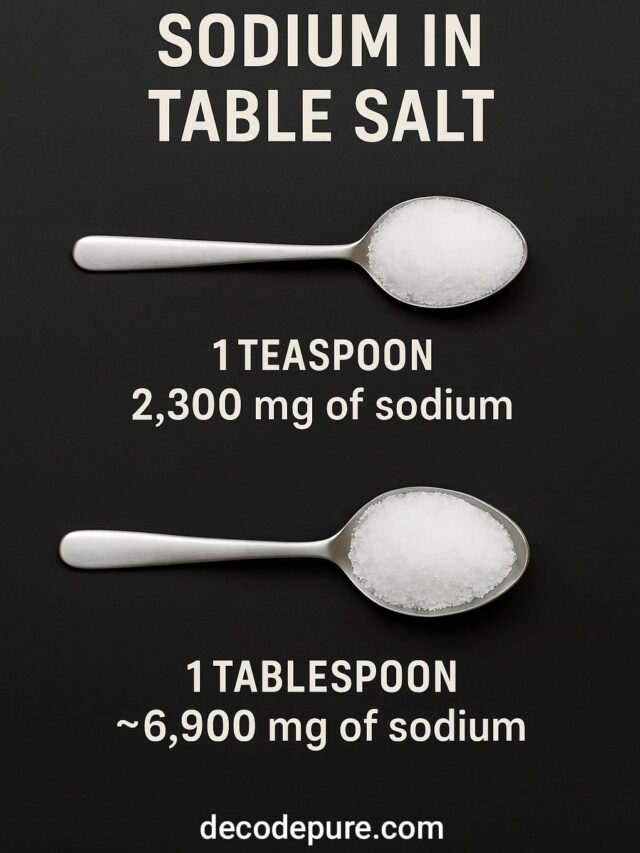
1 teaspoon of table salt ≈ 2300 mg of sodium
1 tablespoon of table salt ≈ 6,900 mg of sodium
Table salt is ≈ 40% sodium by weight, the rest is chloride.
Summary Table
| Ingredient | Risk | Recommended Limit | Common Sources |
|---|---|---|---|
| Salt (Sodium) | High BP → Heart Attack | <2g/day (2000 mg sodium) | Pickles, chips, noodles |
| Sugar (Added) | Inflammation, Obesity, Heart Failure | <30g/day (6-9 tsp) | Sweets, soft drinks |
| Maida | Blood Sugar Spikes, Belly Fat | Replace with whole grains | Bread, pizza, bakery |
Consuming an excess amount of sodium can lead to water retention in the body, which increases blood volume, which makes our heart pump harder, causing high blood pressure (hypertension), which stiffens arteries and increases the risk of heart attack and stroke.
Palm Oil
Palm oil is a type of vegetable oil extracted from the palm tree. It is very cheap and does not spoil for a long time. Most of the food in Indian markets is made with this, and even various famous brands.
Palm oil is used in pizzas, samosas, momos, burgers, pasta, egg rolls, chips, naan, white bread, biscuits, cakes, bakery items, soaps, and even baby products, etc.
Palm oil contains about 50% saturated fat. Saturated fats increase LDL (bad cholesterol) in the blood, which:
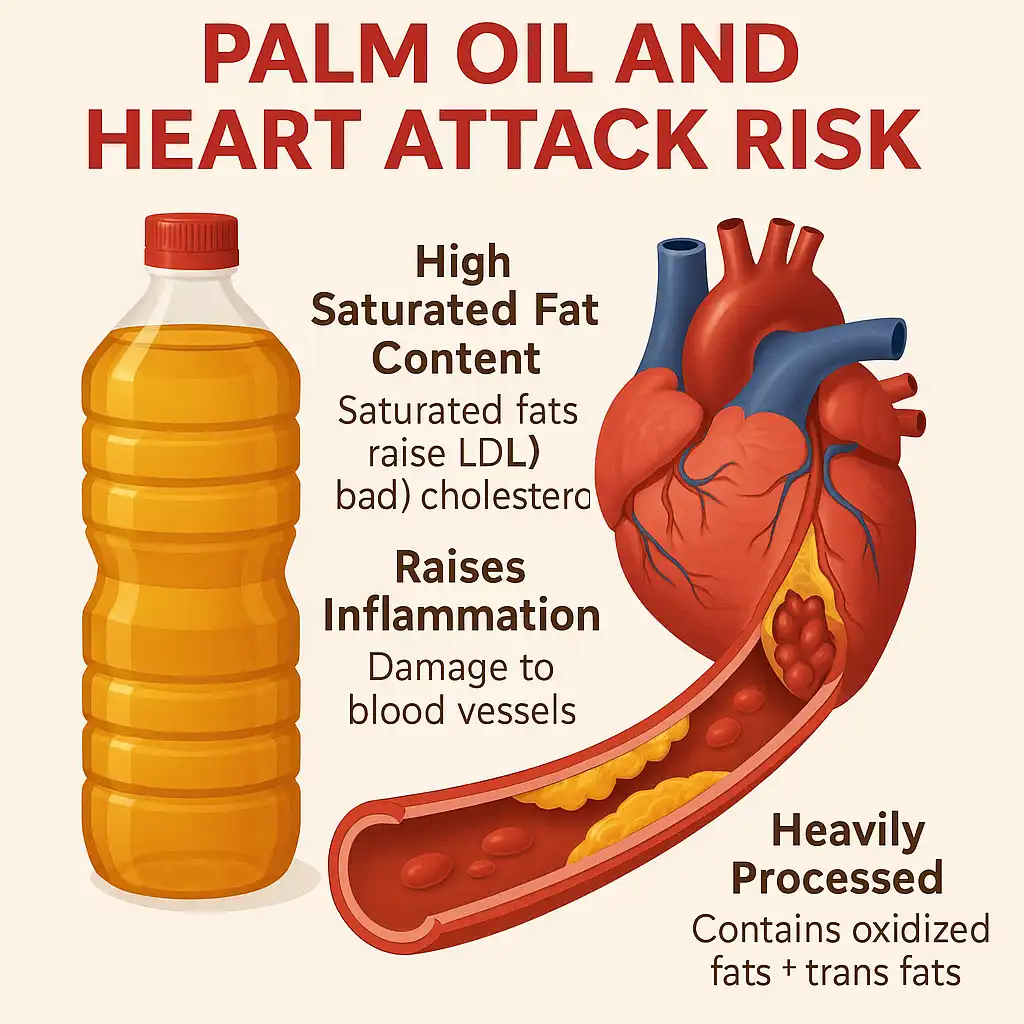
- Builds up plaque in arteries
- Narrows the arteries
- Reduce blood flow to the heart
- Increase the risk of blood clots
All of which directly lead to heart attack.
Especially on the sidewalks, the same oil is used repeatedly. when palm oil is reused, it can generate trans fats, Which
- Dramatically raise LDL (bad cholesterol)
- Lower HDL (good cholesterol)
Very sad to say, globally, India is the leading importer of palm oil in 2023. India imported $8.7 billion worth of palm oil. Ranking first among 206 countries. Imported from Malaysia and Indonesia.
🛑 You may love the taste of salt, sugar, or Maida today. But your heart may pay the price tomorrow.
Smoking
Most of us think smoking only damages the lungs. But smoking cigarettes can be a major cause of heart attack. Every puff of cigarette smoke releases over 4,000 gases and chemicals, including very dangerous carbon monoxide, nicotine, free radicals, etc.
Carbon monoxide (CO) binds with hemoglobin and replaces oxygen in the blood, and our heart doesn’t get enough oxygen, and it has to pump harder to function.
Oxygen down, pressure up, and heart stressed.
Other side, nicotine
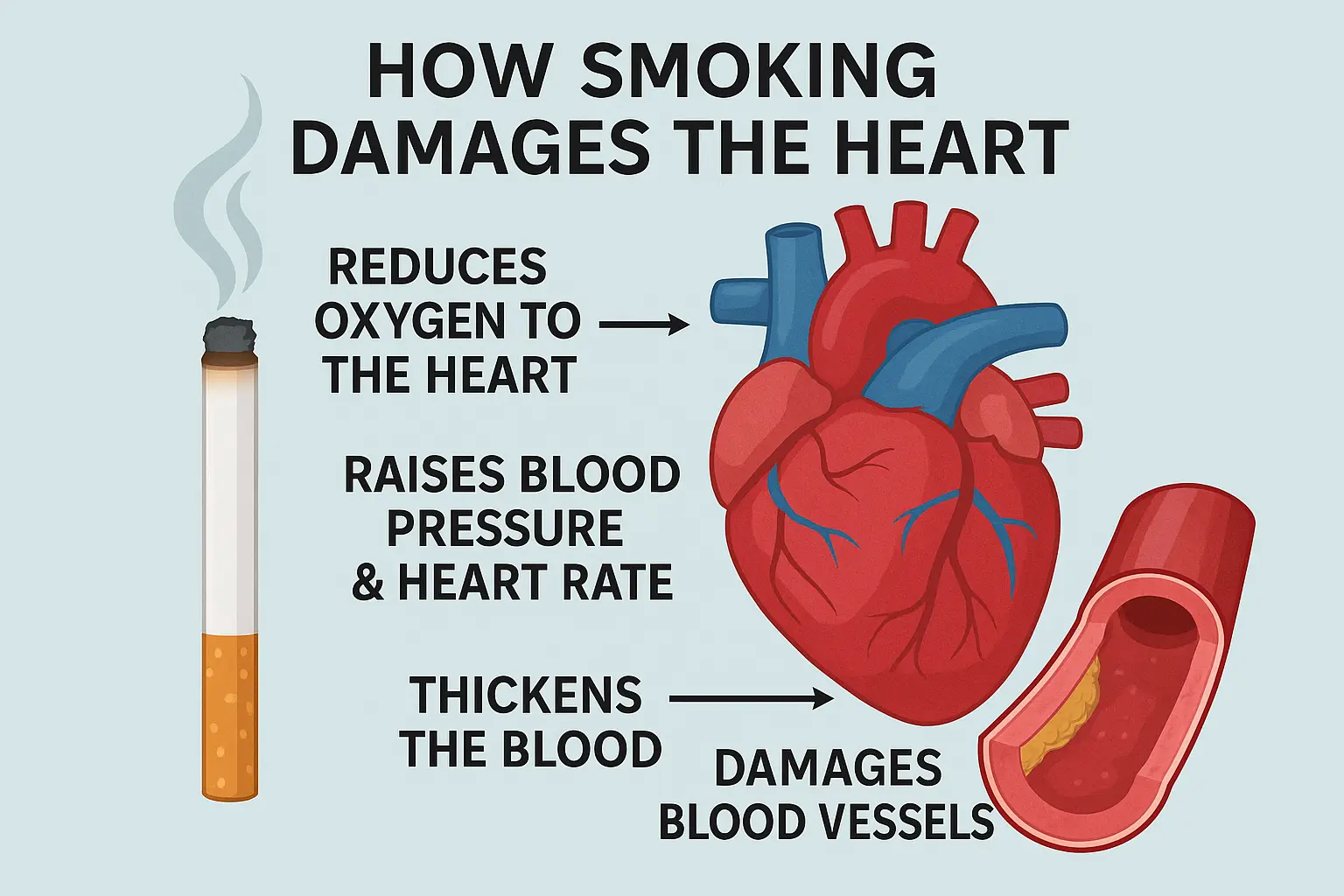
- Constricts blood vessel
- Raises blood pressure
- Increases heart rate
This means our heart is continuously under ‘fight mode,’ and day by day weakens our heart and arteries.
🛑 Smokers are 2–4x more likely to suffer a heart attack.
Source: World Health Organization – Tobacco and Heart Disease
Is this article helpful?
Stressful Lifestyles
There is a huge difference between the lifestyle of people ten years ago and the lifestyle of people today. People in the past used to work more physically, but nowadays our brains get tired through work, but our bodies don’t get tired. As a result, we do not sleep easily at night and spend most of the time working on our mobile or laptop or watching movies. As a result, we do not get the proper sleep we need.
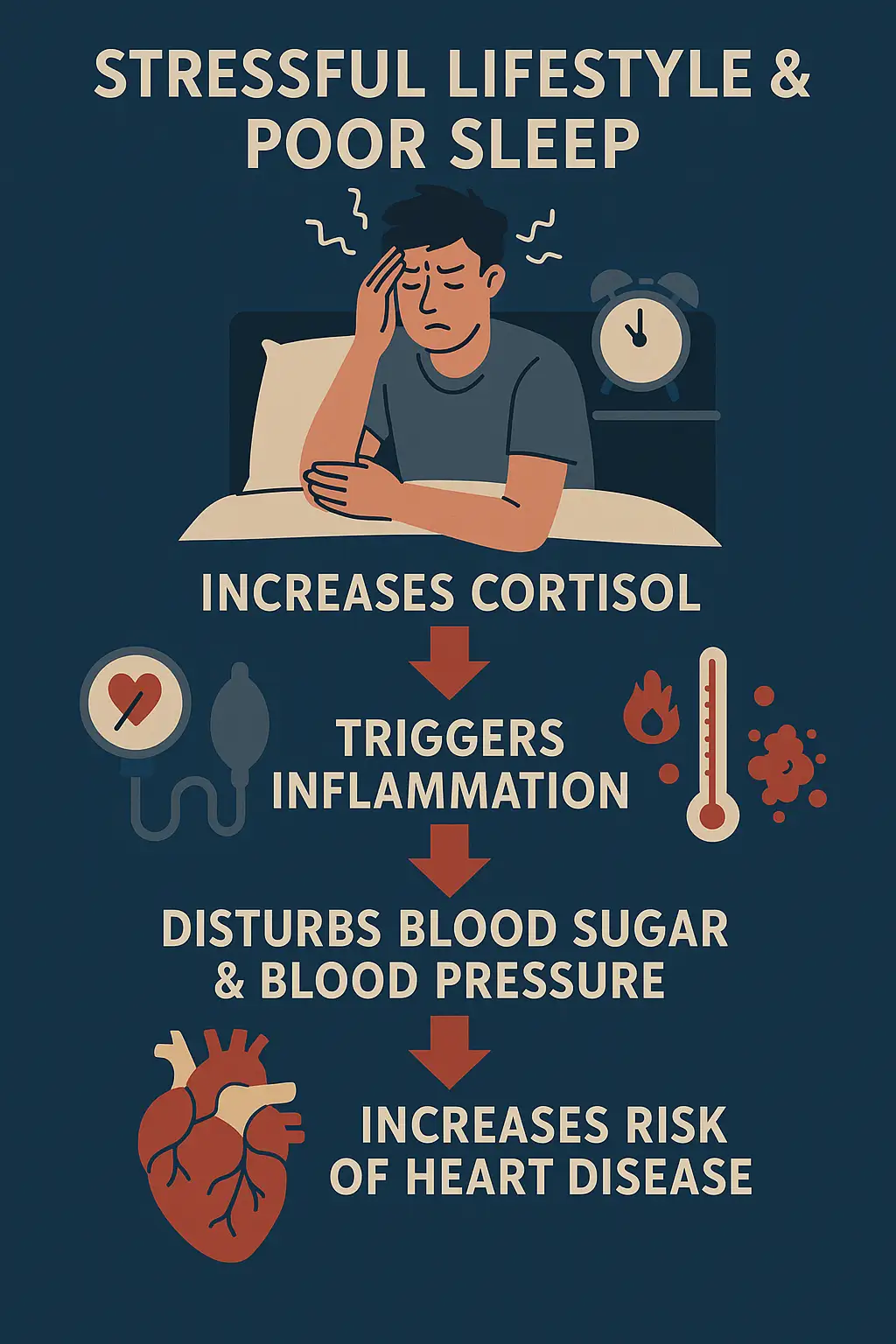
pressure of performance, career, relationship, and financial instability—a deadly combination of stressful life.
Stress increases cortisol and adrenaline, which damage blood vessels and elevate blood pressure, and poor sleep affects blood sugar and heart rhythm. Together they increase the risk of heart attack, even in young people.
Getting just 6 hours or less of sleep regularly raises your heart attack risk by over 20%.
Stressful lifestyle + poor sleep = silent heart killer.
A 2022 study published in The Lancet found that Indians spend more than 9 hours a day sitting, and physical inactivity is a major risk factor for cardiovascular disease.
Genetic problem
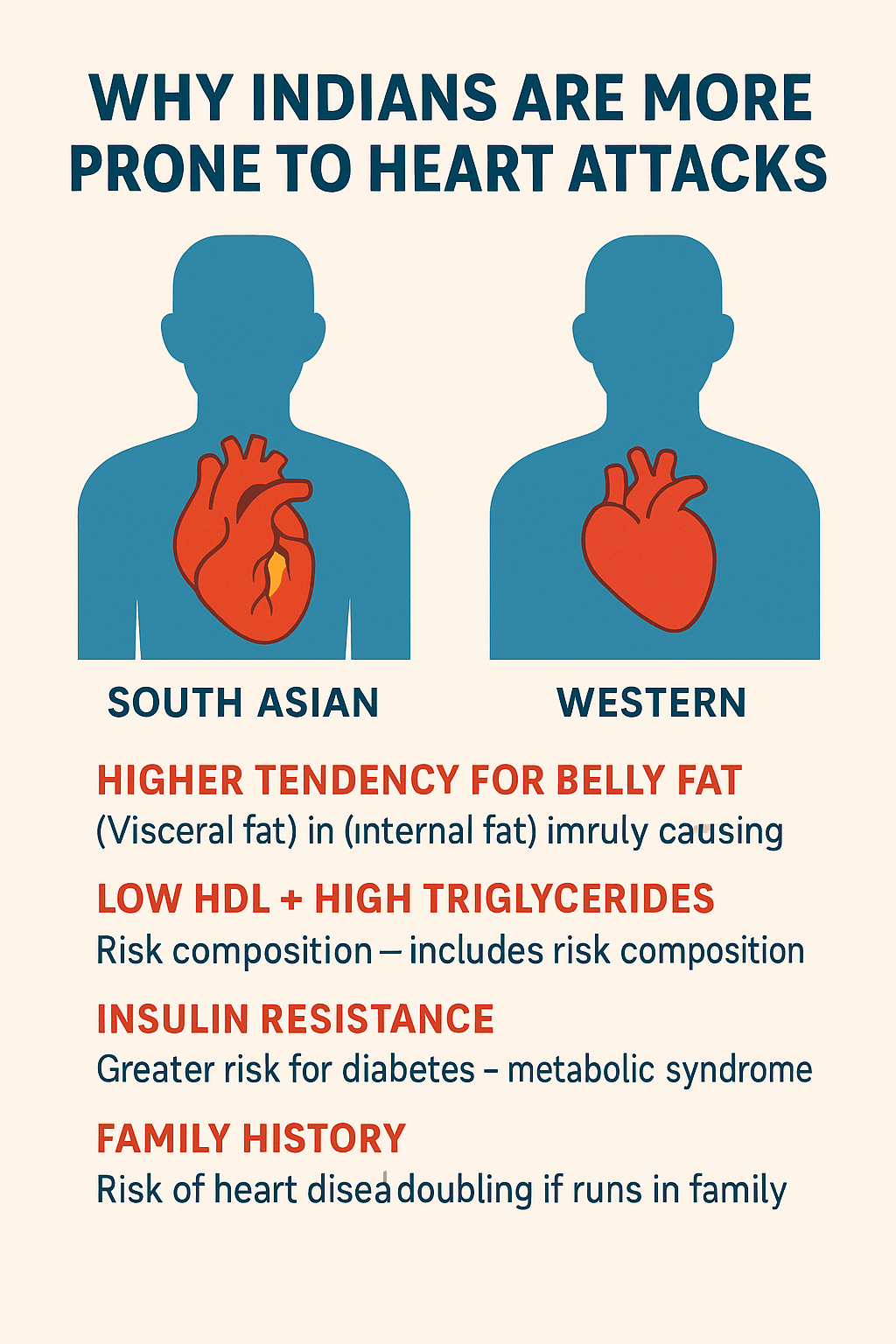
Yes, you heard right. Very sad to say, Indians do have a genetic disadvantage when it comes to heart attacks. Even those who are slim, active, or non-smokers can be at high risk. That’s why you often hear stories like
“He was just 35… looked fit… no bad habits… but died of a heart attack.”
According to the American College of Cardiology, high Lp(a) is much more common among South Asians and is a strong predictor of early heart disease.
Practical Tips for Heart Protection
- ✅ Eat real food: fresh fruits, vegetables, nuts, seeds, and home-cooked meals (try to avoid eating outside food unless absolutely necessary).
- 🏃♂️ Move your body every day: walk, stretch, breathe, etc.
- 🧘♂️ Practice stress relief: yoga, journaling, meditation, and nature time.
- ⛔ Say no to junk, sugary drinks, smoking, and unprescribed supplements.
- 🩺 Get your blood pressure, lipid profile, sugar, and ECG checked annually, even if you’re in your 20s.
Conclusion
Heart attacks are no longer just about age. They can happen to anyone—even young, active people. Being Indian means your heart may be at higher risk. But that doesn’t mean it’s too late or out of your hands.
Every small step—eating better, walking more, stressing less, checking your health—makes a big difference.
Take care of your heart like you take care of your loved ones. Because in the end, a strong heart means a stronger you. 🫀

Q. Why are more young Indians getting heart attacks now?
Due to a mix of poor lifestyle (junk food, stress, no exercise), smoking, lack of sleep, and genetic risk. Even people in their 20s and 30s are now at risk.
Q. Can slim or fit-looking people also get heart attacks?
Yes. Many Indians have belly fat, high cholesterol, or genetic risks even if they look slim — this is called the “thin-fat Indian” problem.
Q. Is heart attack only caused by eating oily or fried food?
No. While fried food is harmful, other things like excess sugar, salt, maida, stress, smoking, and lack of sleep also increase the risk.
Q. Is gym or heavy exercise dangerous for the heart?
Exercise is good — but overdoing it, taking steroids, or using energy drinks without guidance can put extra pressure on the heart, especially if there are hidden health issues.
Q. Can stress really cause heart problems?
Yes, Chronic stress raises blood pressure, damages arteries, and increases the chance of sudden heart attack or stroke.
Q. How can I know if I’m at risk?
Start by getting tested yearly — check:
Blood pressure
Cholesterol
Sugar levels
Lp(a) (genetic cholesterol)
Also, check your family history of heart disease or diabetes.
Q. Is palm oil really harmful?
Yes, especially in processed and fried foods. It raises bad cholesterol and increases the risk of clogged arteries and heart attacks.
Q. Can I reduce my heart attack risk naturally?
Yes! You can lower your risk by:
Eating real, home-cooked food
Walking daily
Sleeping well
Managing stress
Avoiding smoking, alcohol, and sugary or oily food
Why is Heart attack increasing in India in young age?
Due to a mix of poor lifestyle (junk food, stress, no exercise), smoking, lack of sleep, and genetic risk. Even people in their 20s and 30s are now at risk.

I’m Mehebub Alam Chowdhury, an M.Sc. Organic Chemistry student, and my mission with Decodepure is to simplify complex chemical ingredients in everyday products. With my knowledge of chemicals, I aim to help you make safer, healthier choices by breaking down product labels in an easy-to-understand way.