Cooking oil is a daily staple in most kitchens, used to fry and prepare countless meals. Most of the cooking oils available in the market are not as healthy as they appear. Refined through chemical processes and stripped of nutrients, these oils may be doing more harm than good.
In this post we uncover the dark side of cooking oil, e.g., refined oil, break down their making process and health effects and suggest safer and healthier alternatives for your kitchen.
Table of Contents
Worst Oils
1. Refined Oil
Currently most of the Indians are using refined oil as cooking oil.
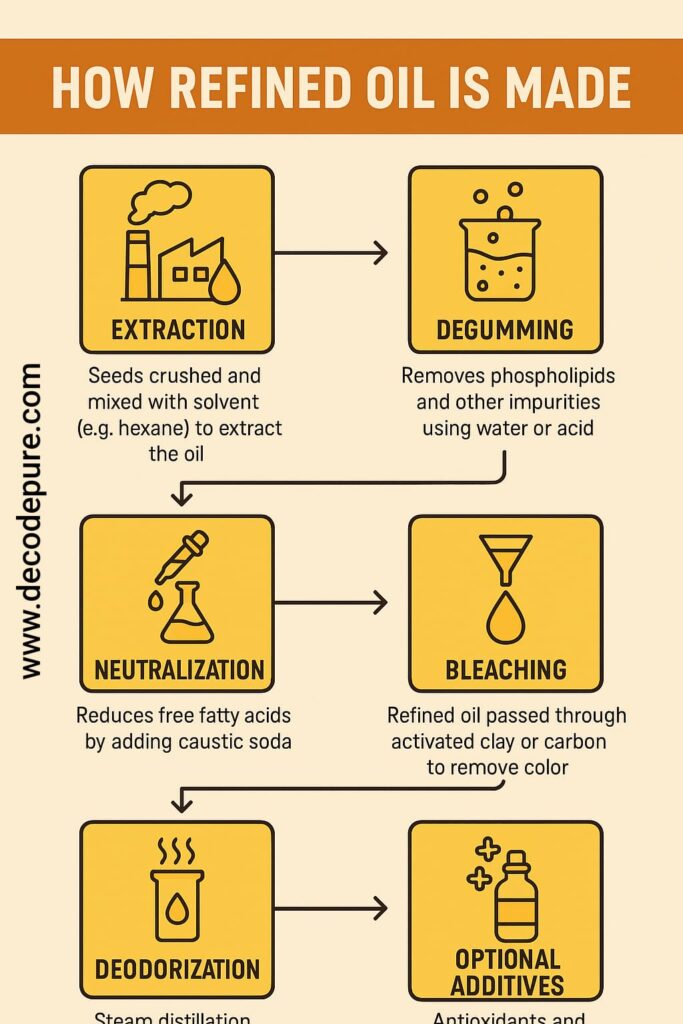
Process –
1. Seeds (like soybean, sunflower, canola, and cottonseed) crushed and mixed with solvent (e.g., hexane) to extract the oil
2. Removes phospholipids (gums) and other impurities using water and acids.
3. Reduces free fatty acids by adding caustic soda (sodium hydroxide).
4. Refined oil passed through activated clay and/or carbon to remove color and pigments.
5. Oil is heated to 230 – 260°C in a vacuum, and steam is passed through. This removes odors and volatile compounds. This high heat destroys all the beneficial nutrients, like vitamin E, and forms trans-fat.
6. Used preservatives like TBHQ to extend shelf life.
Health concerns –
1. Most nutrients, vitamins (like E and K), and antioxidants are stripped away. This oil loses its protective benefits and becomes “empty calories” (Gunstone FD, Vegetable Oils in Food Technology, 2002).
2. High-heat processing forms trans fats and free radicals, which are linked to raising LDL (bad cholesterol), increasing the risk of heart disease, heart stroke, and chronic inflammation. (Harvard T.H. Chan School of Public Health)
3. Hexane residues may remain in trace amounts. It’s a neurotoxin linked to nervous system disorders.
4. Used preservatives like TBHQ and BHA are linked to liver enlargement, tumours and DNA damage. (NIH National Toxicology Program).
5. Refined oils like soybean, sunflower and corn oil are high in omega-6. Linked to heart disease, diabetes, etc.
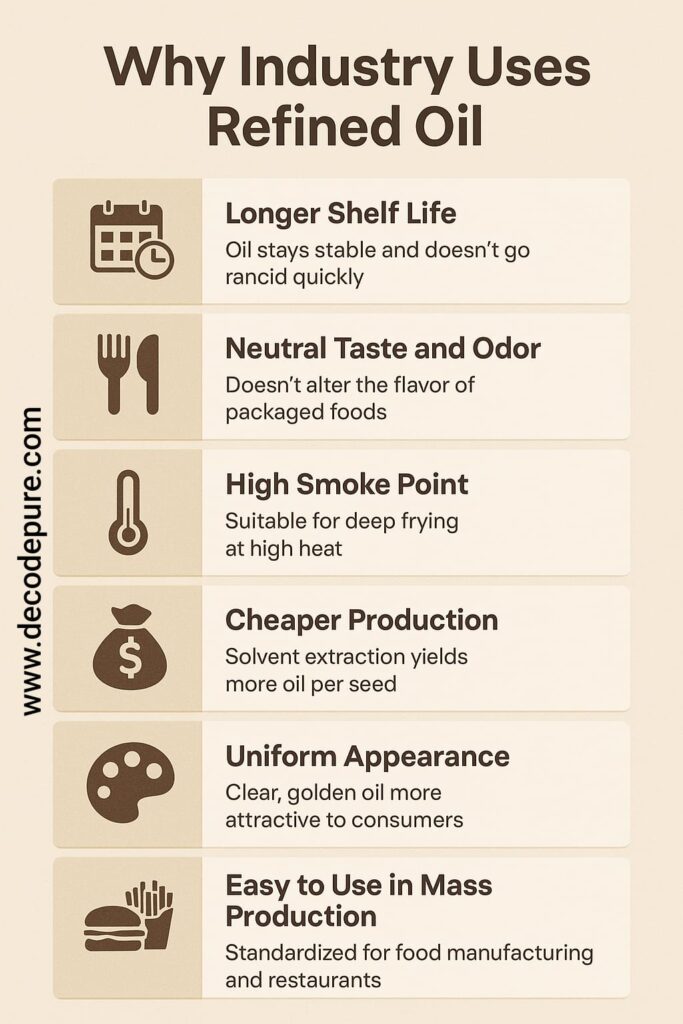
Why industries use it?
- Cheaper production
- Increase self-life and stability
- Neutral test and odor
- High smoke point
- Uniform appearance
- Easy to use in mass production
Example –
Here are some common examples of refined oil widely available in the market as cooking oil: refined sunflower oil (Fortune, Gemini, Patanjali), refined soybean oil (Fortune, Gemini, Patanjali), refined canola oil (Mazola, Wesson, Canola Harvest), refined palm oil (Ruchi Gold, Gemini, Godrej), refined cottonseed oil (Ginni, Dhara, Gold Winner), etc.
2. Reused oil
In India, especially in shops, the same oil is reused over and over again. Reusing cooking oil is very harmful to health. Repeated heating breaks down the oil molecules and produces toxic aldehydes, acrylamide and trans-fat.
These are linked to raising LDL (bad cholesterol), increasing the risk of heart disease, heart stroke, chronic inflammation, acidity, bloating and sluggish digestion.
Best cooking oil
1. Cold – pressed oil
Modern metal press machines are used in this process. Extracted by pressing oil seeds at low temperature without external heat.
Key Features:
- Retains nutrients, antioxidants and natural flavor
- This process is completely chemical free and unrefined
- Very much suitable for light cooking.
Common Oils – Coconut oil, Sesame, Mustard oil, Ground nut oil.
2. Wood – pressed oil (Lakdi Ghani)
In this process, machines are used, like wooden churners rotated slowly (usually by motor or bullock). It’s a traditional form of cold pressing using a wooden pestle (Ghani) to slowly crush seeds at low temperature without external heat.
Key Features:
- This process is completely chemical free and unrefined
- Retains nutrients, antioxidants and natural flavor.
- Wood absorbs heat, preserving nutrients better.
Common Oils – Groundnut oil, Sesame oil, Mustard oil
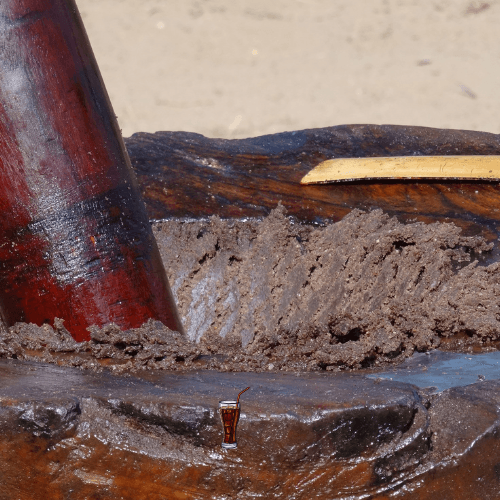
3. Kachchi Ghani Oil
Machines used are similar to wood-pressed or traditional cold presses, at low temperature without external heat.
Key Features :
- Generally darker in color due to natural sediment
- Rich in pungency and flavors, especially mustard oil
- No chemical heating is used in this process
Common Oils – Mustard oil (mostly)
Benefits
1. Low-temperature extraction process helps retain nutrients such as vitamin E and natural antioxidants.
2. This oil retains its original taste and fragrance, best as cooking oil.
3. This unrefined natural oil helps better lipid metabolism, lower inflammation and reduce the risk of heart disease.
4. These oils contain monosaturated (MUFA) and polysaturated (PUFA) fats, which help in brain health, joint flexibility and hormonal balance.
4. Ghee
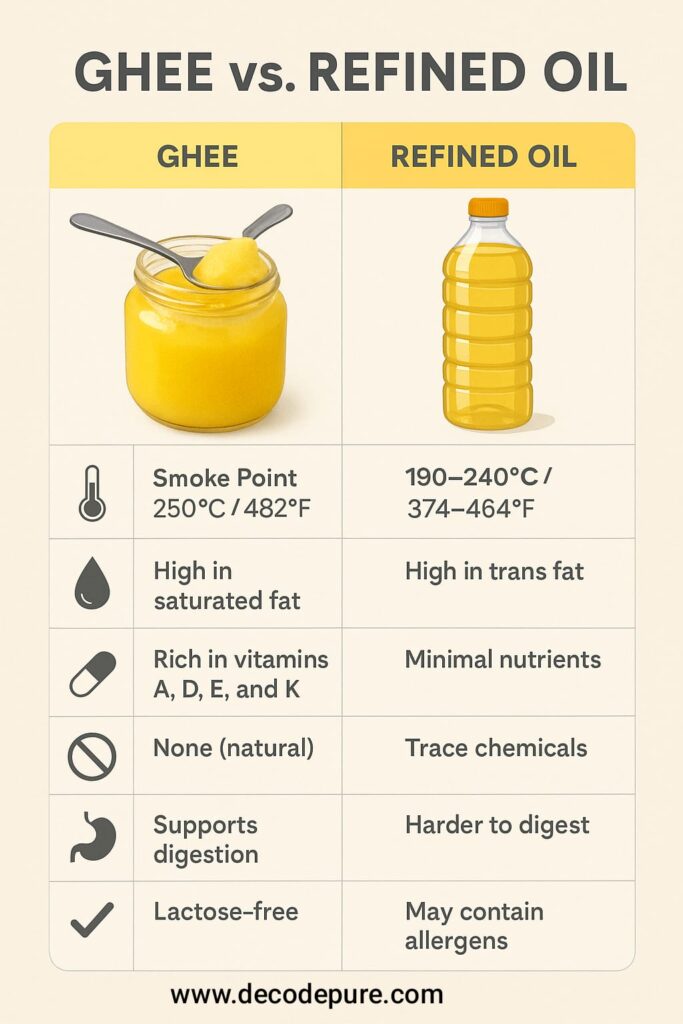
Ghee is an excellent alternative to refined cooking oil. It’s a type of clarified butter made by simmering butter to remove water and milk solids, leaving behind pure fat. Particularly used for deep frying and high heat cooking due to its high smoke point (250°C).
Ghee contains short-chain (butyrate) and medium-chain fatty acids, which –
- support gut health,
- provide quick energy
- and reduce inflammation.
5. Olive oil
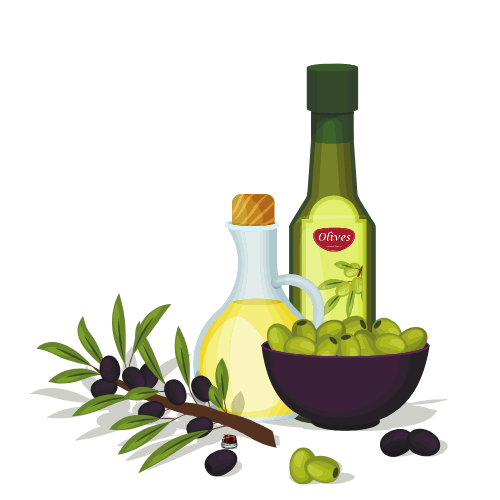
Olive oil is one of the healthiest oils but not ideal for all cooking styles. Olive oil is best for raw or low-heated dishes like pasta, salads, etc. At high heat or deep frying, it quickly degrades and loses nutrients.
- Olive oil rich in antioxidants
- healthy monosaturated fats (MUFA)- lowers LDL and raises HDL that is good for heart health and may reduce Alzhemer’s risk.
- Contains oleocanthal – a natural anti-inflammatory compound.
It’s expansive and can be adulterated – buy from trusted brands.
Common myth
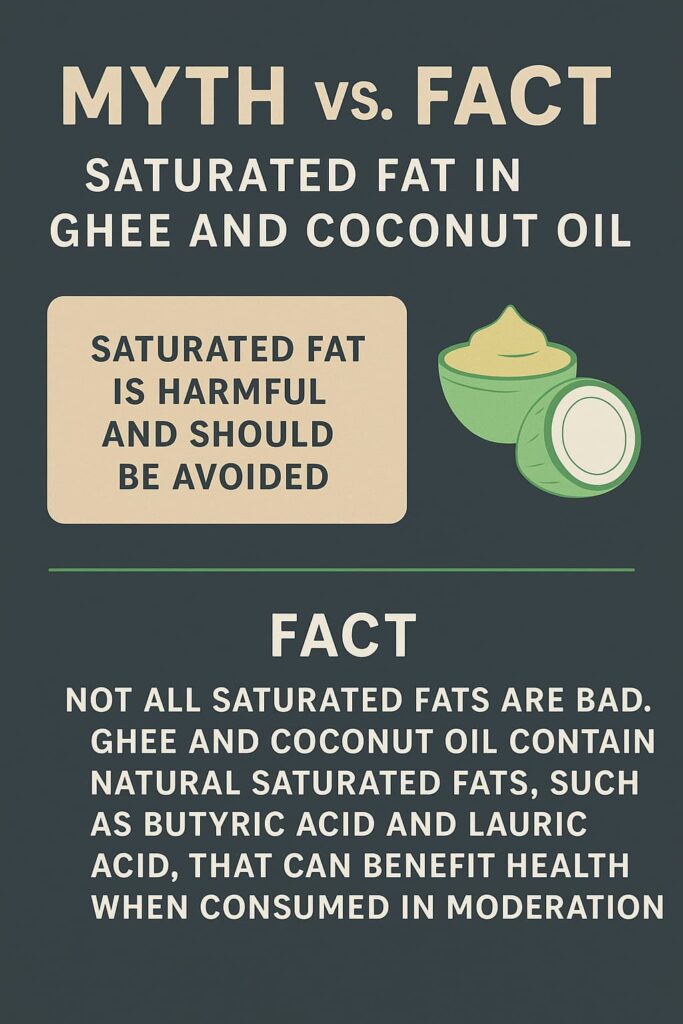
Q. Coconut oil and Ghee contain high saturated fats, is it healthy or unhealthy as cooking oil?
Not all saturated fat is harmful. From modern research, coconut oil contains a special type of saturated fat called medium-chain fatty acids (MCFAs), like lauric acid, that actually increase the good cholesterol (HDL), boosting metabolism. Coconut oil has now been proven to be the healthiest oil in the world.
Ghee contains short-chain (butyrate) and medium-chain fatty acids, which support gut health, provide quick energy and reduce inflammation.
So, both the oil is super healthy as cooking oil.
Summary
1. Refined oils are the worst oils for cooking – stop using them.
2. Avoid palm oil (palmolein oil, hydrogenated palm oil, fractionated palm oil, and refined palm oil are all used under different names in the market for palm oil, mostly in packaged foods).
3. Olive oil is healthy but isn’t great for Indian cooking.
4. Cold-pressed oils are the best for Indian cooking – groundnut oil, sesame oil, mustard oil, and coconut oil.
5. Ghee is the best for all types of cooking – It might not be a very affordable option for daily cooking.
Health impact
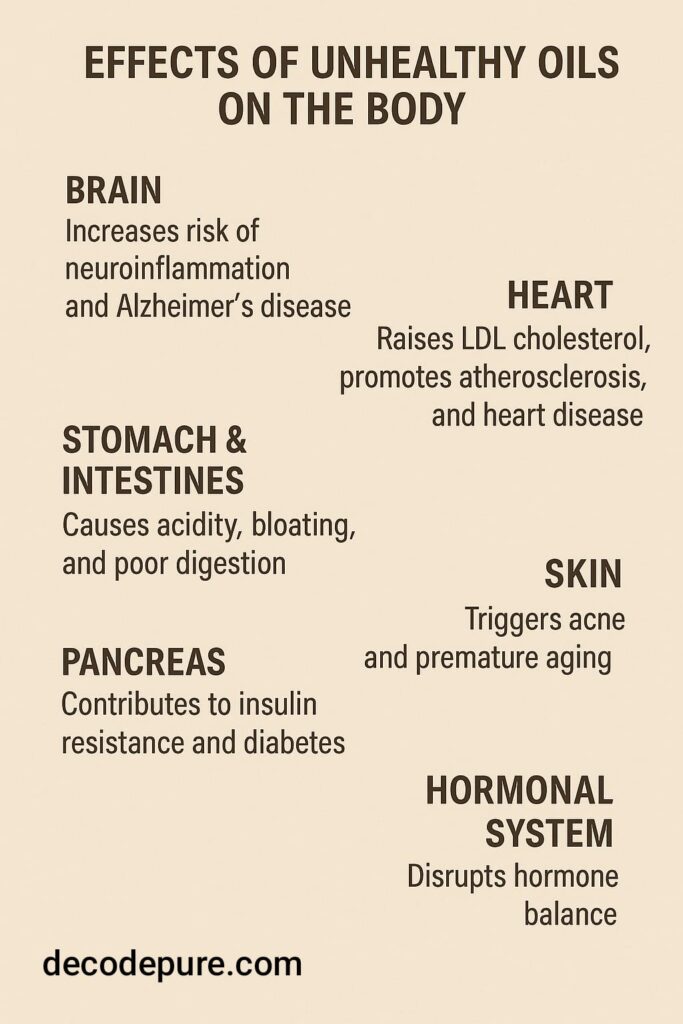
Unhealthy oils Especially refined oil, repeatedly heated and trans-fat-rich oils can severely affect multiple parts of our bodies.
1. Rises in LDL, bad cholesterol in blood, increase heart disease and stroke risk, Type 2 diabetes, etc.
2. Excess intake can cause fatty liver disease (NAFLD). The liver works harder to process toxic compounds from degraded oil.
3. Also, it can cause bloating, acidity and poor digestion and disrupt the gut microbiome.
4. For long-term use of trans fat can cause memory loss and Alzheimer’s disease and increase neuroinflammation.
5. Promotes acne, dull skin and premature ageing.
6. Hormonal balance disrupts, especially for women.
Make decision
You deserve to know what you are putting on your body.
Avoid refined oil and go for cold-pressed oils – groundnut oil, sesame oil, mustard oil, and coconut oil.
As an Indian, there is no need to cook with olive oil as cooking oil because it is very expensive and isn’t great for Indian cooking style.
Read more: The Bitter Truth Behind Your Sweet Sips : Exposing the Dark Side of Cold Drinks
Conclusion
As an Indian, you don’t need to look for healthy alternatives; they are already a part of our culture. India has long been a land of natural, traditional oils – from the mustard fields of the North to the coconut groves of the South. Our ancestors relied on wood-pressed (Kolhu), coal-pressed and Kachchi Ghani oils, not out of trend but out of wisdom.
All we need is to rediscover and return to our roots. Say no to refined fakes and yes to real, regionally sourced oil.
I believe that buying anything shouldn’t be a guessing game. It’s time we started reading labels and exploring healthier alternatives.
Q. Which cooking oil is healthiest?
Extra-virgin olive oil is frequently cited as the top choice for heart health, packed with monounsaturated fats and antioxidants. Ideal for low to medium-heat cooking and raw uses.
Q. Can I reuse cooking oil?
You can, but only a few times—strain it, store it in a cool dark place, and discard when it becomes dark or smelly
Q. Which oils degrade when heated?
Oils with high polyunsaturated fats (like flax, walnut, sunflower, soybean, and corn oil) degrade faster and may produce harmful compounds when overheated
Safe alternative in Market
1. Wood Pressed Coconut Oil
2. Wooden Cold Pressed Sesame Cooking Oil
3. Thanjai Natural Unrefined Wooden Cold Pressed Groundnut Oil
4. Divya Kamdhenu Gir Cow Ghee
5. Fortune Kachi Ghani Pure Mustard Oil

I’m Mehebub Alam Chowdhury, an M.Sc. Organic Chemistry student, and my mission with Decodepure is to simplify complex chemical ingredients in everyday products. With my knowledge of chemicals, I aim to help you make safer, healthier choices by breaking down product labels in an easy-to-understand way.