Chips – everyone loves them, right? It’s salty, crispy and almost impossible to stop eating. Behind the taste and eye-catching packaging of chips, it contains harmful ingredients that may do more harm than good.
You will be surprised to know that the chips made in India use palm oil, but the chips made in America do not use palm oil. Tell me, is this acceptable?
In this post, we break down the hidden truth about chips and disclose each ingredient one by one.
Table of Contents
Ingredients matter
As a common man, we have no alternative way to verify which product is harmful and which is not. Only the ingredient list can help us in this regard. There is no other way.
So, before buying anything, be sure to check the ingredients list.
Common Ingredients used
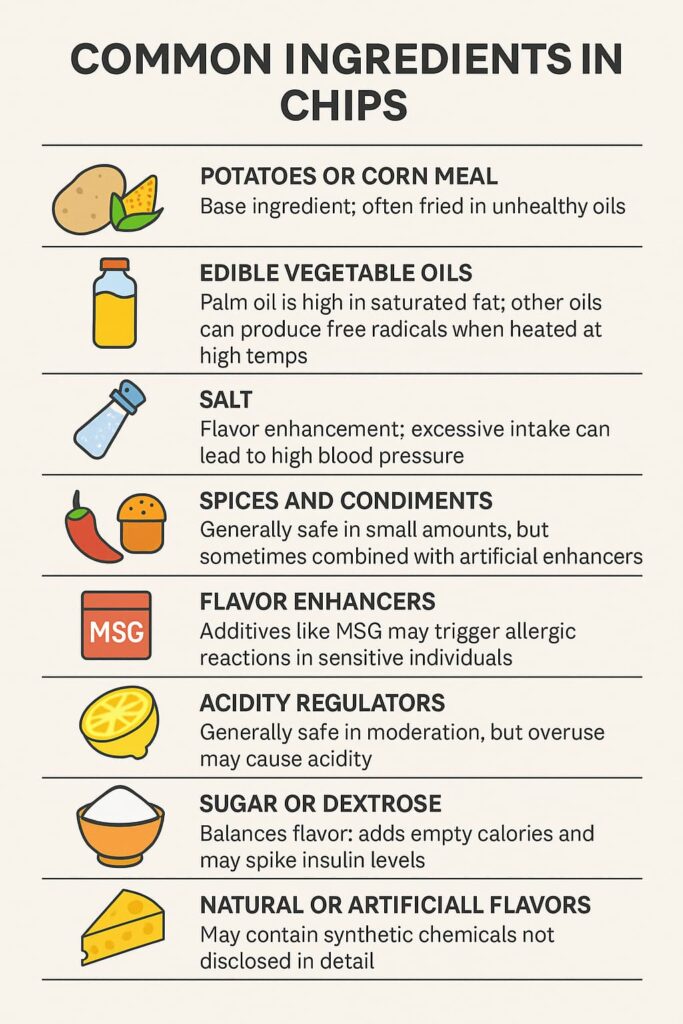
The most common ingredients in chips used are potatoes, vegetable oil (like palm oil/sunflower oil), saturated fat, maltodextrin, trans fat, sugar/dextrose, salt, sodium, artificial flavour, hydrolysed vegetable protein, flavour enhancers (627, 631), antioxidants, and anti-caking agents, etc.
Let’s briefly discuss all the ingredients.
1. Potatoes – Main/Base ingredient
Natural, not harmful but often fried in unhealthy oils.
2. Vegetable Oil – palm oil/sunflower oil; palm oil is the most dangerous ingredient in this list.
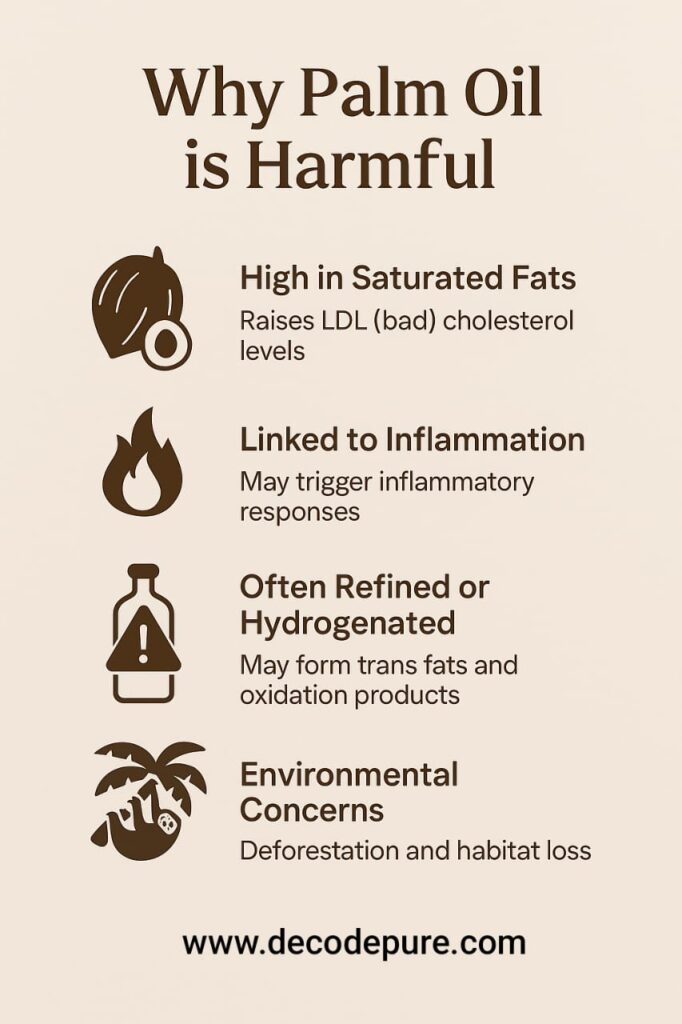
Palm oil is high in saturated fat and raises the bad cholesterol. Very harmful for heart health. This will be discussed in detail later.
4. Saturated fat – it gives chips a crunchy mouthfeel, helping chips stay fresh and crisp (longer self-life).
Saturated fat raises LDL (bad cholesterol) and increases the risk of heart disease and stroke when consumed frequently.
Reference: American Heart Association.
5. Maltodextrin – Adds smooth, crispy coating and prevents clumping in spice blends. Making products cheaper to produce.
Bad for diabetics and metabolism, spike blood sugar quickly.
6. Trans fat – makes oil more stable, so chips last longer without going rancid. Gives chips a crispy texture.
Raise bad cholesterol (LDL), increasing the heart stroke risk.
7. Salt – Flavour enhancement
Excessive intake can cause high blood pressure and heart issues.
8. Sodium –
Recommended sodium intake,
WHO: less than 2,000 mg of sodium (≈ 5 gm of salt).
Indian Council of Medical Research (ICMR): 1800–2300 mg of sodium for adults.
A single 30 g chip pack can have 300-500 mg of sodium. 1 teaspoon of table salt ≈ 2300 mg sodium. That’s 20 – 25% of your daily limit in just one snack!
9. Spices – Onion, garlic, chilli, tomato, turmeric, etc., were used.
Generally safe.
10. Flavour Enhancers – Monosodium Glutamate (MSG) – E621, Disodium Inosinate – E631, Disodium Guanylate – E627.
It can cause headaches and allergies.
11. Sugar – Balances flavour
A small amount is not harmful.
What is saturated fat, unsaturated fat and trans fat
Saturated fat –
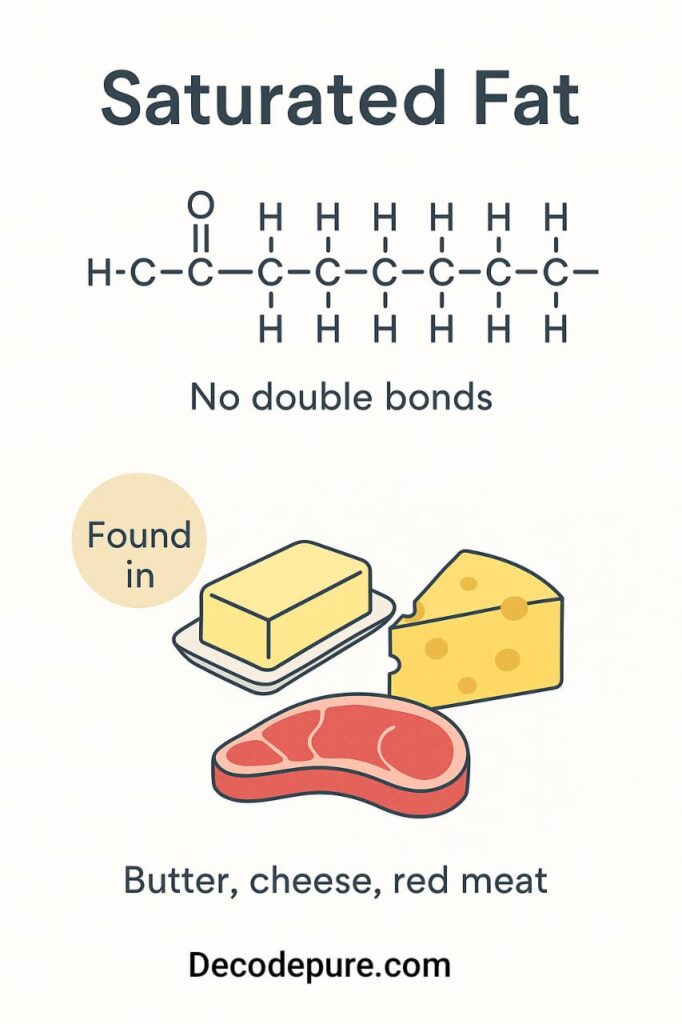
Saturated fat has a single bond between two carbons (C-C) in their fatty acid chains. It’s most found in animal products (like butter, cheese, and red meat) and some plant oils (like palm oil and coconut oil). Typically, solid at room temperature.
Health impact – Eating too much saturated fat can raise bad cholesterol (LDL) in blood. High LDL level increases the heart disease and stroke risk.
Unsaturated fat –
Unsaturated fat has a double bond between two carbons (C=C) in their fatty acid chains. It’s most found in plant-based foods like vegetable oil, nuts and seeds and also in animals (like fish). Generally liquid at room temperature.
Health impact – Unsaturated fats help to improve cholesterol levels by increasing good HDL cholesterol and reducing bad LDL cholesterol, lowering the risk of heart disease and stroke risk.
Trans fat –
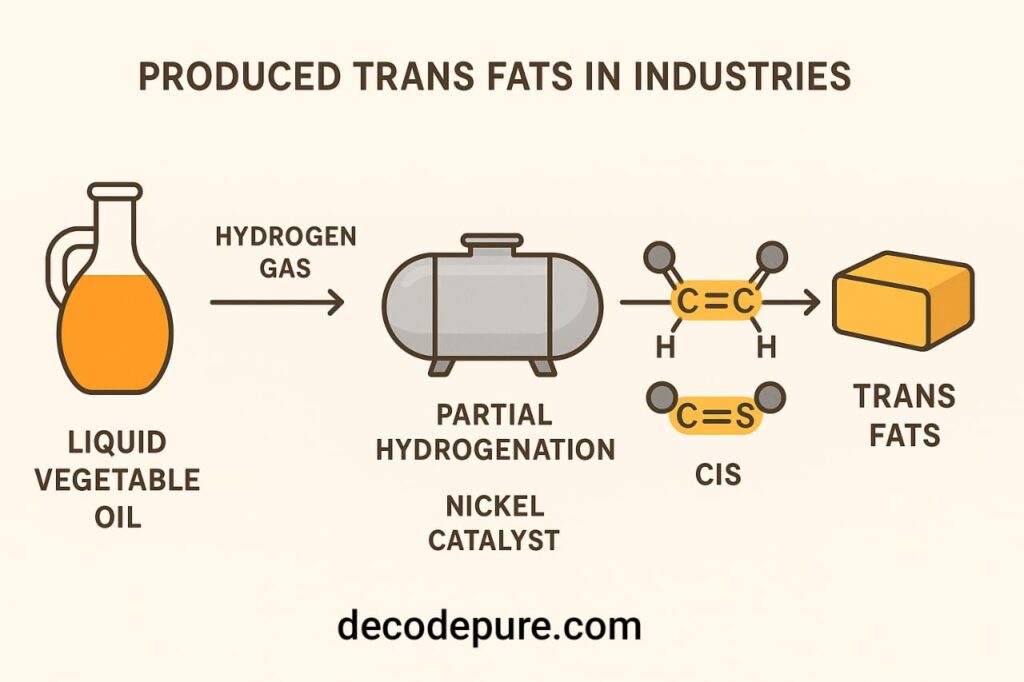
Trans fat is a type of unsaturated fat. The produced process makes it unhealthy; it is artificially altered through a process called hydrogenation in industries. Turning liquid oils into solid fats to increase shelf-life and stability.
Process – Start with liquid vegetable oil (naturally unsaturated). After that, hydrogen gas is added, and the oil is heated at a high temperature (120 – 210°C). Hydrogen gas is bubbled through the oil. A nickel catalyst is used to speed up the reaction. Some double bonds convert into single bonds, and some unsaturated fat shapes are twisted ‘cis’ to ‘trans’ through this process. This process oil became more solid or semi-solid. This trans fat doesn’t melt easily and increases shelf life.
Why industries use it –
- Cheaper than using butter and animal fat.
- Increase self-life and stability
- Improves texture.
Health impact –
- Raises LDL (bad cholesterol)
- Lowers HDL (good cholesterol)
- Increase risk of Heart disease, Heart stroke, Chronic inflammation.
Palm Oil
Globally, India is the leading importer of palm oil in 2023. India imported $8.7 billion worth of palm oil. Ranking first among 206 countries. Imported from Malaysia, Indonesia.
Because it is very cheap and does not spoil for a long time, most of the food in Indian markets is made with this palm oil, and even various famous brands, including Haldiram, use this palm oil in the preparation of their products.
They don’t care if you’re sick or not; they need money.
Reference: Harvard Medical School
If you have confusion about saturated fat, unsaturated fat and trans-fat download this pdf file.
What we eat actually
Let’s discuss the most popular brands of chips and calculate what we are eating and how much.
1. Lay’s (PepsiCo india)
Lay’s potato chips, ingredients – potato, edible vegetable oil (palm oil/sunflower oil), seasoning (sugar, iodised salt, milk solids), spices & condiments, Maltodextrin, artificial flavour, flavour enhancers (627, 631), anticaking agent (551), hydrolysed vegetable oil protein, and edible vegetable oil (palm oil, coconut oil).
- Total fat = 33.1 gm (per 100 gm)
- Saturated fat = 16 gm (per 100 gm)
- Trans fat = 0.1 gm (per 100 gm)
- Sodium = 892 mg (per 100 gm)
- Total sugar = 6 gm (per 100 gm
Note – High amount of Palm oil, saturated fat, trans fat, sodium, Maltodextrin, Artificial flavor, Flavor Enhancers (627,631) makes it unhealthy. There is no problem in eating it one or two times a month.
2. Bingo (ITC)
Bingo a Mad Angels ingredients – rice grits, refined palmolein oil, refined sugar, spices and condiments, iodised salt, acidity regulators (INS 330, INS 296, INS 334), hydrolysed vegetable protein, anti-caking agents (INS 551), tomato powder, jaggery powder, and natural & nature-identical flavouring substances.
- Total fat = 32.8 gm (per 100 gm)
- Saturated fat = 16 gm (per 100 gm)
- Trans fat = 0.1 gm (per 100 gm)
- Sodium = 892 mg (per 100 gm)
- Total sugar = 6 gm (per 100 gm
Note – A high amount of palm oil, saturated fat, trans fat, and acidity regulators makes it unhealthy. There is no problem in eating it one or two times a month.
3. Kurkure
Kurkure Naamkin- Masala Munch
Ingredients – Rice meal (42.7%), Edible vegetable oil (palmolein oil), corn meal (19.7%), Spices and Condiments (onion powder, chilli powder, amchur, coriander seed powder, ginger powder, garlic powder, black pepper powder, turmeric powder, spice extracts, salt, black salt, tomato powder (0.1%), sugar, citric acid (330), tartaric acid).
- Total fat = 34.6 gm (per 100 gm)
- Saturated fat = 16 gm (per 100 gm)
- Trans fat = 0.1 gm (per 100 gm)
- Sodium = 892 mg (per 100 gm)
- Total sugar = 6 gm (per 100 gm
There are many other brands of chips available in the market, which claim to be healthy; it is not possible to discuss all of them. Hopefully, you can now verify for yourself whether they are healthy or unhealthy.
Why does Kurkure catch fire?
Kurkure catches fire due to it containing starch and oil, which are flammable when heated at high temperatures.
Kurkure does not contain any plastic.
Overview
Most of the chips are made up of palm oil, trans fat, saturated fat, maltodextrin, and sodium. If these are consumed for a long time, they can cause various diseases in the body, like raising bad cholesterol (LDL) in the blood. High LDL levels increase the risk of heart disease, stroke, Type 2 diabetes, etc.
Mind it
Palm oil is used under different names in the market such as-
1. Palm Oil
2. Palmolein Oil
3. Hydrogenated Palm Oil
4. Fractionated Palm Oil
5. Refined Palm Oil
6. Palm Stearin
7. Palm Kernel Oil
8. Palm Kernel Stearin
9. Palm Kernel Olein
10. Vegetable Oil (if unspecified, often includes palm oil)
Many packages say “0% palm oil”. If you see “hydrogenated oil” written anywhere on the package, you know it’s palm oil.
Read Labels like a pro
Order – Ingredients are arranged by volume of concentration (the top 5 are main components, used in high volume).
Don’t use foolish marketing terms like “Made with real potatoes” or “Baked not fried”, “0% trans-fat”, “Whole grain”, “No added MSG”, “Low cholesterol”, etc. Just because all levels are allowed to write doesn’t mean that what is written is true.
Make decision (Buy or Skip)
There is no problem eating it two to three times a month, but don’t buy too much and bring it home. The more you bring home, the more you will eat.
Conclusion
You deserve to know what you are putting on your body.
Usually, children eat more of these types of foods, so parents need to be more aware; try making chips at home and make it a habit to feed them.
I believe that buying anything shouldn’t be a guessing game. It’s time we started reading labels and exploring healthier alternatives.
I think now it’s very easy for you to identify. Did I miss any ingredients? Whether you have a question, a suggestion, or just want to share your thoughts, feel free to reach out. I look forward to reading your messages.
Read more: Behind the Sweetness : A Real Look at What’s in your Mango Juice
Join WhatsApp Channel to Updated
Safe alternative in Market
1. BRB Popped Potato Chips | Not Baked, Not Fried
2. Eatopia superfood Oat Bites
3. Adukale Benne Muruku | South Indian Snacks
4. HEALTHY MASTER Vision to serve healthy Light & Crispy Beetroot Chips
5. Greenhabit Ragi KURMURA MURMURA aka Ragi Puff for Healhty Breakfast Snack
6. Pure & Sure Organic Mini Chakli
Q. Why does Kurkure catch fire?
Kurkure catch fire due to it contain starch and oil, which are flammable when heated in high temperature.
Q. Does Kurkure contain plastic?
No, Kurkure does not contain any plastic. Kurkure catch fire due to it contain starch and oil, which are flammable when heated in high temperature.
Q. Are chips junk foods?
Yes, chips are considered junk food.

I’m Mehebub Alam Chowdhury, an M.Sc. Organic Chemistry student, and my mission with Decodepure is to simplify complex chemical ingredients in everyday products. With my knowledge of chemicals, I aim to help you make safer, healthier choices by breaking down product labels in an easy-to-understand way.